
Apple's WWDC 2026 introduces changes to the App Store that allow independent developers to bundle subscriptions.
Apple unveiled a comprehensive range of updates to the App Store during WWDC 2026 on Monday, including cross-developer subscription bundles, group purchasing options, enterprise volume licensing, and an AI-driven discovery system designed to recommend apps based on a user's current software. These updates signify the most substantial changes to app marketing and sales for developers since the introduction of subscription pricing in 2016.
The major new feature for developers is the cross-developer App Store Bundles, enabling independent developers to combine their subscriptions and offer them at a discounted rate. There is also a related offering called App Store Suites, which allows different developers to group compatible apps under a single subscription, addressing a longstanding developer demand for bundle creation without requiring ownership under the same parent company.
Group purchases will allow subscribers to buy multiple licenses for an app and share them with others, set to launch in winter 2026. Furthermore, volume purchasing options via Apple Business Manager and Apple School Manager, expected in fall 2026, will facilitate bulk app license purchases for organizations. Together, these features bring the App Store closer to the enterprise software distribution model long utilized by Google and Microsoft.
On the discovery front, Apple is introducing Personalized Collections and App Notes this week in the U.S. Personalized Collections leverage on-device intelligence to suggest apps based on what users already have installed, such as recommendations for "Apps that pair well with your photography workflow." App Notes will provide brief editorial descriptions for individual app recommendations, explaining their relevance. Both features are generated locally, meaning no app usage data is sent to Apple’s servers.
Additionally, a new Creative Assets system will allow developers to showcase rich media across the App Store. Video previews, animated content, and high-resolution images can now be displayed on product pages and in search results, all managed through a centralized Asset Library in App Store Connect. Developers can submit these assets independently of app updates, enabling them to refresh their marketing without needing to release a new build.
Game developers will have access to Featuring Nominations, a dedicated tool for pitching their games for editorial placement in the Apple Games app. This is part of an initiative to create a unique curation strategy for the Apple Games storefront, separate from the main App Store editorial team.
Retention Messaging introduces new tools for developers to minimize subscriber churn. When a user attempts to cancel a subscription, developers can offer targeted promotions, explain recent updates, or highlight untested features. Although Apple has not disclosed the revenue share related to subscriptions retained through these messages, the feature aligns with the existing App Store commission model.
Various operational improvements have also been implemented to streamline developers' interactions with the App Store. Submissions for In-App Purchases can now be grouped and reviewed collectively. Furthermore, the Mac App Store will no longer require support for Intel-based Macs, marking Apple’s complete transition to its own silicon.
Apple reported that the App Store ecosystem generated $1.4 trillion in developer billings and sales in 2025, a figure that was announced on June 4 ahead of the conference. This statistic provides the commercial context for all the features revealed on Monday.
A significant change for users is the new Screen Time categorization system, which will be implemented in July. Apple will update its age rating questionnaire, requiring developers to classify their apps into categories such as Social Media, Entertainment, Games, or Other. This will enable parents to set daily time limits by category via Screen Time, rather than managing time limits for individual apps.
This new system is designed to complement the broader parental controls introduced across iOS 27, including contact approval for children’s accounts and automatic action when explicit content is shared. The category-level framework replaces the current method of blocking specific apps, which many parents have found difficult to manage.
These updates come in the midst of ongoing regulatory and legal scrutiny of Apple’s App Store practices. Recently, the U.S. Supreme Court opted not to pause a contempt order involving the Epic Games case, which prohibits Apple from charging commission on purchases made through external links. In Europe, the company is facing enforcement actions under the Digital Markets Act related to limitations on how developers can communicate with users about alternative payment methods.
While cross-developer bundles and group purchasing do not directly address these ongoing disputes, they do broaden the spectrum of commercial options available within Apple’s ecosystem. The underlying goal is to give developers additional incentives to remain within the platform rather than pursuing transactions elsewhere.
Additionally, Apple recently settled a $250 million class action lawsuit concerning marketing claims about Siri AI and used the WWDC keynote to finally unveil personalized assistant features that had been promised two years ago. Although the announcements regarding the App Store were distinct from the Siri AI features, the central message was consistent: Apple is striving to demonstrate that its platform still provides sufficient value to developers and users to warrant the commission structure that is under regulatory and legal challenge.
Other articles
 The SANDISK Extreme Portable SSD is revolutionizing your perspective on storage upgrades.
Searching for a more intelligent method to increase your storage without needing to upgrade your laptop? The SANDISK Extreme Portable SSD provides fast performance, capacity options reaching up to 4TB, and easy plug-and-play use.
The SANDISK Extreme Portable SSD is revolutionizing your perspective on storage upgrades.
Searching for a more intelligent method to increase your storage without needing to upgrade your laptop? The SANDISK Extreme Portable SSD provides fast performance, capacity options reaching up to 4TB, and easy plug-and-play use.
 The Pentagon has included Alibaba, Baidu, BYD, and Unitree in its list of Chinese military enterprises.
The Pentagon's revised 1260H list identifies 188 Chinese firms that it claims assist the military, including Alibaba, Baidu, BYD, Unitree, Nio, and CXMT.
The Pentagon has included Alibaba, Baidu, BYD, and Unitree in its list of Chinese military enterprises.
The Pentagon's revised 1260H list identifies 188 Chinese firms that it claims assist the military, including Alibaba, Baidu, BYD, Unitree, Nio, and CXMT.
 Nashville Zoo states that a suggested AI data center might prevent its endangered leopards from reproducing.
Nashville Zoo is opposing a proposed 69,000 sq ft DC BLOX data center located just 50 yards away from its animals. A petition against the project has garnered nearly 300,000 signatures.
Nashville Zoo states that a suggested AI data center might prevent its endangered leopards from reproducing.
Nashville Zoo is opposing a proposed 69,000 sq ft DC BLOX data center located just 50 yards away from its animals. A petition against the project has garnered nearly 300,000 signatures.
 Xteink X4 review: I was skeptical about this compact e-reader, but it helped improve my bad screen habits.
The Xteink X4 is simple to share, even simpler to integrate into your daily carry, and is a delightfully appealing gadget that could capture the book lover in you without straining your budget.
Xteink X4 review: I was skeptical about this compact e-reader, but it helped improve my bad screen habits.
The Xteink X4 is simple to share, even simpler to integrate into your daily carry, and is a delightfully appealing gadget that could capture the book lover in you without straining your budget.
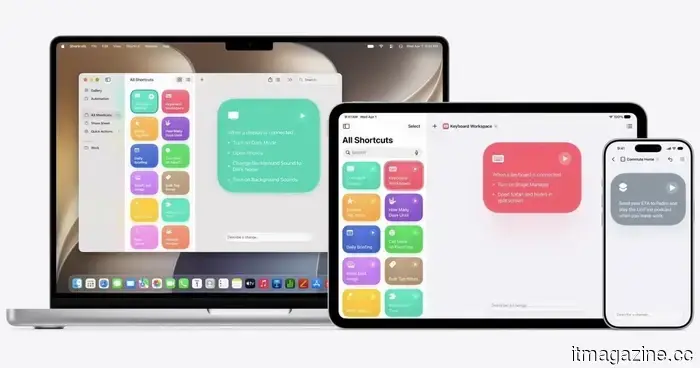 iOS 27 has simplified Shortcuts to the point where you have no reason not to utilize them.
iOS 27 employs Apple Intelligence to allow you to create Shortcuts simply by describing them in everyday language. You can say goodbye to the hassle of managing countless actions to streamline your daily activities.
iOS 27 has simplified Shortcuts to the point where you have no reason not to utilize them.
iOS 27 employs Apple Intelligence to allow you to create Shortcuts simply by describing them in everyday language. You can say goodbye to the hassle of managing countless actions to streamline your daily activities.
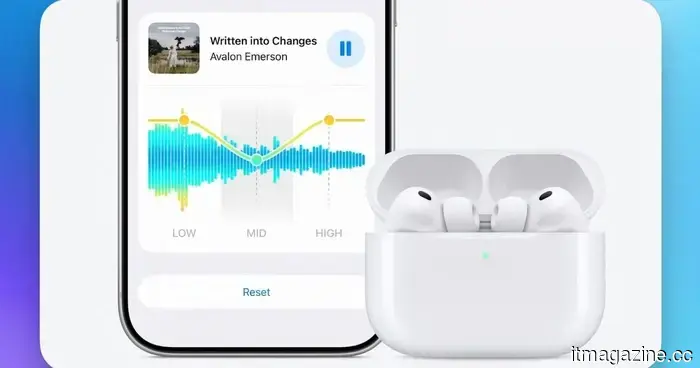 AirPods are finally receiving a personalized EQ to adjust the listening experience.
Apple is now allowing you to customize your AirPods according to your preferences. A new custom EQ setting will be introduced with iOS 27, enabling you to modify the bass, mids, and highs to suit your liking.
AirPods are finally receiving a personalized EQ to adjust the listening experience.
Apple is now allowing you to customize your AirPods according to your preferences. A new custom EQ setting will be introduced with iOS 27, enabling you to modify the bass, mids, and highs to suit your liking.
Apple's WWDC 2026 introduces changes to the App Store that allow independent developers to bundle subscriptions.
At WWDC 2026, Apple revealed cross-developer App Store bundles, group subscriptions, volume purchasing options, and AI-powered Personalized Collections.