
Judge prohibits Trump's $100,000 H-1B fee, deeming it an illegal tax.
A federal judge invalidated Trump's $100,000 fee for H-1B visas, labeling it an unlawful tax and stating that the president lacks the authority to impose taxes without Congress's approval. This ruling offers some relief to tech companies, although an appeal from the government is anticipated.
US District Judge Leo T. Sorokin in Massachusetts declared on Monday that the $100,000 fee imposed by President Donald Trump on H-1B visa applications is unlawful and needs to be revoked. The judgement determined that the proclamation breached both the federal Administrative Procedure Act and the Constitution, as Congress had not granted the executive branch the power to levy such a tax.
Last September, Trump signed the proclamation, which added the fee on top of existing application costs that already amounted to several thousand dollars. Officials in the administration presented it as a way to encourage companies to hire American workers over foreign ones.
The fee's implications
The $100,000 charge applied to new H-1B applications and was typically paid by the employer sponsoring the visa. Immigration lawyers previously cautioned that this fee would essentially transform the H-1B into an exclusive work permit, available only to the wealthiest companies and highest-paid employees.
For mid-sized tech firms and startups, the cost was prohibitive. The H-1B visa is the main avenue for hiring skilled foreign-born engineers, scientists, and researchers, and its annual limit of 85,000 was already filled before the fee was raised.
Who initiated the challenge
A coalition of employers and trade groups filed the lawsuit. The US Chamber of Commerce also lodged a separate challenge in October, arguing that the fee would hinder American competitiveness at a time when the demand for AI and engineering expertise is at an all-time high.
Judge Sorokin concurred with the plaintiffs that the fee constituted a tax both in its essence and implementation, irrespective of the administration's terminology. This distinction is crucial because the president cannot impose a tax without congressional permission.
The context of AI talent
This ruling emerges amid a global competition for AI talent. China has placed travel restrictions on researchers from its leading AI laboratories. It has become common for top-tier labs, such as OpenAI, Anthropic, and Meta, to offer compensation packages in the nine-figure range.
The H-1B program serves as a key channel for much of that talent to enter the United States. Approximately 70% of H-1B approvals are granted to workers in computer-related fields, with Big Tech companies being some of the largest sponsors.
Meanwhile, the domestic tech workforce is undergoing transformation due to AI-infused restructuring. Companies are eliminating mid-level positions while presenting million-dollar salaries for AI experts. The conflict between limiting foreign labor and competing for the few researchers capable of developing advanced models reflects the core policy contradiction at the heart of the H-1B discussion.
What will happen next
An appeal from the government is expected. The ruling applies nationwide, but a higher court could reinstate the fee or limit the decision's scope.
For now, H-1B applications return to the fee structure that existed before the proclamation. Companies that paid the $100,000 fee during its implementation may seek refunds, although the specifics of that process remain unclear.
The more significant issue is whether the administration will pursue an alternative legal strategy to achieve the same result. A fee established through formal rulemaking, as opposed to a presidential proclamation, might withstand judicial scrutiny; however, this process would take months and encounter its own political challenges. For the time being, the pathway remains open.
Other articles
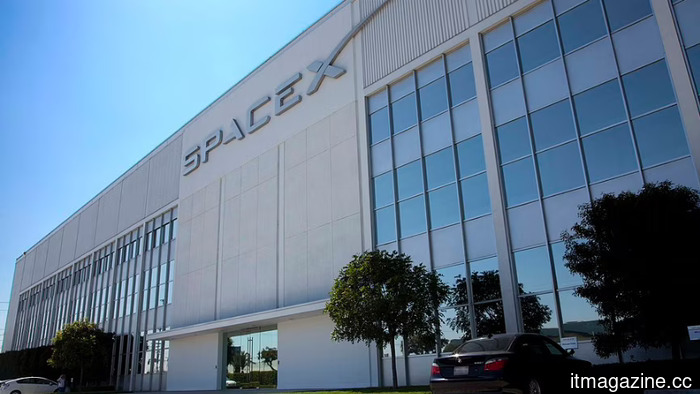 SpaceX's IPO has seen a significant oversubscription as order books finalize before the pricing scheduled for Wednesday.
SpaceX's $75 billion IPO is significantly oversubscribed at a share price of $135. The order books will close on Monday, with pricing anticipated on Wednesday, and trading set to commence Thursday on Nasdaq.
SpaceX's IPO has seen a significant oversubscription as order books finalize before the pricing scheduled for Wednesday.
SpaceX's $75 billion IPO is significantly oversubscribed at a share price of $135. The order books will close on Monday, with pricing anticipated on Wednesday, and trading set to commence Thursday on Nasdaq.
 Resident Evil Veronica brings Code Veronica back to life for a fresh nightmare in 2027.
Capcom has officially revealed Resident Evil Veronica, a contemporary remake of Code: Veronica, reviving Claire Redfield’s harrowing experience on Rockfort Island in 2027.
Resident Evil Veronica brings Code Veronica back to life for a fresh nightmare in 2027.
Capcom has officially revealed Resident Evil Veronica, a contemporary remake of Code: Veronica, reviving Claire Redfield’s harrowing experience on Rockfort Island in 2027.
 Apple Intelligence is arriving on Safari, featuring more intelligent tabs, personalized extensions, and improvements to password management.
Apple has introduced new Apple Intelligence features for Safari, which encompass AI-driven tab organization, the ability to create custom extensions, webpage monitoring, and automatic password updates.
Apple Intelligence is arriving on Safari, featuring more intelligent tabs, personalized extensions, and improvements to password management.
Apple has introduced new Apple Intelligence features for Safari, which encompass AI-driven tab organization, the ability to create custom extensions, webpage monitoring, and automatic password updates.
 FCC grants Amazon Leo an extension for satellite deployment but removes its spectrum priority.
The FCC granted Amazon an exemption from the July 30 deadline to launch 1,616 satellites but removed its spectrum priority until March 2028. SpaceX objected to the extension.
FCC grants Amazon Leo an extension for satellite deployment but removes its spectrum priority.
The FCC granted Amazon an exemption from the July 30 deadline to launch 1,616 satellites but removed its spectrum priority until March 2028. SpaceX objected to the extension.
 Apple's WWDC 2026 introduces changes to the App Store that allow independent developers to bundle subscriptions.
At WWDC 2026, Apple revealed cross-developer App Store bundles, group subscriptions, volume purchasing options, and AI-powered Personalized Collections.
China gives the green light to its first commercial brain implant, surpassing Neuralink.
China has granted approval for the world’s first commercial brain-computer interface, surpassing Neuralink in the race to market. This technology enables movement restoration for paralyzed individuals, but it raises significant ethical questions.
Apple's WWDC 2026 introduces changes to the App Store that allow independent developers to bundle subscriptions.
At WWDC 2026, Apple revealed cross-developer App Store bundles, group subscriptions, volume purchasing options, and AI-powered Personalized Collections.
China gives the green light to its first commercial brain implant, surpassing Neuralink.
China has granted approval for the world’s first commercial brain-computer interface, surpassing Neuralink in the race to market. This technology enables movement restoration for paralyzed individuals, but it raises significant ethical questions.
Judge prohibits Trump's $100,000 H-1B fee, deeming it an illegal tax.
A federal judge annulled Trump's $100,000 H-1B visa fee, declaring it an unconstitutional tax. This ruling provides relief to tech companies that depend on foreign AI expertise. An appeal is anticipated.