
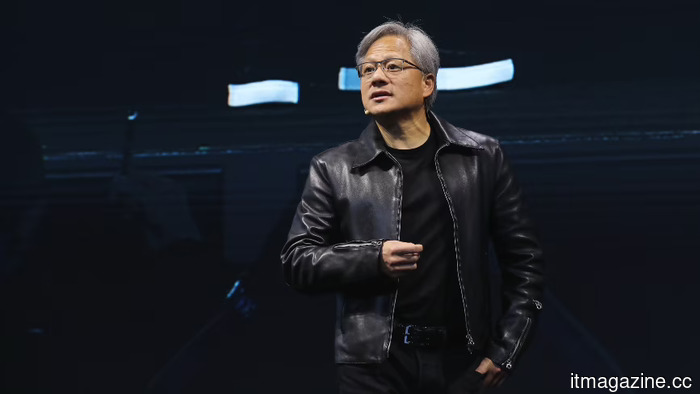
Nvidia and Hyundai are intensifying their focus on robotics with regards to Atlas.
The lobby of Hyundai’s headquarters in Seoul is now taking care of its own plants. On Monday, it was also managing security and deliveries, with a lineup of robots prepared for a significant visitor: Jensen Huang. The chief executive of Nvidia was in South Korea to strengthen the chipmaker’s partnership with Hyundai Motor Group, and the showcase in the revamped lobby, which Hyundai has transformed into a “physical AI testbed,” was the main focus.
Following discussions with Hyundai executive chair Chung Euisun, the two companies outlined a broader plan to convert physical AI and robotics from research endeavors into industrial applications, covering areas such as mobility, manufacturing, and robotics. Huang informed reporters that they are getting "very very close" to industrializing robotics and expressed their intention to integrate AI into “all forms of mobility.” He praised Hyundai’s primary strength, which is scale.
“Hyundai excels in manufacturing, mobility, and heavy industries, producing at extremely large scales,” he stated. “No one is better positioned to leverage that and create opportunities than Hyundai.”
The most significant change in their roadmap concerns the location: transitioning robotics from laboratory settings to factory floors. The aim is to utilize Hyundai’s production infrastructure to develop globally scalable robotics platforms, first training the machines in simulations. A prominent example is Boston Dynamics’ Atlas humanoid robot, owned by Hyundai, which garnered investor interest at CES in January with its production-ready model.
Discussions primarily revolved around Hyundai’s 9 trillion won (approximately $5.9 billion) initiative to establish an AI data center, a robotics manufacturing cluster, and a hydrogen facility in Saemangeum, a western port city Huang optimistically referred to as South Korea’s “AI Valley.” Chung hinted that further investments might occur and proposed a “perfect AI ecosystem,” including a joint data hub, if Nvidia officially joins the initiative. Currently, Nvidia’s involvement is limited to enthusiasm and the potential for substantial sales of computing power, with the data center anticipated to operate on tens of thousands of its Blackwell GPUs.
This partnership aligns with Nvidia’s broader strategy. The company has been integrating itself into the hardware segment of AI, engaging with LG Electronics on robotics and data centers, conducting humanoid trials with Siemens on factory floors, and investing billions in AI equity. Automotive manufacturers, with their facilities, supply chains, and resources, rank among the most valuable partners for a company wagering that the same technologies driving chatbots will soon operate real-world machines.
Investors reacted positively to the news, with Hyundai Motor shares increasing nearly 7% and Nvidia climbing over 6% on the day. Hyundai has indicated its goal to mass-produce Atlas starting in 2028, aiming for up to 30,000 units annually. Whether the robots will be delivered on time remains uncertain, but the ambitions are clear.
For Hyundai, the future of automotive manufacturing appears more like a fleet of self-learning machines rather than conventional assembly lines. For Nvidia, this represents yet another industry powered by its chips, from design software to the factory floor and the robots produced there.
Other articles
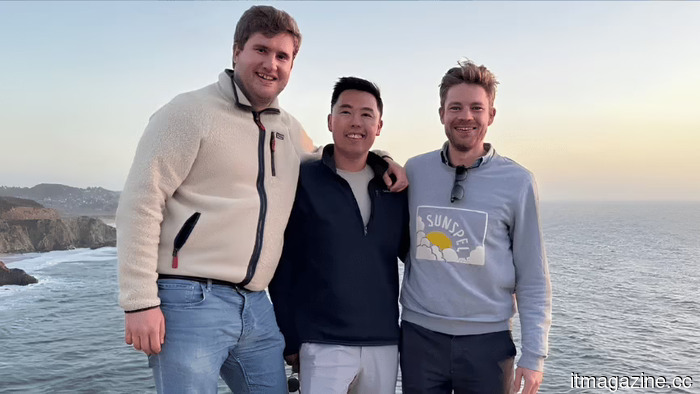 Cosine assembles UK leaders to develop a sovereign AI model.
During London Tech Week, Britain's Cosine secured partnerships with BT, HSBC, BAE, and other organizations to develop Lumen Sovereign, a UK frontier AI model that will be trained on the Isambard-AI supercomputer.
Cosine assembles UK leaders to develop a sovereign AI model.
During London Tech Week, Britain's Cosine secured partnerships with BT, HSBC, BAE, and other organizations to develop Lumen Sovereign, a UK frontier AI model that will be trained on the Isambard-AI supercomputer.
 Ninja Theory's Senua is set to deliver the gameplay that Hellblade enthusiasts have been seeking.
Ninja Theory announced Senua during the Xbox Games Showcase, a 2027 action-adventure that moves away from the Hellblade series' strict linear format to feature more expansive combat and an interconnected world.
Ninja Theory's Senua is set to deliver the gameplay that Hellblade enthusiasts have been seeking.
Ninja Theory announced Senua during the Xbox Games Showcase, a 2027 action-adventure that moves away from the Hellblade series' strict linear format to feature more expansive combat and an interconnected world.
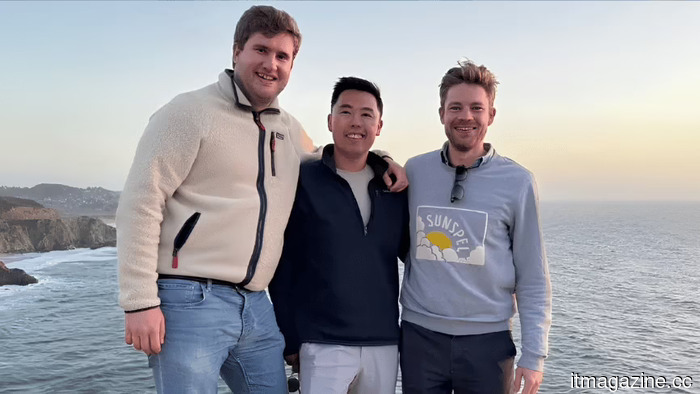 Cosine rallies UK leaders to develop a sovereign AI model.
During London Tech Week, Britain's Cosine secured commitments from BT, HSBC, BAE, and others to develop Lumen Sovereign, a UK-based frontier AI model utilizing the Isambard-AI supercomputer for training.
Cosine rallies UK leaders to develop a sovereign AI model.
During London Tech Week, Britain's Cosine secured commitments from BT, HSBC, BAE, and others to develop Lumen Sovereign, a UK-based frontier AI model utilizing the Isambard-AI supercomputer for training.
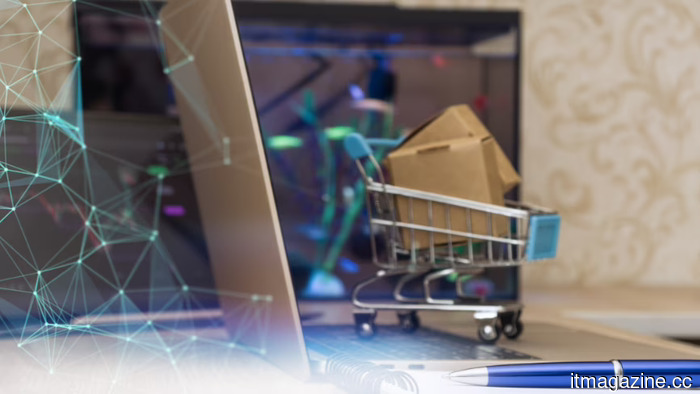 AI determines which online stores you will see, often overlooking the majority of them.
A study involving 9,720 ecommerce stores revealed that Google Gemini made no recommendations for 60% of them. The successful stores were not necessarily the largest brands, but rather those whose product data could be effectively interpreted by AI.
AI determines which online stores you will see, often overlooking the majority of them.
A study involving 9,720 ecommerce stores revealed that Google Gemini made no recommendations for 60% of them. The successful stores were not necessarily the largest brands, but rather those whose product data could be effectively interpreted by AI.
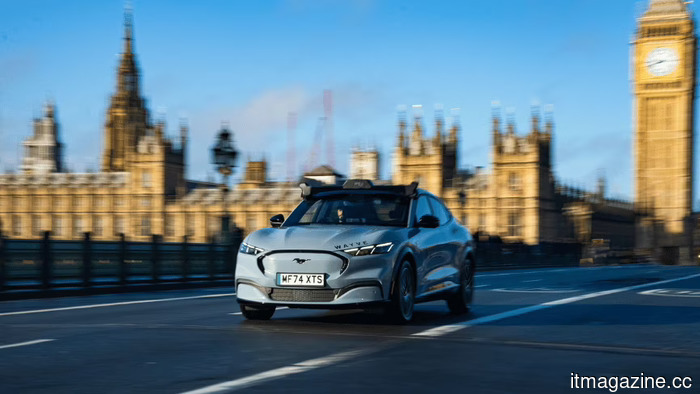 Uber launches a waitlist in London for Wayve's robotaxi service.
Uber has established a waitlist in London for self-driving rides powered by the British startup Wayve, in preparation for a trial set for 2026, while Waymo is planning a competing launch.
Uber launches a waitlist in London for Wayve's robotaxi service.
Uber has established a waitlist in London for self-driving rides powered by the British startup Wayve, in preparation for a trial set for 2026, while Waymo is planning a competing launch.
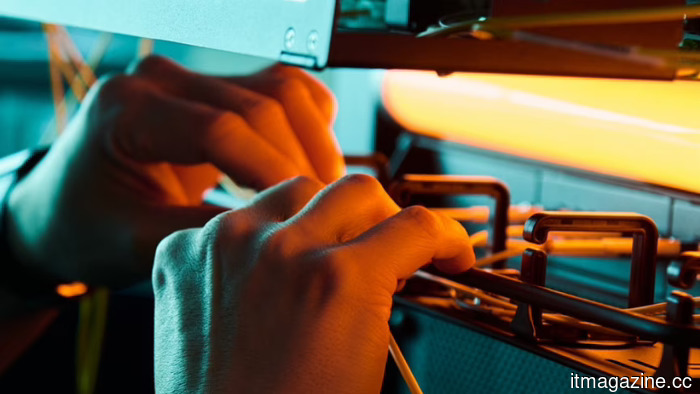 Oriole launches its first completely photonic AI network, claiming an 81% reduction.
UK-based startup Oriole Networks is implementing the first large-scale pure photonic AI network in collaboration with AMD, asserting a power reduction of 81% and less than 1% GPU idle time at the ARIA lab in the UK.
Oriole launches its first completely photonic AI network, claiming an 81% reduction.
UK-based startup Oriole Networks is implementing the first large-scale pure photonic AI network in collaboration with AMD, asserting a power reduction of 81% and less than 1% GPU idle time at the ARIA lab in the UK.
Nvidia and Hyundai are intensifying their focus on robotics with regards to Atlas.
Following discussions in Seoul, Nvidia and Hyundai are strengthening their partnership in physical-AI, centered around Boston Dynamics' Atlas humanoid and a $5.9 billion Korean "AI Valley."