
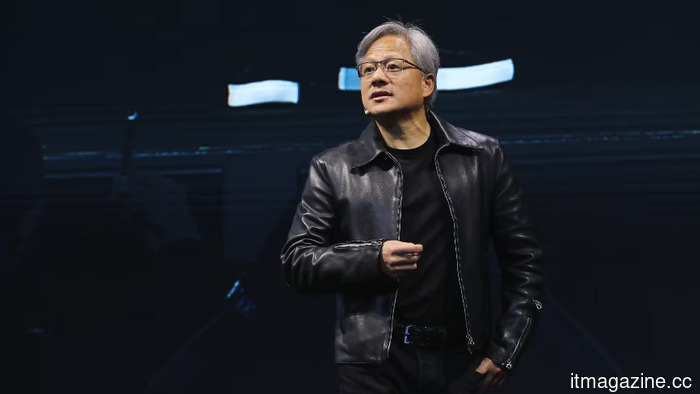
Nvidia and Hyundai intensify their efforts in robotics with a focus on Atlas.
The lobby of Hyundai’s headquarters in Seoul now takes care of its own plants. On Monday, it also managed security and deliveries, with a lineup of robots prepared for a notable guest: Jensen Huang. The Nvidia CEO visited South Korea to strengthen the partnership between the chipmaker and Hyundai Motor Group, showcasing the purpose of the renovated lobby, designed as a “physical AI testbed.”
Following discussions with Hyundai’s executive chair Chung Euisun, both companies outlined an enhanced strategy to transition physical AI and robotics from research initiatives to industrial applications in areas such as mobility, manufacturing, and robotics. Huang informed reporters that they are getting “very very close” to the industrialization of robotics, expressing plans to incorporate AI into “all forms of mobility.” He praised Hyundai's key advantage in terms of scale.
“Hyundai excels in manufacturing, mobility, and heavy industries, producing at extremely large scales,” he stated. “No one is better positioned to leverage that and to create new opportunities than Hyundai.”
The most significant change in their roadmap involves shifting robotics from the research environment to the production floor. The companies aim to utilize Hyundai’s manufacturing foundation to create globally scalable robotics platforms, first training the machines in simulations. A prime example is Boston Dynamics’ Atlas humanoid robot, which Hyundai owns and whose production-ready version attracted investor interest at January’s CES.
Much of the dialogue focused on Hyundai’s 9 trillion won (approximately $5.9 billion) initiative to establish an AI data center, a robot manufacturing hub, and a hydrogen plant in the western port city of Saemangeum, which Huang enthusiastically dubbed South Korea’s “AI Valley.” Chung indicated that additional investment could follow and proposed a “perfect AI ecosystem,” including a joint data hub, if Nvidia officially participates in the project, which it hasn't done yet. For now, Nvidia’s involvement consists of enthusiasm and the potential for significant sales of computing power, as the data center is projected to operate on tens of thousands of its Blackwell GPUs.
This collaboration aligns with Nvidia’s broader strategy. The company has been integrating itself into the hardware side of AI, engaging with LG Electronics on robotics and data centers, conducting humanoid trials in factories with Siemens, and investing billions into AI equity. Automakers, with their production facilities, supply chains, and capital, represent some of the most valuable partners for a company betting that models similar to those behind chatbots will soon be used to operate real-world machines.
Investors reacted positively, with Hyundai Motor shares rising nearly 7% and Nvidia increasing by over 6% for the day. Hyundai has expressed intentions to mass-produce Atlas starting in 2028, potentially at a rate of up to 30,000 units annually. Whether the robots will be delivered on time remains uncertain, but the ambition is clear.
For Hyundai, the future of automotive manufacturing appears to involve a cadre of machines that can learn to perform tasks autonomously, rather than a traditional assembly line. Meanwhile, for Nvidia, this represents yet another industry reliant on its chips, covering everything from design software to the factory floor and the robots produced there.
Other articles
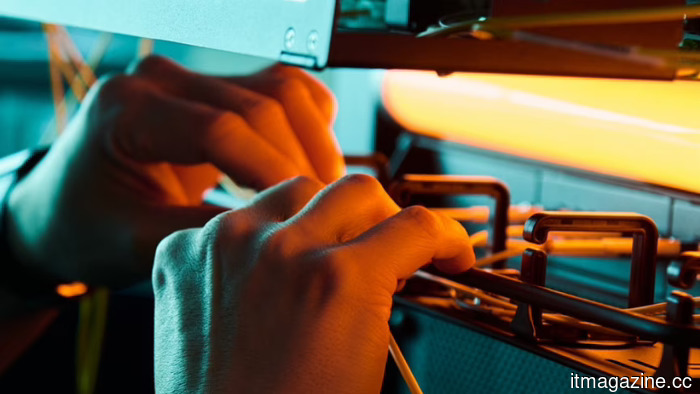 Oriole launches its first completely photonic AI network, claiming an 81% reduction.
UK-based startup Oriole Networks is implementing the first large-scale pure photonic AI network in collaboration with AMD, asserting a power reduction of 81% and less than 1% GPU idle time at the ARIA lab in the UK.
Oriole launches its first completely photonic AI network, claiming an 81% reduction.
UK-based startup Oriole Networks is implementing the first large-scale pure photonic AI network in collaboration with AMD, asserting a power reduction of 81% and less than 1% GPU idle time at the ARIA lab in the UK.
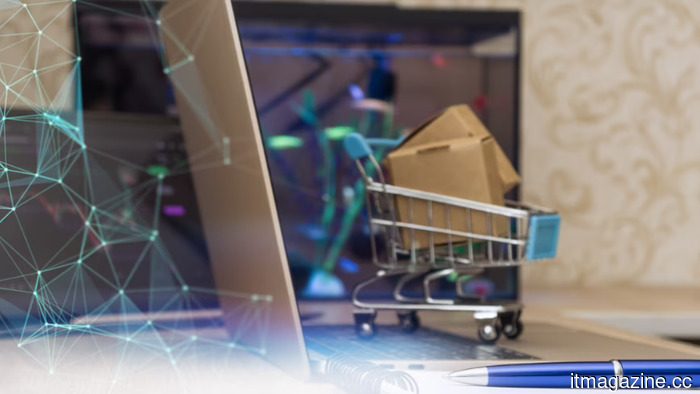 AI determines which online stores are visible to you, overlooking many of them.
A research of 9,720 ecommerce stores revealed that Google Gemini suggested nothing for 60% of these stores. The successful stores weren’t necessarily the largest brands, but rather those whose product data was comprehensible to AI.
AI determines which online stores are visible to you, overlooking many of them.
A research of 9,720 ecommerce stores revealed that Google Gemini suggested nothing for 60% of these stores. The successful stores weren’t necessarily the largest brands, but rather those whose product data was comprehensible to AI.
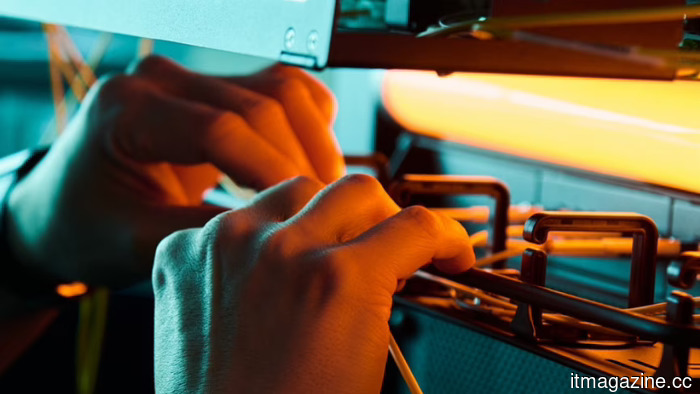 Oriole launches its inaugural fully photonic AI network, claiming an 81% reduction.
UK-based startup Oriole Networks is implementing the first fully photonic AI network at scale in collaboration with AMD, asserting an 81% reduction in power consumption and less than 1% idle time for GPUs in the ARIA lab in the UK.
Oriole launches its inaugural fully photonic AI network, claiming an 81% reduction.
UK-based startup Oriole Networks is implementing the first fully photonic AI network at scale in collaboration with AMD, asserting an 81% reduction in power consumption and less than 1% idle time for GPUs in the ARIA lab in the UK.
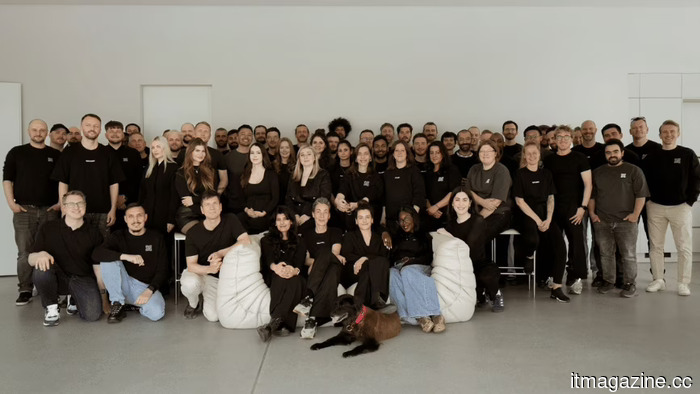 GALVANY secures €10M to address issues in Germany's heat-pump sector.
Berlin's GALVANY secured €10 million from SET Ventures and AENU to expand its heat-pump platform in Germany, following a sevenfold increase in revenue to €20.1 million.
GALVANY secures €10M to address issues in Germany's heat-pump sector.
Berlin's GALVANY secured €10 million from SET Ventures and AENU to expand its heat-pump platform in Germany, following a sevenfold increase in revenue to €20.1 million.
 Bending Spoons submits a filing for a US IPO on Nasdaq.
Bending Spoons, the Milan-based company responsible for Evernote, WeTransfer, and Vimeo, has submitted a filing for a US IPO on Nasdaq, aiming for a revenue of $1.31 billion in 2025 and a stated target valuation of $20 billion.
Bending Spoons submits a filing for a US IPO on Nasdaq.
Bending Spoons, the Milan-based company responsible for Evernote, WeTransfer, and Vimeo, has submitted a filing for a US IPO on Nasdaq, aiming for a revenue of $1.31 billion in 2025 and a stated target valuation of $20 billion.
 Artificial intelligence is determining which online stores you encounter, while disregarding the majority of them.
Research involving 9,720 ecommerce stores revealed that Google Gemini made no recommendations for 60% of them. The successful stores were not necessarily the largest brands, but rather those whose product data could be effectively interpreted by AI.
Artificial intelligence is determining which online stores you encounter, while disregarding the majority of them.
Research involving 9,720 ecommerce stores revealed that Google Gemini made no recommendations for 60% of them. The successful stores were not necessarily the largest brands, but rather those whose product data could be effectively interpreted by AI.
Nvidia and Hyundai intensify their efforts in robotics with a focus on Atlas.
Following discussions in Seoul, Nvidia and Hyundai are strengthening their physical-AI partnership, focusing on Boston Dynamics' Atlas humanoid and a $5.9 billion Korean "AI Valley" initiative.