

AI determines which online stores you will see, often overlooking the majority of them.
TL;DR: A study by AI commerce company Recomaze analyzed 9,720 ecommerce stores and conducted 58,320 product queries using Google Gemini. In 60% of cases, no recommendations were made, and when they were, they spanned over 50,000 brands.
Shoppers are beginning to consult AI assistants for purchasing advice, in addition to asking for definitions or dinner ideas. New research indicates that most online retailers are often excluded from these responses. The study, conducted by Recomaze, involved running six purchase-intent queries for each of the 9,720 ecommerce stores through Google Gemini, totaling 58,320 evaluations. In 60% of instances, no store was recommended. Stores were mentioned only 14% of the time, with assistants mostly directing shoppers to competitors or providing no store suggestions.
As companies like Amazon and Google continue to integrate AI into shopping experiences, the phrase “what should I buy” is taking on new significance. Rather than providing numerous links, a concise list of store names is emerging as the modern equivalent of achieving a top position in search rankings. The study argues that many product catalogs have been designed for human comprehension and traditional search engines, rather than for AI systems that must interpret products to make recommendations to shoppers.
An intriguing outcome is the distribution of store recommendations when they do occur. These did not concentrate among a select few large brands; rather, they were spread across 50,287 unique brands. The top ten brands made up about 4% of the total recommendations, while the top 100 accounted for around 11%. The most frequently cited store, Etsy, was mentioned in just 1.3% of the queries. One specific case highlighted a query for cocktail capsules that favored Bartesian, a niche brand, over larger competitors like Walmart and Target. The study suggests that AI-driven product discovery benefits smaller retailers, indicating that they are not automatically excluded due to their size.
Category played a significant role in a store's visibility. Visually driven categories fared worst, with around 74% of stores in home and living being overlooked, and 67% in apparel. Conversely, food and beverage had roughly 52% visibility. A text-based AI struggles to assess visual elements that influence the purchase of clothing or home items, often defaulting to larger generic retailers, while products with defined characteristics are easier to match.
The study acknowledges its own limitations, noting that it conducted only one scan per store, utilized only Google Gemini (not ChatGPT or Perplexity), and produced algorithmically generated queries with 42% of stores left uncategorized. The stores were sourced from BuiltWith, and the queries were designed to align with each store’s category, targeting questions typical of shoppers who know what they want but not where to buy it, as opposed to brand-name searches that are simpler to win.
“The shop window used to be Google. Now it is whatever the AI decides to recommend, and most brands have no idea whether they are included in the answer,” stated Delian Coroamă, founder and CEO of Recomaze. “The stores that get recommended are not necessarily the biggest; they are the ones whose product information is readable and trustworthy to the AI.”
Recomaze has a commercial interest in these findings, as it provides tools to monitor store visibility across ChatGPT, Gemini, and Perplexity, and helps rewrite product data to enhance its recommendation compatibility. Nonetheless, the fundamental insight remains difficult to dismiss: a new intermediary now exists between consumers and retailers, determining which names are mentioned, and currently, many brands remain unacknowledged.
Other articles
 Bending Spoons submits a filing for a US initial public offering on Nasdaq.
Bending Spoons, the Milan-based company responsible for Evernote, WeTransfer, and Vimeo, has submitted its application for a US IPO on Nasdaq, aiming for a revenue of $1.31 billion in 2025 and a reported target valuation of $20 billion.
Bending Spoons submits a filing for a US initial public offering on Nasdaq.
Bending Spoons, the Milan-based company responsible for Evernote, WeTransfer, and Vimeo, has submitted its application for a US IPO on Nasdaq, aiming for a revenue of $1.31 billion in 2025 and a reported target valuation of $20 billion.
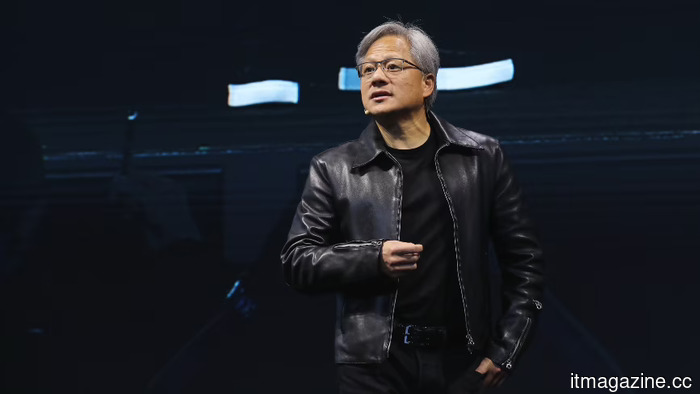 Nvidia and Hyundai are intensifying their focus on robotics with regards to Atlas.
Following discussions in Seoul, Nvidia and Hyundai are strengthening their partnership in physical-AI, centered around Boston Dynamics' Atlas humanoid and a $5.9 billion Korean "AI Valley."
Nvidia and Hyundai are intensifying their focus on robotics with regards to Atlas.
Following discussions in Seoul, Nvidia and Hyundai are strengthening their partnership in physical-AI, centered around Boston Dynamics' Atlas humanoid and a $5.9 billion Korean "AI Valley."
 Uber launches waitlist for Wayve robotaxis in London.
Uber has launched a waitlist in London for autonomous rides facilitated by British startup Wayve, in anticipation of a trial set for 2026, while Waymo prepares for a competing rollout.
Uber launches waitlist for Wayve robotaxis in London.
Uber has launched a waitlist in London for autonomous rides facilitated by British startup Wayve, in anticipation of a trial set for 2026, while Waymo prepares for a competing rollout.
 Uber launches a waitlist in London for Wayve's robotaxi service.
Uber has established a waitlist in London for self-driving rides powered by the British startup Wayve, in preparation for a trial set for 2026, while Waymo is planning a competing launch.
Uber launches a waitlist in London for Wayve's robotaxi service.
Uber has established a waitlist in London for self-driving rides powered by the British startup Wayve, in preparation for a trial set for 2026, while Waymo is planning a competing launch.
 Cosine mobilizes UK leaders to develop a national AI model.
During London Tech Week, the UK's Cosine secured partnerships with BT, HSBC, BAE, and others to develop Lumen Sovereign, a UK-based frontier AI model that will be trained on the Isambard-AI supercomputer.
Cosine mobilizes UK leaders to develop a national AI model.
During London Tech Week, the UK's Cosine secured partnerships with BT, HSBC, BAE, and others to develop Lumen Sovereign, a UK-based frontier AI model that will be trained on the Isambard-AI supercomputer.
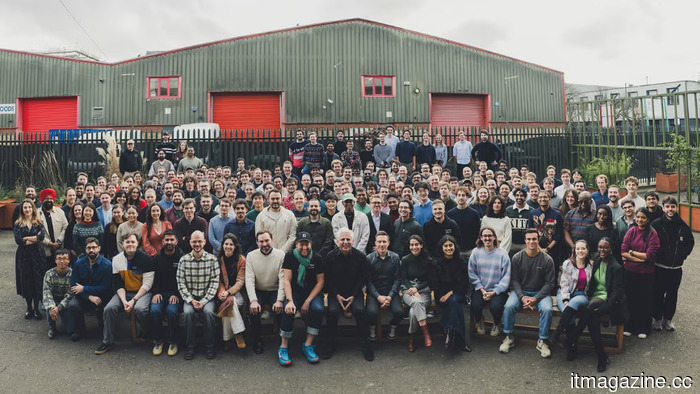 PhysicsX secures $300 million at a valuation of $2.4 billion for its AI-driven physics simulation.
London's PhysicsX secured $300 million from Temasek, achieving a valuation of $2.4 billion, which is double its value from last year. The startup, founded by F1, reduces engineering simulation time from days to seconds.
PhysicsX secures $300 million at a valuation of $2.4 billion for its AI-driven physics simulation.
London's PhysicsX secured $300 million from Temasek, achieving a valuation of $2.4 billion, which is double its value from last year. The startup, founded by F1, reduces engineering simulation time from days to seconds.
AI determines which online stores you will see, often overlooking the majority of them.
A study involving 9,720 ecommerce stores revealed that Google Gemini made no recommendations for 60% of them. The successful stores were not necessarily the largest brands, but rather those whose product data could be effectively interpreted by AI.