

Cosine assembles UK leaders to develop a sovereign AI model.
UK banks, telecoms, and defense manufacturers now share a common concern regarding the AI systems they rely on, which are predominantly developed and controlled in the United States. A startup, only three years old, is wagering that these industries will invest in a solution.
Cosine, a cutting-edge AI lab in the UK, has formed a coalition with prominent British institutions to co-create Lumen Sovereign, claimed to be the nation's first sovereign frontier AI model.
The signatories represent a significant portion of the national economy, including BT, HSBC, Lloyds, NatWest, BAE Systems, Babcock, LSEG, PwC, Thales UK, Leonardo UK, and Telefónica Tech, all signing a memorandum of understanding to contribute to defining the model’s use cases, security standards, and governance.
The announcement coincided with the start of London Tech Week, during which Prime Minister Keir Starmer outlined a more proactive AI policy and revealed around £400 million in new funding for specialized AI chips to boost the country’s computing capabilities. He expressed that Britain's future AI leaders should "start here, scale here and stay here."
The core advantage is control. Lumen Sovereign will be trained entirely on Isambard-AI, a Bristol supercomputer powered by Nvidia and among Europe’s most formidable, utilizing computing resources allocated through the government’s £500 million Sovereign AI initiative, which recognized Cosine in its initial cohort this past April.
Cosine asserts that the model will have no reliance on foreign infrastructure at any point and can be implemented within a client’s own systems, even in isolated environments with no internet connection.
This is essential to their proposal. For many businesses, selecting an AI model is a straightforward procurement choice; however, for a defense contractor, a bank conducting anti-money laundering checks, or a manager of critical infrastructure, it’s primarily a legal and security issue. Transmitting classified data, AML alerts, or clinical information to a server located in a US data center is frequently prohibited.
“Businesses are increasingly realizing the risks associated with total reliance on foreign suppliers,” said Cosine co-founder and CEO Alistair Pullen, who noted that being locked into a vendor creates “security risks, dependency risks, and potential cost increases.”
Cosine is a distinctive yet credible candidate for this undertaking. Founded in 2022 by Pullen, Yang Li, and Sam Stenner, the Y Combinator-backed lab has raised only $8 million from investors like Lakestar, yet its coding models have consistently outperformed those of OpenAI, Anthropic, Mistral, and DeepSeek in independent evaluations for the past two years. It supports over 38 programming languages, including COBOL, Fortran, and Ada, which are still utilized in the UK’s defense systems and financial infrastructure, and that many AI tools struggle to handle.
According to Cosine, Lumen Sovereign will be created from scratch using proprietary datasets that cover more than 30 regulated workflows, rather than by merely fine-tuning an open-source model, with plans for deployment by the end of 2026.
Coalition partners are clear about their motivation. "Cosine has provided us with a pathway to a completely UK-native and highly customizable AI stack," stated Peter Passaro, director of AI and data at Babcock, highlighting the “very complex defense environments in which we operate.”
Priority applications include cybersecurity, KYC and AML investigations, legal document analysis, and healthcare management—sectors where UK AI adoption has been hindered by ongoing security concerns.
Cosine's initiative represents a critical aspect of a broader British effort for AI autonomy, which often encounters a challenging reality. The government has invested heavily in domestic computing and chip supply, forming sovereign-infrastructure agreements with Nscale and Nvidia; however, significant US projects like OpenAI's Stargate UK have faced setbacks.
Despite these efforts, "sovereign" AI in Britain still largely depends on American chips, particularly Isambard-AI. Currently, the agreements are memoranda rather than binding contracts, and Lumen Sovereign has yet to be developed. Training a frontier model from the ground up to meet the strict standards required by defense and finance, especially by the end of the year, is a daunting endeavor, and Britain has previously declared sovereign-AI ambitions.
What sets this attempt apart is the coalition: a group of institutions treating sovereign AI not as a mere slogan but as a necessary procurement criterion.
Other articles
 Oriole launches its first entirely photonic AI network, asserting an 81% reduction.
UK-based startup Oriole Networks is implementing the initial large-scale pure photonic AI network in collaboration with AMD, asserting an 81% reduction in power usage and less than 1% idle time for GPUs in the ARIA lab in the UK.
Oriole launches its first entirely photonic AI network, asserting an 81% reduction.
UK-based startup Oriole Networks is implementing the initial large-scale pure photonic AI network in collaboration with AMD, asserting an 81% reduction in power usage and less than 1% idle time for GPUs in the ARIA lab in the UK.
 Artificial intelligence is determining which online stores you encounter, while disregarding the majority of them.
Research involving 9,720 ecommerce stores revealed that Google Gemini made no recommendations for 60% of them. The successful stores were not necessarily the largest brands, but rather those whose product data could be effectively interpreted by AI.
Artificial intelligence is determining which online stores you encounter, while disregarding the majority of them.
Research involving 9,720 ecommerce stores revealed that Google Gemini made no recommendations for 60% of them. The successful stores were not necessarily the largest brands, but rather those whose product data could be effectively interpreted by AI.
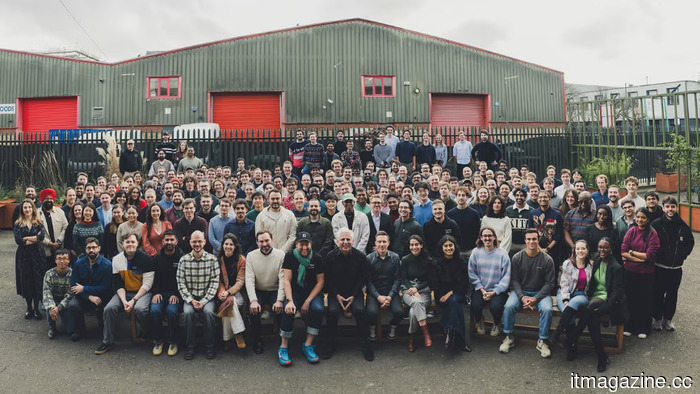 PhysicsX secures $300 million at a valuation of $2.4 billion for its AI-driven physics simulation.
London's PhysicsX secured $300 million from Temasek, achieving a valuation of $2.4 billion, which is double its value from last year. The startup, founded by F1, reduces engineering simulation time from days to seconds.
PhysicsX secures $300 million at a valuation of $2.4 billion for its AI-driven physics simulation.
London's PhysicsX secured $300 million from Temasek, achieving a valuation of $2.4 billion, which is double its value from last year. The startup, founded by F1, reduces engineering simulation time from days to seconds.
 The US is encouraging NATO allies to allocate defense funds for replacing Huawei.
A US official advised allies to allocate NATO defense budgets to remove Huawei equipment from their networks, but the proposal did not gain traction as Europe remains divided on the issue of a ban.
The US is encouraging NATO allies to allocate defense funds for replacing Huawei.
A US official advised allies to allocate NATO defense budgets to remove Huawei equipment from their networks, but the proposal did not gain traction as Europe remains divided on the issue of a ban.
 Bending Spoons submits an application for a US IPO on Nasdaq.
Bending Spoons, the Milan-based company responsible for Evernote, WeTransfer, and Vimeo, has submitted a request for a U.S. IPO on Nasdaq, aiming for a revenue of $1.31 billion in 2025 and a target valuation of $20 billion.
Bending Spoons submits an application for a US IPO on Nasdaq.
Bending Spoons, the Milan-based company responsible for Evernote, WeTransfer, and Vimeo, has submitted a request for a U.S. IPO on Nasdaq, aiming for a revenue of $1.31 billion in 2025 and a target valuation of $20 billion.
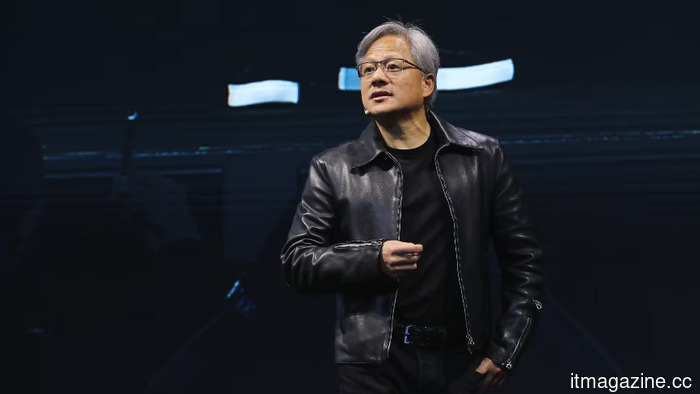 Nvidia and Hyundai intensify their efforts in robotics with a focus on Atlas.
Following discussions in Seoul, Nvidia and Hyundai are strengthening their physical-AI partnership, focusing on Boston Dynamics' Atlas humanoid and a $5.9 billion Korean "AI Valley" initiative.
Nvidia and Hyundai intensify their efforts in robotics with a focus on Atlas.
Following discussions in Seoul, Nvidia and Hyundai are strengthening their physical-AI partnership, focusing on Boston Dynamics' Atlas humanoid and a $5.9 billion Korean "AI Valley" initiative.
Cosine assembles UK leaders to develop a sovereign AI model.
During London Tech Week, Britain's Cosine secured partnerships with BT, HSBC, BAE, and other organizations to develop Lumen Sovereign, a UK frontier AI model that will be trained on the Isambard-AI supercomputer.