
China gives the green light to its first commercial brain implant, surpassing Neuralink.
Summary: China has approved the world’s first commercial brain implant, surpassing Neuralink in the race for brain-computer interfaces (BCIs). This development reflects a geopolitical competition, with China’s rapid advancements driven by state support contrasting with the more cautious, slower FDA approval process in the US.
The concept of controlling machines through thought has transitioned from science fiction to a regulated medical product, at least in China. Earlier this year, China’s National Medical Products Administration gave commercial approval to NEO, a brain-computer interface created by researchers from NeuraMatrix and Tsinghua University. This is the first time any country has approved an invasive BCI device for commercial use.
Mechanism of NEO
During a 90-minute procedure, NEO’s eight sensors are positioned on the dura mater, the brain's protective membrane. Unlike Neuralink, which embeds electrode threads into brain tissue, NEO rests on the membrane's surface. The system interprets brain signals in real time, allowing patients to control a pneumatic glove with their thoughts, enabling movements like grasping objects or drinking water for individuals who previously lost hand function.
China’s Strategic Approach
This approval aligns with China’s state-driven strategy that has led the electric vehicle sector to global prominence. The Chinese government has identified BCI as one of six future strategic industries, aiming for leadership in brain technology by 2030 and eliminating regulatory obstacles to expedite clinical trials. The outcome is a surge of state-funded Chinese BCI startups that are quickly navigated through a regulatory system that would typically take years elsewhere, focusing on speed and scalability over the cautious approval processes endorsed by the US Food and Drug Administration (FDA).
Status of US Competitors
Neuralink has implanted its N1 device in at least 21 patients under research parameters. Its first patient, Noland Arbaugh, showcased the ability to play chess, browse the internet, and control a cursor through thought alone. However, Neuralink has not yet achieved commercial approval. The company aims for high-volume production and nearly automated surgeries by 2026, but FDA clearance for commercial sale is likely years away.
Synchron has received the first FDA investigational device exemption for a permanently implanted BCI using its Stentrode device, which is inserted via the jugular vein, bypassing open brain surgery. They plan to use a $200 million Series D funding to conduct a pivotal trial this year. Precision Neuroscience has opted for a different strategy, clearing the 510(k) route in April 2025 and collaborating with Medtronic to integrate its technology into existing neurosurgery infrastructures. Currently, no BCI is available for commercial sale in the US, with all implants taking place under research protocols or expanded access programs.
Current Capabilities of BCI
The technology has advanced beyond theoretical demonstrations. Patients with implanted BCIs have successfully browsed the internet, maneuvered robotic arms, and converted thoughts into text. Such progress is attributed to two converging trends: improved hardware capable of reading more brain signals with reduced surgical risks, and AI models that can decode these signals more rapidly and accurately. As these elements enhance, the variety of actions a BCI can interpret continues to grow.
Ethical Considerations
At its finest, BCI technology restores independence to millions who have lost it due to paralysis, blindness, hearing loss, and other conditions, making a strong medical case for its introduction. However, more challenging ethical questions arise when the technology extends beyond restoration. Some researchers suggest BCIs could pave the way for new AI forms by simulating brain information processing. Others foresee possibilities for enhancing human capabilities, such as improved memory, faster learning, or direct brain-to-brain communication.
These prospects prompt questions that current regulators are not prepared to address: Who owns the data collected by a brain implant? Can a government enforce access to neural signals? What occurs when the distinction between treating disabilities and enhancing typical brain functions shifts from medical to commercial contexts?
China’s approval of NEO signifies a pivotal moment for patients requiring this technology now and marks the beginning of a global race where the regulations are yet to be established.
Other articles
 Xteink X4 review: I was skeptical about this small e-reader, but it helped improve my bad screen habits.
The Xteink X4 is simple to recommend, even simpler to incorporate into your daily carry, and a delightfully appealing gadget that could capture the heart of the book lover in you without breaking the bank.
Xteink X4 review: I was skeptical about this small e-reader, but it helped improve my bad screen habits.
The Xteink X4 is simple to recommend, even simpler to incorporate into your daily carry, and a delightfully appealing gadget that could capture the heart of the book lover in you without breaking the bank.
 SpaceX's IPO has seen a significant oversubscription as order books finalize before the pricing scheduled for Wednesday.
SpaceX's $75 billion IPO is significantly oversubscribed at a share price of $135. The order books will close on Monday, with pricing anticipated on Wednesday, and trading set to commence Thursday on Nasdaq.
SpaceX's IPO has seen a significant oversubscription as order books finalize before the pricing scheduled for Wednesday.
SpaceX's $75 billion IPO is significantly oversubscribed at a share price of $135. The order books will close on Monday, with pricing anticipated on Wednesday, and trading set to commence Thursday on Nasdaq.
 The comeback of Xbox exclusives begins with Gears of War and Clockwork Revolution.
Microsoft has announced that Gears of War: E-Day and Clockwork Revolution will be exclusive to Xbox consoles, with both titles also available on PC and through Game Pass.
The comeback of Xbox exclusives begins with Gears of War and Clockwork Revolution.
Microsoft has announced that Gears of War: E-Day and Clockwork Revolution will be exclusive to Xbox consoles, with both titles also available on PC and through Game Pass.
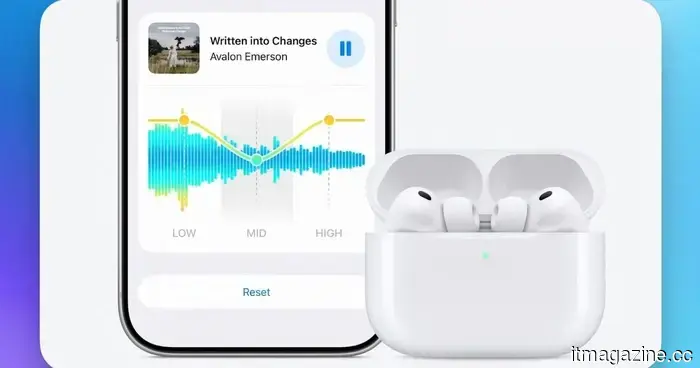 AirPods are finally receiving a personalized EQ to adjust the listening experience.
Apple is now allowing you to customize your AirPods according to your preferences. A new custom EQ setting will be introduced with iOS 27, enabling you to modify the bass, mids, and highs to suit your liking.
AirPods are finally receiving a personalized EQ to adjust the listening experience.
Apple is now allowing you to customize your AirPods according to your preferences. A new custom EQ setting will be introduced with iOS 27, enabling you to modify the bass, mids, and highs to suit your liking.
 Reconsidering growth frameworks: Rush Digital Marketing’s strategy regarding ownership and independence.
Amanda Rush, Nexus Install, LinkedIn lead generation, B2B outreach, acquiring clients, coaching enterprises, consulting expansion, marketing automation, online marketing, outreach strategies, lead generation management.
Reconsidering growth frameworks: Rush Digital Marketing’s strategy regarding ownership and independence.
Amanda Rush, Nexus Install, LinkedIn lead generation, B2B outreach, acquiring clients, coaching enterprises, consulting expansion, marketing automation, online marketing, outreach strategies, lead generation management.
 FCC grants Amazon Leo an extension for satellite deployment but removes its spectrum priority.
The FCC granted Amazon an exemption from the July 30 deadline to launch 1,616 satellites but removed its spectrum priority until March 2028. SpaceX objected to the extension.
FCC grants Amazon Leo an extension for satellite deployment but removes its spectrum priority.
The FCC granted Amazon an exemption from the July 30 deadline to launch 1,616 satellites but removed its spectrum priority until March 2028. SpaceX objected to the extension.
China gives the green light to its first commercial brain implant, surpassing Neuralink.
China has granted approval for the world’s first commercial brain-computer interface, surpassing Neuralink in the race to market. This technology enables movement restoration for paralyzed individuals, but it raises significant ethical questions.