

FCC grants Amazon Leo an extension for satellite deployment but removes its spectrum priority.
The FCC has granted Amazon a waiver on the July 30 deadline for launching the first 1,616 satellites in its Amazon Leo broadband constellation, but has taken away its spectrum priority until March 2028. The ultimate deadline for having all 3,232 planned Gen 1 satellites in orbit by July 2029 remains unchanged.
This waiver includes a penalty: any Amazon Leo satellites launched after July 30 will temporarily lose their priority status in the Ka and Ku spectrum bands. Consequently, Amazon will be responsible for ensuring these satellites do not interfere with competing constellations, such as SpaceX’s Starlink. The FCC stated in a Friday order that this measure is meant to ensure Americans benefit quickly from multiple satellite service providers.
Amazon can regain its priority status in March 2028, or earlier if it achieves a 50% deployment milestone beforehand. Additionally, priority can potentially be restored as soon as October 2027 if Amazon demonstrates that it has manufactured all necessary hardware and secure launch manifests to meet this goal.
SpaceX opposed any leniency for Amazon, asserting that the FCC should require Amazon to wait for a future licensing round before launching more satellites. The FCC disagreed, arguing for competition in satellite broadband as beneficial to the public interest, even if one competitor is lagging.
Amazon requested the extension in January, citing limited availability of commercial launch opportunities. At that point, it had only 210 to 241 satellites in orbit, far short of the required 1,616. The company has signed launch contracts with United Launch Alliance’s Atlas V and Vulcan, Arianespace’s Ariane 6, SpaceX’s Falcon 9, and Blue Origin’s New Glenn.
The New Glenn launch vehicle presents the most uncertainty, as a rocket from this line recently exploded during a static fire test at Cape Canaveral, damaging the vehicle, erector-gantry, and a lightning tower. This explosion was linked to the NG-4 mission, which was intended to carry 48 Amazon Leo satellites. Blue Origin has not issued a timeline for repairs or returning to flight.
While the FCC’s decision provides Amazon with some regulatory flexibility, it does not address the underlying hardware issues. The company still needs to launch over 3,000 satellites in roughly three years using a launch fleet that has recently lost a crucial vehicle. In contrast, Starlink operates more than 7,600 satellites and serves over 10 million subscribers, and any delays on Amazon’s part will exacerbate that gap.
Other articles
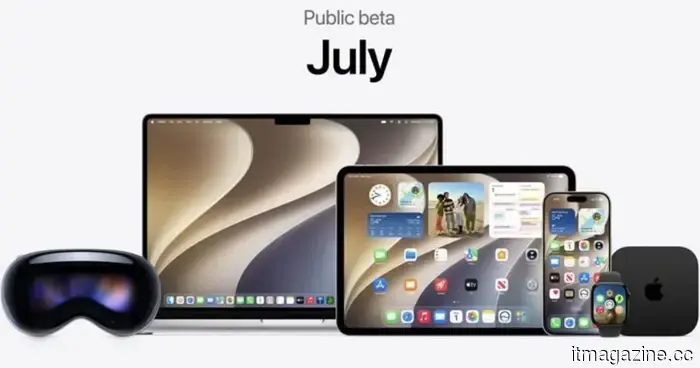 Apple unveils iOS 27, featuring quick app launches, enhanced Siri AI, and improvements in Liquid Glass for your iPhone.
iOS 27 has been officially released, and if your iPhone seemed to be slower following the iOS 26 update, Apple claims this new update addresses that issue.
Apple unveils iOS 27, featuring quick app launches, enhanced Siri AI, and improvements in Liquid Glass for your iPhone.
iOS 27 has been officially released, and if your iPhone seemed to be slower following the iOS 26 update, Apple claims this new update addresses that issue.
 Resident Evil Veronica brings Code Veronica back to life for a fresh nightmare in 2027.
Capcom has officially revealed Resident Evil Veronica, a contemporary remake of Code: Veronica, reviving Claire Redfield’s harrowing experience on Rockfort Island in 2027.
Resident Evil Veronica brings Code Veronica back to life for a fresh nightmare in 2027.
Capcom has officially revealed Resident Evil Veronica, a contemporary remake of Code: Veronica, reviving Claire Redfield’s harrowing experience on Rockfort Island in 2027.
 The SANDISK Extreme Portable SSD is transforming your perspective on storage upgrades.
Seeking a more intelligent solution for increasing storage without replacing your laptop? The SANDISK Extreme Portable SSD provides fast performance, versatile capacities of up to 4TB, and easy plug-and-play functionality.
The SANDISK Extreme Portable SSD is transforming your perspective on storage upgrades.
Seeking a more intelligent solution for increasing storage without replacing your laptop? The SANDISK Extreme Portable SSD provides fast performance, versatile capacities of up to 4TB, and easy plug-and-play functionality.
 Xteink X4 review: I was skeptical about this small e-reader, but it helped improve my bad screen habits.
The Xteink X4 is simple to recommend, even simpler to incorporate into your daily carry, and a delightfully appealing gadget that could capture the heart of the book lover in you without breaking the bank.
Xteink X4 review: I was skeptical about this small e-reader, but it helped improve my bad screen habits.
The Xteink X4 is simple to recommend, even simpler to incorporate into your daily carry, and a delightfully appealing gadget that could capture the heart of the book lover in you without breaking the bank.
 Reevaluating growth frameworks: Rush Digital Marketing’s strategy regarding ownership and independence.
Amanda Rush, Nexus Install, LinkedIn lead generation, B2B engagement, client onboarding, coaching enterprise, consulting development, marketing automation, online marketing, outreach frameworks, lead-generation management.
Reevaluating growth frameworks: Rush Digital Marketing’s strategy regarding ownership and independence.
Amanda Rush, Nexus Install, LinkedIn lead generation, B2B engagement, client onboarding, coaching enterprise, consulting development, marketing automation, online marketing, outreach frameworks, lead-generation management.
 Apple has officially released its revamped AI: Siri AI, now available as a standalone application, along with a three-tier privacy framework.
At WWDC 2026, Apple introduced Siri AI, redesigned using a custom Gemini model, featuring a standalone application, personal context capabilities, and a three-tier privacy framework.
Apple has officially released its revamped AI: Siri AI, now available as a standalone application, along with a three-tier privacy framework.
At WWDC 2026, Apple introduced Siri AI, redesigned using a custom Gemini model, featuring a standalone application, personal context capabilities, and a three-tier privacy framework.
FCC grants Amazon Leo an extension for satellite deployment but removes its spectrum priority.
The FCC granted Amazon an exemption from the July 30 deadline to launch 1,616 satellites but removed its spectrum priority until March 2028. SpaceX objected to the extension.