
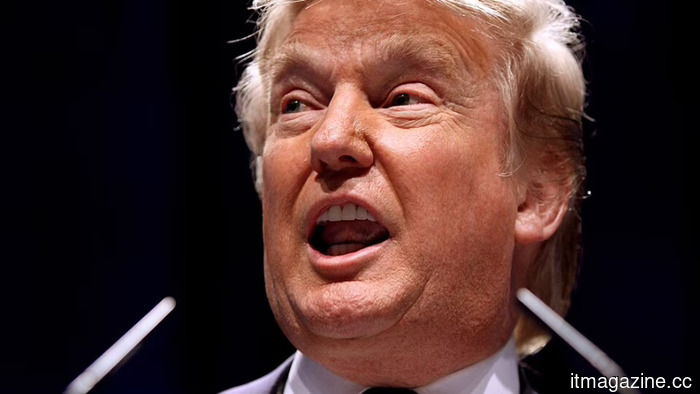
Trump signs revised AI order featuring a voluntary 30-day model evaluation.
On Tuesday, President Trump signed an executive order that sets up a voluntary framework for the government's review of frontier AI models prior to their public release, concluding weeks of internal disagreements within the White House regarding the extent of regulation for the technology. The order, named “Promoting Advanced Artificial Intelligence Innovation and Security,” was signed in private without the typical livestream or public ceremony, marking a departure from the usual fanfare that accompanies presidential announcements related to AI.
The final executive order is significantly narrower than the initial draft that Trump rejected on May 21, when he canceled a planned signing ceremony out of concern that it might “dull America’s edge on AI technology.” The original draft included a mandatory 90-day pre-release review period and proposed giving the government formal authority to evaluate frontier models. In contrast, the signed version invites companies to voluntarily submit their models 30 days before release and engage in a collaborative framework instead of undergoing mandatory testing.
Key components of the order include three main mechanisms. First, it introduces a voluntary pre-release review framework where AI developers can consult with the government to determine if their models qualify as “covered frontier models,” grant access for up to 30 days prior to planned release, and work together in selecting “trusted partners” for early access. Participation in this framework is explicitly voluntary, allowing companies to opt out without penalties.
Secondly, the order establishes an AI cybersecurity clearinghouse within 30 days, overseen by the Treasury Secretary, the National Cyber Director, the NSA, and CISA. This clearinghouse will identify software vulnerabilities, validate findings, and coordinate the distribution of remediation and patches, directly addressing the Mythos crisis that highlighted how AI-discovered vulnerabilities can surpass existing disclosure and patching processes.
Thirdly, federal agencies are instructed to create benchmarks for evaluating the cybersecurity capabilities of AI models and to enhance the government’s security defenses against AI-enabled threats. While the order also covers AI safety research, its specific provisions are less prescriptive than those in the original draft.
The changes made between the original draft and the signed order reflect the success of the pro-industry faction within the White House. The mandatory 90-day review was shortened to a 30-day voluntary period, and the formal evaluation authority was replaced with a collaborative approach. Reporting requirements for companies working on powerful models were eased to avoid what industry advocates considered regulatory overreach.
Silicon Valley's objections to the initial draft played a crucial role. AI companies argued that compulsory pre-release testing would hinder American innovation, place them at a competitive disadvantage compared to Chinese firms that do not face similar requirements, and set a precedent for government control over technology deployment. The signed order addresses these issues by ensuring participation is voluntary and framing the government's role as collaborative rather than regulatory.
However, the voluntary nature of the framework means that its effectiveness hinges entirely on whether AI companies decide to engage. Companies already participating in pre-release testing with CAISI, like Google, Microsoft, and xAI, may continue or expand their collaboration, while those that perceive government review as a business hindrance or who are eager to launch products can easily opt out.
In stark contrast, the EU's AI Act, which will be fully enforced starting in August, imposes mandatory requirements, statutory authority, and penalties for non-compliance. The Trump order aims to establish norms and create institutional structures (such as the cybersecurity clearinghouse and benchmark development process) but depends on voluntary compliance rather than enforceable obligations.
For the White House, the understated signing could have been intentional. The order provides the administration with a policy framework it can refer to when discussing AI oversight, establishes structures that might be strengthened later, and avoids a public clash with an AI industry whose leaders are some of the administration’s most visible supporters. The question of whether a voluntary framework is sufficient for a technology capable of discovering 10,000 zero-day vulnerabilities in a month remains unanswered by the order.
Other articles
 Focused Energy secures $240 million to commercialize NIF laser fusion technology.
German fusion startup Focused Energy has secured $240 million in Series A funding, led by utility company RWE, to develop a laser-powered reactor inspired by the net energy gain breakthrough achieved by the NIF.
Focused Energy secures $240 million to commercialize NIF laser fusion technology.
German fusion startup Focused Energy has secured $240 million in Series A funding, led by utility company RWE, to develop a laser-powered reactor inspired by the net energy gain breakthrough achieved by the NIF.
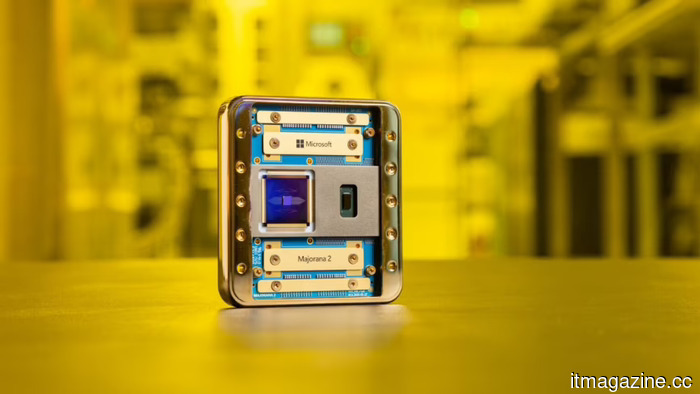 Microsoft's Majorana 2 quantum chip boasts a reliability improvement of 1,000 times and aims for a 2029 launch.
Microsoft's Majorana 2 qubits have a duration of 20 seconds, compared to microseconds for competitors, and are developed using agentic AI. The company aims to achieve a scalable quantum computer by 2029.
Microsoft's Majorana 2 quantum chip boasts a reliability improvement of 1,000 times and aims for a 2029 launch.
Microsoft's Majorana 2 qubits have a duration of 20 seconds, compared to microseconds for competitors, and are developed using agentic AI. The company aims to achieve a scalable quantum computer by 2029.
 Hackers forcefully bypassed Dashlane's two-factor authentication and accessed encrypted vaults.
Attackers managed to circumvent Dashlane's two-factor authentication on fewer than 20 accounts by brute-forcing numeric codes and downloading encrypted password vaults. Data is safeguarded by zero-knowledge encryption, provided that the master passwords are robust.
Hackers forcefully bypassed Dashlane's two-factor authentication and accessed encrypted vaults.
Attackers managed to circumvent Dashlane's two-factor authentication on fewer than 20 accounts by brute-forcing numeric codes and downloading encrypted password vaults. Data is safeguarded by zero-knowledge encryption, provided that the master passwords are robust.
 Globally, electric cars are becoming more affordable, with the exception of buyers in the US.
In other parts of the world, electric vehicles became more affordable, but in the US, tax credits were eliminated, resulting in a 45% decline in EV sales in Q4 compared to the previous year.
Globally, electric cars are becoming more affordable, with the exception of buyers in the US.
In other parts of the world, electric vehicles became more affordable, but in the US, tax credits were eliminated, resulting in a 45% decline in EV sales in Q4 compared to the previous year.
 RogueDB presents an easy-to-use database platform aimed at minimizing infrastructure tasks for startups and IT teams.
RogueDB provides a completely managed, API-based database that eliminates the need for configuration and tuning, allowing startup engineering teams to focus more on product development rather than infrastructure maintenance.
RogueDB presents an easy-to-use database platform aimed at minimizing infrastructure tasks for startups and IT teams.
RogueDB provides a completely managed, API-based database that eliminates the need for configuration and tuning, allowing startup engineering teams to focus more on product development rather than infrastructure maintenance.
 Microsoft announces Project Solara: an operating system designed for agent-first devices.
Microsoft's Project Solara is an innovative platform designed for devices that utilize AI agents rather than traditional apps. Currently, two concept designs—a badge and a desk device—are being tested in partnership with Best Buy, CVS, Levi's, and Target.
Microsoft announces Project Solara: an operating system designed for agent-first devices.
Microsoft's Project Solara is an innovative platform designed for devices that utilize AI agents rather than traditional apps. Currently, two concept designs—a badge and a desk device—are being tested in partnership with Best Buy, CVS, Levi's, and Target.
Trump signs revised AI order featuring a voluntary 30-day model evaluation.
Trump signed a scaled-back AI executive order featuring a voluntary 30-day pre-release model review and a cybersecurity clearinghouse, a reduction from the previously mandatory 90-day draft that was eliminated in May.