

The EU's plan for an AI gigafactory faces setbacks as delays cause partners to feel disconnected.
**TL;DR** The EU's initiative to establish five AI gigafactory data centres is facing challenges due to delays and funding issues, with the bidding now delayed to July and only two out of five centres potentially funded before 2028. Interest has dropped from 70 companies to around 10, with SoftBank's investment in France significantly overshadowing the entire initiative.
The European Union's objective of creating five large-scale AI data centres, each with a gigawatt capacity and around 100,000 advanced chips, is encountering obstacles before it truly begins. The bidding schedule, originally set for May, has now been postponed to July. Uncertainty regarding funding means only two of the five proposed centres may secure financing before the EU's next budget cycle starts in 2028. At least two consortia are reevaluating their bidding intent if the project's scale is significantly reduced, as indicated by insiders.
This initiative, introduced last year to foster investment in European AI infrastructure, initially attracted interest from roughly 70 companies across the region. Now, approximately 10 groups are anticipated to submit bids, with a maximum of one bid allowed per country. The European Commission has postponed the release of its criteria for the data centres several times. Maria Nowicka, a policy researcher at the Brussels think tank Interface, noted, “I think I’ve lost count” of the number of delays.
**The funding gap**
The plan, estimated at €20 billion ($23.3 billion), expects less than half of the funds to come from governments. The EU intends to offer €4.1 billion in subsidies, matched by contributions from member states hosting the centres, with private investors expected to cover the remaining costs. However, the phased funding approach, allocating money in 2028 and 2030, means subsidies will arrive years after the necessary infrastructure is required. By 2030, US utilities alone plan to invest $1.4 trillion in AI-related grid infrastructure, with American hyperscalers spending hundreds of billions annually on data centres, including in Europe.
The disparity in scale is notable. SoftBank recently declared plans to invest up to €75 billion in data centres in France, surpassing the total EU programme by over three times. Meta is securing $13 billion for a single data centre in Texas. Compared to what companies are investing per facility, the EU’s €4.1 billion in direct subsidies across five countries appears modest.
**The consortium problem**
Initial proposals were designed as national consortia that pooled resources from several companies. In Germany, the Schwarz Group (owner of Lidl) and Deutsche Telekom both showed interest in leading bids. In Spain, Telefónica heads a consortium, while in France, Mistral AI is negotiating to join a €10 billion project.
However, shifting requirements are reducing enthusiasm. Interest from the Schwarz Group has waned due to the lengthy and complicated tender process, according to an insider. The company is constructing its own data centre south of Berlin without awaiting EU subsidies. Deutsche Telekom's CEO Tim Hoettges stated the company will only engage if there is a guaranteed demand from industry and government customers. Telefónica's COO mentioned that the company is considering holding only 10% to 15% of a joint venture bid.
Mistral AI's CEO, Arthur Mensch, criticized the program’s focus on national frameworks, stating, “One of the problems is that it’s kind of thought at a national level, which is completely stupid. Any successful endeavor in that domain needs to be European-wide and much larger than what is actually framed in the program.”
**Another EU tech policy stumble**
The delays surrounding the gigafactory initiative reflect the EU’s struggles with its 2022 Chips Act, which failed to increase the bloc’s share of global semiconductor production, despite aspirations to double it by 2030. French companies submitted a €10 billion bid for one of the five designated gigafactory sites, showcasing a private sector readiness that the EU’s bureaucratic process has failed to fully leverage.
The urgency for a strategic motivation remains. Amid strained transatlantic relations under the current Trump administration, the EU is advocating for tech sovereignty as crucial for security, privacy, and competitiveness. While Europe has taken the lead in AI regulation through the AI Act, implementing regulations without adequate infrastructure results in establishing rules for a game conducted on external hardware.
Polish digital minister Dariusz Standerski, who is involved in EU discussions, confirmed the July bidding timeline and the two-phase funding structure. A Commission spokesperson indicated that a call for proposals should be approved "shortly after thorough preparations." For the companies that have already decided to build their own facilities, without waiting for potentially delayed subsidies, the EU’s reassurances may arrive too late to be of any significance.
Other articles
 The upcoming Apple Watch may feature an enhanced OLED display along with improved battery life.
Apple is said to be assessing a new OLED display technology named HMO, which offers improved battery performance and reduced production expenses.
The upcoming Apple Watch may feature an enhanced OLED display along with improved battery life.
Apple is said to be assessing a new OLED display technology named HMO, which offers improved battery performance and reduced production expenses.
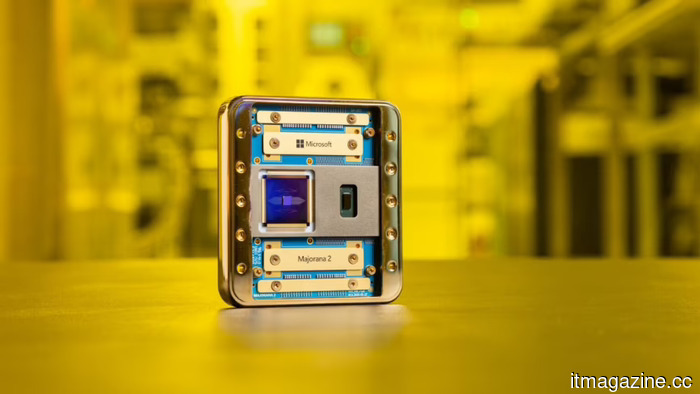 Microsoft's Majorana 2 quantum chip boasts a reliability improvement of 1,000 times and aims for a 2029 launch.
Microsoft's Majorana 2 qubits have a duration of 20 seconds, compared to microseconds for competitors, and are developed using agentic AI. The company aims to achieve a scalable quantum computer by 2029.
Microsoft's Majorana 2 quantum chip boasts a reliability improvement of 1,000 times and aims for a 2029 launch.
Microsoft's Majorana 2 qubits have a duration of 20 seconds, compared to microseconds for competitors, and are developed using agentic AI. The company aims to achieve a scalable quantum computer by 2029.
 5 fantastic sci-fi films on Netflix to enjoy this summer
Take a look at these five sci-fi films available on Netflix that are ideal for viewing this summer, featuring Godzilla Minus One, Atlas, and others.
5 fantastic sci-fi films on Netflix to enjoy this summer
Take a look at these five sci-fi films available on Netflix that are ideal for viewing this summer, featuring Godzilla Minus One, Atlas, and others.
 EXCLUSIVE: Obsession Star Megan Lawless Discusses Sarah’s Unexpected Destiny, Audience Reactions, and Future Plans
In a unique interview, Obsession star Megan Lawless talks about Sarah's unexpected demise, the film's remarkable success, her camaraderie with Inde Navarrette, and her future plans.
EXCLUSIVE: Obsession Star Megan Lawless Discusses Sarah’s Unexpected Destiny, Audience Reactions, and Future Plans
In a unique interview, Obsession star Megan Lawless talks about Sarah's unexpected demise, the film's remarkable success, her camaraderie with Inde Navarrette, and her future plans.
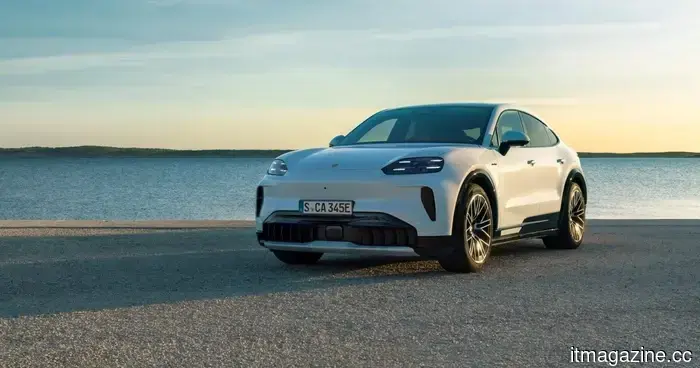 Globally, electric cars are becoming more affordable, with the exception of buyers in the US.
In other parts of the world, electric vehicles became more affordable, but in the US, tax credits were eliminated, resulting in a 45% decline in EV sales in Q4 compared to the previous year.
Globally, electric cars are becoming more affordable, with the exception of buyers in the US.
In other parts of the world, electric vehicles became more affordable, but in the US, tax credits were eliminated, resulting in a 45% decline in EV sales in Q4 compared to the previous year.
 5 excellent sci-fi films on Netflix to enjoy during the summer
Take a look at these five sci-fi films available on Netflix that are ideal for summer viewing, featuring Godzilla Minus One, Atlas, and others.
5 excellent sci-fi films on Netflix to enjoy during the summer
Take a look at these five sci-fi films available on Netflix that are ideal for summer viewing, featuring Godzilla Minus One, Atlas, and others.
The EU's plan for an AI gigafactory faces setbacks as delays cause partners to feel disconnected.
The EU's 20 billion euro initiative for five AI data centers is experiencing delays and funding shortages, resulting in bidding being postponed until July. The number of interested companies has decreased from 70 to 10, and consortia are reevaluating their positions.