
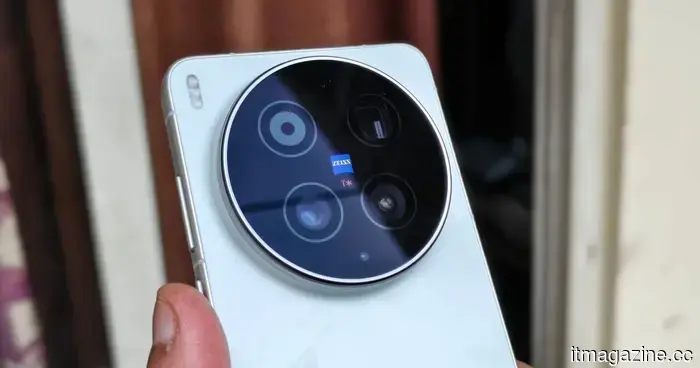
The Vivo X300 Ultra is outshining all other camera phones, and here's the reason.
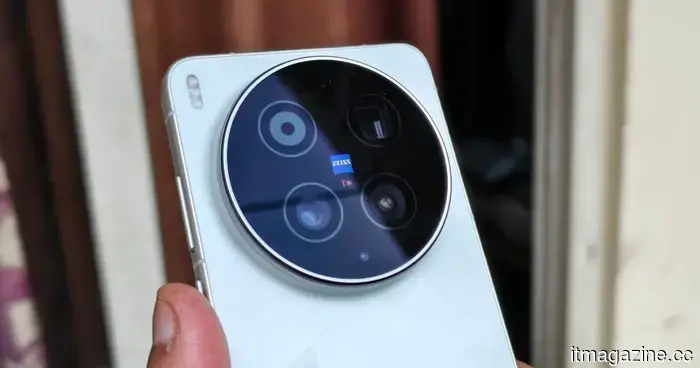
For several years, smartphone manufacturers have claimed to provide “DSLR-like” photography experiences. Many have enhanced image processing, incorporated larger sensors, or added multiple cameras to the rear. However, the Vivo X300 Ultra takes a notably different route—it aims not just to replicate a camera but to function like one.
With options for external telephoto lenses, physical camera controls, filter compatibility, and tripod mounts, Vivo's new Ultra flagship resembles more of a modular photography system than a standard smartphone. The brand is shifting from merely pursuing enhanced smartphone photos to targeting creators who typically carry mirrorless cameras.
Introducing the ultimate advancement in smartphone photography.
A key highlight is Vivo’s upgraded Photography Kit. Rather than relying on multiple telephoto cameras like some competitors, Vivo enhances the existing 85mm telephoto capability of the X300 Ultra by using external teleconverter lenses. This year, users can select between a 200mm lens and a larger 400mm attachment tailored for extreme long-distance photography.
These lenses are teleconverters instead of traditional camera lenses, meaning they amplify the existing telephoto capabilities of the phone rather than featuring their own focusing systems or apertures. This design allows them to be smaller, lighter, and more portable, while still significantly extending zoom capacity.
The Photography Kit also comes with a specialized protective case that features a bayonet-style mounting system around the camera module. This permits users to directly attach filters, telephoto adapters, and other accessories to the phone. Vivo even accommodates ND, UV, and circular polarizer filters, providing greater flexibility for outdoor shooting.
For those using tripods, the telephoto lenses include Arca-Swiss compatible tripod collars, enhancing stability for long-distance photography. The revamped camera grip further enhances this experience with dedicated buttons for video recording, zoom control, shutter operation, a programmable function button, and a scroll wheel.
Camera specifications are impressive, but the quality is even more remarkable.
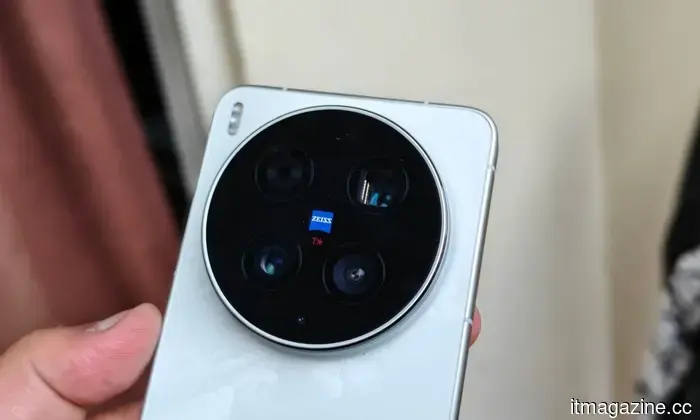
The camera hardware is bold in its ambitions. Vivo maintains a 35mm equivalent focal length for the primary camera, offering a more focused and natural perspective compared to the ultra-wide lenses typically found on flagship smartphones. This year, the phone upgrades to Sony’s 200MP Lytia 901 sensor in a substantial 1/1.12-inch format, replacing the previous 50MP configuration.
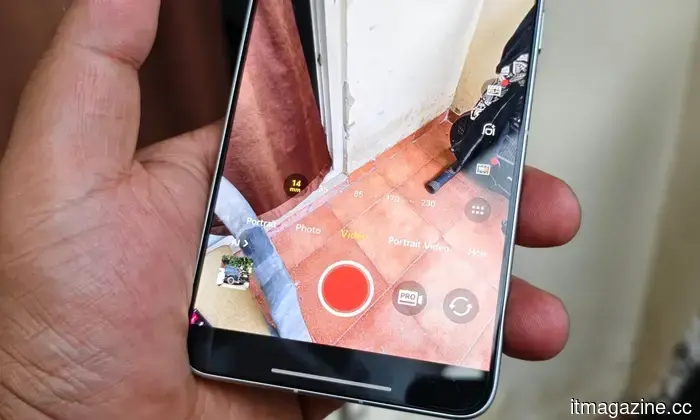
The telephoto system remains one of the device's standout features. Vivo retains a single 85mm equivalent zoom camera with an f/2.7 aperture, powered by a substantial 200MP 1/1.4-inch Samsung HP0 sensor. Meanwhile, the ultra-wide camera continues to utilize a large 1/1.28-inch sensor paired with a 14mm lens, positioning it as one of the most proficient ultra-wide systems available on smartphones.
On the front, the X300 Ultra is equipped with a 50MP selfie camera featuring autofocus support and a 24mm equivalent lens for clearer selfies and video calls.
However, our focus shifts to three primary categories: portrait photography, long-range shots, and video stability. It’s important to note that all testing was conducted at the default 12.5MP camera resolution, with additional images captured at 50MP as well.
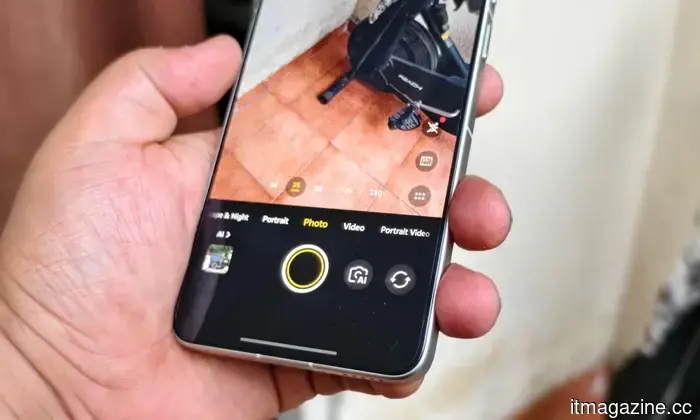
Starting with portrait mode, it performs as advertised, but we reserve our excitement. In our experience, the camera produced better portrait images in Photo mode rather than the dedicated Portrait mode. The latter occasionally resulted in edges appearing unrealistically soft or overly bokeh-ed. Nonetheless, we were able to capture satisfactory portraits using the standard 35mm lens, showcasing rich details and vibrant colors. Vivo has ensured that the display is one of the best for accurately representing colors instead of merely enhancing them with warmer tones.
We discussed resolution options, which typically start at 25MP, then 50MP, and up to 200MP. We took a few photos at 200MP and 50MP, but considering the importance of balancing quality and file size, we recommend sticking to the default setting of 12.5MP. Overall, the dynamic range was excellent, and the white balance was accurate for all photos—regardless of whether they were portrait shots or not—using just the 35mm lens.
Next, at 50mm, the photo quality remains strong and becomes slightly more detailed. The quality of images continues to impress, and while portrait shots appear great, we still noted that edges tended to be more aggressively softened in Portrait mode, appearing more natural in standard Photo mode. A pertinent question indeed.
Have we reached critical zoom levels yet?
Next, the 70mm focal length is only available in Photo mode, while Portrait mode progresses directly to 85mm. For base 12.5MP shots at the default 35mm focal length, 70mm functions as a 2x zoom, yielding excellent quality images. The colors are vibrant, white balance is maintained, and edges remain sharp.
The 85mm photos are sufficiently good, providing tighter framing suitable for













Other articles
 The Vivo X300 Ultra is putting other camera phones to shame, and here's the reason.
The Vivo X300 Ultra integrates external lenses, accessories aimed at creators, and top-tier camera hardware to enhance smartphone photography towards a more professional camera experience.
The Vivo X300 Ultra is putting other camera phones to shame, and here's the reason.
The Vivo X300 Ultra integrates external lenses, accessories aimed at creators, and top-tier camera hardware to enhance smartphone photography towards a more professional camera experience.
 Focused Energy secures $240 million to commercialize NIF laser fusion technology.
German fusion startup Focused Energy has secured $240 million in Series A funding, led by utility company RWE, to develop a laser-powered reactor inspired by the net energy gain breakthrough achieved by the NIF.
Focused Energy secures $240 million to commercialize NIF laser fusion technology.
German fusion startup Focused Energy has secured $240 million in Series A funding, led by utility company RWE, to develop a laser-powered reactor inspired by the net energy gain breakthrough achieved by the NIF.
 Microsoft reveals Project Solara: an operating system designed for agent-first devices.
Microsoft's Project Solara is an innovative platform for devices that operate using AI agents in place of traditional apps. Two concept designs, one resembling a badge and the other a desk device, are currently being tested with Best Buy, CVS, Levi's, and Target.
Microsoft reveals Project Solara: an operating system designed for agent-first devices.
Microsoft's Project Solara is an innovative platform for devices that operate using AI agents in place of traditional apps. Two concept designs, one resembling a badge and the other a desk device, are currently being tested with Best Buy, CVS, Levi's, and Target.
 Poland implements
The Polish Prime Minister, Tusk, has declared a sovereignty assessment for state technology purchases and will issue yearly reports on IT independence, cautioning that reliance on foreign AI poses risks to both security and the economy.
Poland implements
The Polish Prime Minister, Tusk, has declared a sovereignty assessment for state technology purchases and will issue yearly reports on IT independence, cautioning that reliance on foreign AI poses risks to both security and the economy.
 Hackers used brute force to compromise Dashlane's two-factor authentication and downloaded encrypted vaults.
Attackers circumvented Dashlane's 2FA on less than 20 accounts by brute-forcing numeric codes and retrieving encrypted password vaults. Zero-knowledge encryption safeguards data, provided that the master passwords are robust.
Perplexity divides AI processing between personal computers and the cloud to reduce expenses.
Perplexity AI has developed a real-time routing system that divides AI tasks between personal computers and cloud servers, which was unveiled at Computex in collaboration with Intel, as revenue reaches $500 million.
Hackers used brute force to compromise Dashlane's two-factor authentication and downloaded encrypted vaults.
Attackers circumvented Dashlane's 2FA on less than 20 accounts by brute-forcing numeric codes and retrieving encrypted password vaults. Zero-knowledge encryption safeguards data, provided that the master passwords are robust.
Perplexity divides AI processing between personal computers and the cloud to reduce expenses.
Perplexity AI has developed a real-time routing system that divides AI tasks between personal computers and cloud servers, which was unveiled at Computex in collaboration with Intel, as revenue reaches $500 million.
The Vivo X300 Ultra is outshining all other camera phones, and here's the reason.
The Vivo X300 Ultra integrates external lenses, accessories designed for creators, and top-tier camera hardware to bring smartphone photography nearer to the experience of using a professional camera.