
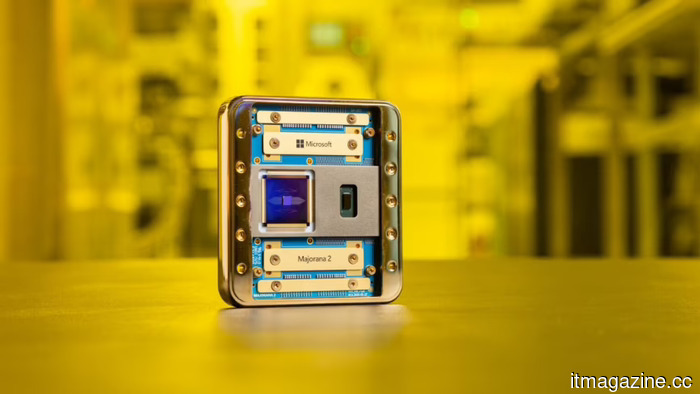
Microsoft's Majorana 2 quantum chip boasts reliability that is 1,000 times greater, with a goal set for 2029.
**TL;DR** Microsoft has introduced Majorana 2, a quantum chip featuring qubits that are 1,000 times more reliable than those in its predecessor, achieving an average lifetime of 20 seconds compared to microseconds for competitors. The development was sped up by agentic AI through Microsoft Discovery, positioning the company to aim for a scalable quantum computer by 2029, significantly reducing its original timeline.
Microsoft has launched Majorana 2, an advanced topological quantum chip with qubits that boast a reliability improvement of 1,000 times compared to the first Majorana chip released last year. This enhancement has led the company to shorten its timeline for achieving a scalable quantum computer from 2033 to 2029, halving its initial target. Microsoft attributes the acceleration to agentic AI utilized through its Microsoft Discovery research platform, which has enhanced materials science, fabrication optimization, and measurement automation.
The statistics are impressive: Majorana 2’s qubits can maintain their quantum state for an average of 20 seconds, with some lasting up to one minute, while most other quantum systems report qubit lifetimes in microseconds. To illustrate, Microsoft compares this to a phone battery that can last three years on a single charge instead of depleting in a day. Coupled with one-microsecond operations and a qubit size of 1/100th of a millimeter, the chip positions Microsoft on a path toward commercially viable quantum computing by the decade's end.
**How agentic AI enhanced chip development**
A significant change in materials was the shift from aluminum to lead for the superconductor. Lead inherently protects qubits from cosmic interferences that lead to instability, although working with it posed challenges that took years to resolve. Various quantum computing startups in Europe and the US are exploring different methods to tackle the qubit stability issue, but Microsoft’s unique topological approach, which creates a novel state of matter, is structurally distinct from the superconducting circuits utilized by IBM, Google, and most others.
Microsoft Discovery’s AI agents were integrated throughout the workflow of the quantum team in numerous ways. They automated the measurement process, drastically reducing the previously manual weeks-long cycle time. The agents analyzed nearly twenty years of experimental data across various formats and silos, uncovering correlations that no single researcher could have identified in such a vast volume. They optimized fabrication processes by simulating the most promising material compositions prior to actual experiments. Additionally, they identified an uncalibrated temperature sensor that was adding noise to the fabrication process, a mistake that had previously gone unnoticed.
“Agentic AI has integrated into nearly every aspect of our work,” stated Chetan Nayak, Microsoft technical fellow. The use of AI in quantum hardware development represents a merger that has the potential to accelerate the entire field: improved AI contributes to building superior quantum computers, which may eventually lead to the advancement of AI itself.
**Microsoft Discovery goes public**
In conjunction with the Majorana 2 announcement, Microsoft made its Discovery platform publicly accessible. This platform enables organizations to deploy autonomous AI agent teams, directed by human expertise, to expedite scientific research and development. It features a Discovery Engine for research and reasoning tasks, enterprise-grade security and governance, and integration with Azure. While Google, Anthropic, and OpenAI are all pursuing AI for scientific purposes, Microsoft is the first to launch a commercially available platform specifically tailored for frontier R&D with integrated agent orchestration.
Microsoft also introduced a free Discovery app in an early preview that individuals can download and operate locally with a GitHub Copilot account. Companies such as chemical firm Syensqo are already using the platform to create next-generation fluids for semiconductor manufacturing.
**The competitive landscape**
The quantum computing sector is witnessing a surge in funding and IPO activity. Quantinuum’s extremely oversubscribed IPO this week valued the Honeywell-backed company at $14.3 billion. In May, the US government allocated $2 billion to quantum firms, with IBM receiving $1 billion for its Anderon quantum chip foundry. Focused Energy raised $240 million for laser fusion initiatives. The market is anticipating that quantum computing will mirror AI's advancement from laboratory novelty to commercial viability within this decade.
Microsoft’s topological method has provoked considerable debate in the field. The company’s 2018 assertion of having observed Majorana zero modes was withdrawn following outside examination. Majorana 1, introduced in 2025, helped restore credibility through peer-reviewed results. Majorana 2’s 1,000-fold improvement and the expedited timeline for 2029 will likely face similar scrutiny, and the accompanying peer-reviewed publication will serve as a critical test of the validity of these claims.
The demands for energy and compute resources in AI render the potential of quantum computing more commercially applicable than ever before. If Microsoft can successfully deliver a scalable topological quantum computer by 2029, the implications for drug discovery, materials science, cryptography, and optimization could
Other articles
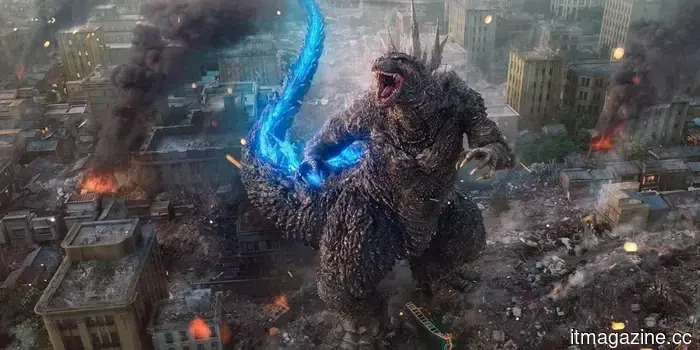 5 excellent sci-fi films on Netflix to enjoy during the summer
Take a look at these five sci-fi films available on Netflix that are ideal for summer viewing, featuring Godzilla Minus One, Atlas, and others.
5 excellent sci-fi films on Netflix to enjoy during the summer
Take a look at these five sci-fi films available on Netflix that are ideal for summer viewing, featuring Godzilla Minus One, Atlas, and others.
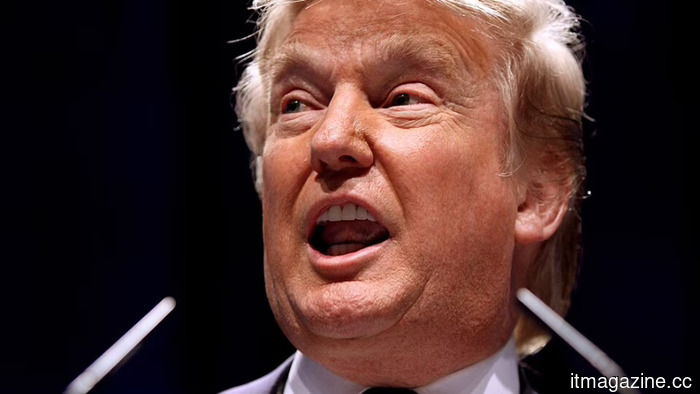 Trump signs revised AI order featuring a voluntary 30-day model evaluation.
Trump signed a scaled-back AI executive order featuring a voluntary 30-day pre-release model review and a cybersecurity clearinghouse, a reduction from the previously mandatory 90-day draft that was eliminated in May.
Trump signs revised AI order featuring a voluntary 30-day model evaluation.
Trump signed a scaled-back AI executive order featuring a voluntary 30-day pre-release model review and a cybersecurity clearinghouse, a reduction from the previously mandatory 90-day draft that was eliminated in May.
 Hackers used brute force to compromise Dashlane's two-factor authentication and downloaded encrypted vaults.
Attackers circumvented Dashlane's 2FA on less than 20 accounts by brute-forcing numeric codes and retrieving encrypted password vaults. Zero-knowledge encryption safeguards data, provided that the master passwords are robust.
Hackers used brute force to compromise Dashlane's two-factor authentication and downloaded encrypted vaults.
Attackers circumvented Dashlane's 2FA on less than 20 accounts by brute-forcing numeric codes and retrieving encrypted password vaults. Zero-knowledge encryption safeguards data, provided that the master passwords are robust.
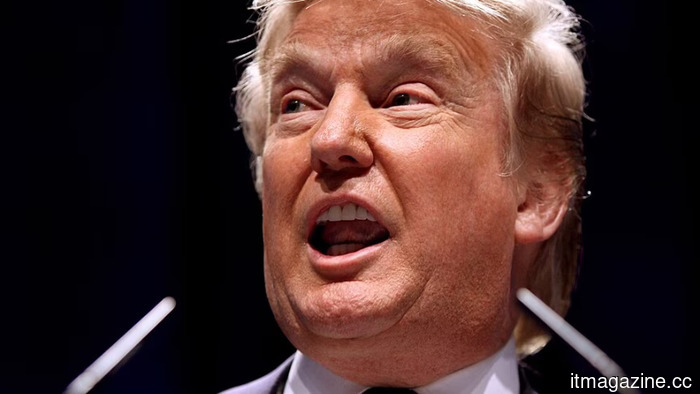 Trump signs a revised AI order featuring a voluntary 30-day review of models.
Trump signed a reduced AI executive order that includes a voluntary 30-day pre-release model review and a cybersecurity clearinghouse, which is shorter than the previously planned 90-day mandatory draft that was abandoned in May.
Trump signs a revised AI order featuring a voluntary 30-day review of models.
Trump signed a reduced AI executive order that includes a voluntary 30-day pre-release model review and a cybersecurity clearinghouse, which is shorter than the previously planned 90-day mandatory draft that was abandoned in May.
 5 fantastic sci-fi films on Netflix to enjoy this summer
Take a look at these five sci-fi films available on Netflix that are ideal for viewing this summer, featuring Godzilla Minus One, Atlas, and others.
5 fantastic sci-fi films on Netflix to enjoy this summer
Take a look at these five sci-fi films available on Netflix that are ideal for viewing this summer, featuring Godzilla Minus One, Atlas, and others.
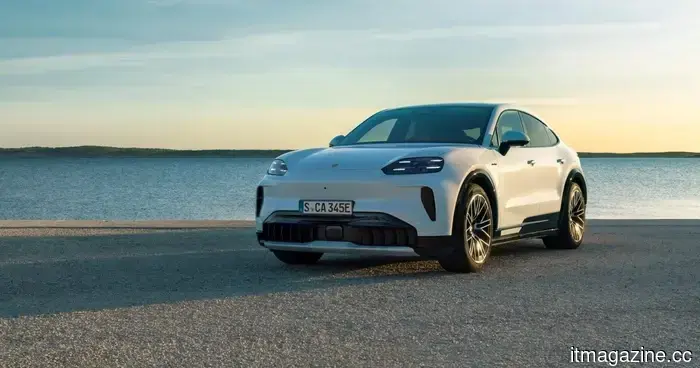 Globally, electric cars are becoming more affordable, with the exception of buyers in the US.
In other parts of the world, electric vehicles became more affordable, but in the US, tax credits were eliminated, resulting in a 45% decline in EV sales in Q4 compared to the previous year.
Globally, electric cars are becoming more affordable, with the exception of buyers in the US.
In other parts of the world, electric vehicles became more affordable, but in the US, tax credits were eliminated, resulting in a 45% decline in EV sales in Q4 compared to the previous year.
Microsoft's Majorana 2 quantum chip boasts reliability that is 1,000 times greater, with a goal set for 2029.
Microsoft's Majorana 2 qubits can last 20 seconds, compared to microseconds for competitors, and are developed using agentic AI. The company is now aiming to create a scalable quantum computer by 2029.