
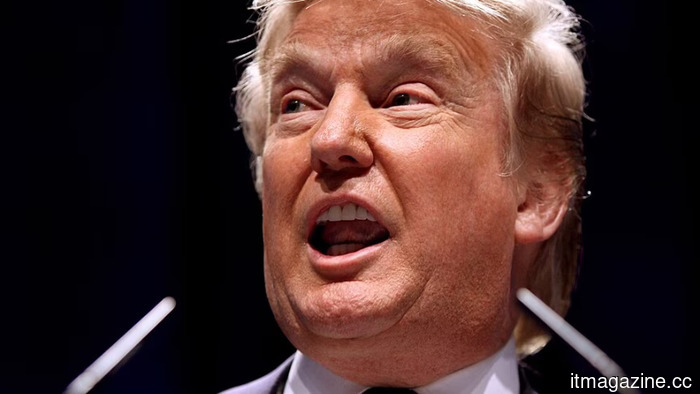
Trump signs a revised AI order featuring a voluntary 30-day review of models.
On Tuesday, President Trump signed an executive order that creates a voluntary framework for the government to review frontier AI models prior to their public launch, resolving weeks of internal debates within the White House regarding the level of regulatory oversight needed for the technology. The order, named “Promoting Advanced Artificial Intelligence Innovation and Security,” was signed privately, without the typical livestream or public ceremony, which contrasts with the usual pomp surrounding presidential announcements about AI.
The finalized version is significantly more limited than the draft Trump rejected on May 21, when he abandoned a planned signing event due to concerns that the order “could impair America’s advantage in AI technology.” The initial draft suggested a mandatory 90-day pre-release review period and would have granted the government formal evaluation authority over frontier models. The signed document invites companies to voluntarily submit models 30 days prior to their release and to engage in a collaborative framework instead of undergoing mandatory testing.
Key Components of the Order
The executive order outlines three primary mechanisms. Firstly, it establishes a voluntary pre-release review framework where AI developers can work with the government to assess whether their models meet the criteria for “covered frontier models,” grant access for up to 30 days before their official release, and partner with “trusted partners” for early access. This framework is explicitly voluntary, meaning companies can choose not to participate without facing any repercussions.
Secondly, the order mandates the creation of an AI cybersecurity clearinghouse within 30 days, to be overseen by the Treasury Secretary, the National Cyber Director, the NSA, and CISA. This clearinghouse will identify software vulnerabilities, verify findings, and coordinate remediation and patch distribution, responding directly to the Mythos crisis that highlighted the speed at which AI-discovered vulnerabilities can outstrip existing disclosure and patching mechanisms.
Thirdly, federal agencies are tasked with establishing benchmarks for evaluating the cybersecurity capabilities of AI models and enhancing the government's defenses against AI-driven threats. The order also touches on AI safety research, but the specifics are less detailed than those in the original draft.
Changes Made
The distinctions between the abandoned draft and the signed order reflect the success of the pro-industry faction within the White House. The original 90-day mandatory review period was shortened to a 30-day voluntary timeframe. The formal government evaluation authority was replaced by a collaborative framework. The requirements for reporting by companies developing powerful models, which would have resembled elements from Biden’s revoked AI executive order, were softened to prevent what industry supporters viewed as excessive regulation.
Objections from Silicon Valley regarding the initial draft were pivotal. AI companies contended that obligatory pre-release testing would hinder American innovation, create a competitive disadvantage compared to Chinese firms that do not face similar regulations, and set a precedent for government control over technology deployment. The signed order addresses these worries by making participation voluntary and positioning the government’s role as collaborative rather than regulatory.
Remaining Concerns
The voluntary nature of the framework means that its effectiveness is entirely contingent on whether AI companies opt to participate. Firms already in pre-release testing with CAISI, such as Google, Microsoft, and xAI, may choose to continue or broaden their collaboration. Conversely, companies that perceive government review as a commercial hindrance or those eager to launch products may simply decide to withdraw.
In contrast, the EU’s AI Act, set to take full effect in August, imposes mandatory requirements, statutory authority, and penalties for non-compliance. The Trump order establishes norms and creates institutional structures (like the cybersecurity clearinghouse and the benchmark development process) but relies on goodwill rather than obligation.
For the White House, the discreet signing may have been intentional. The order equips the administration with a policy document to refer to regarding AI oversight, establishes frameworks that could be fortified later, and avoids a public disagreement with an AI industry whose leaders are among the administration’s most prominent backers. Whether a voluntary framework is sufficient for a technology that can uncover 10,000 zero-day vulnerabilities in a month is a question the order intentionally leaves unanswered.
Other articles
 Microsoft reveals Project Solara: an operating system designed for agent-first devices.
Microsoft's Project Solara is an innovative platform for devices that operate using AI agents in place of traditional apps. Two concept designs, one resembling a badge and the other a desk device, are currently being tested with Best Buy, CVS, Levi's, and Target.
Microsoft reveals Project Solara: an operating system designed for agent-first devices.
Microsoft's Project Solara is an innovative platform for devices that operate using AI agents in place of traditional apps. Two concept designs, one resembling a badge and the other a desk device, are currently being tested with Best Buy, CVS, Levi's, and Target.
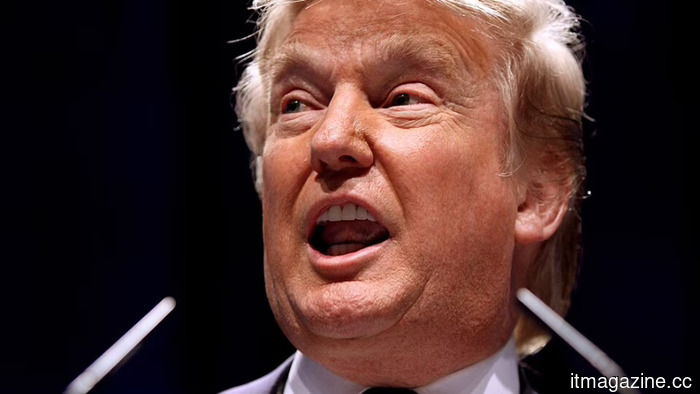 Trump signs revised AI order featuring a voluntary 30-day model evaluation.
Trump signed a scaled-back AI executive order featuring a voluntary 30-day pre-release model review and a cybersecurity clearinghouse, a reduction from the previously mandatory 90-day draft that was eliminated in May.
Trump signs revised AI order featuring a voluntary 30-day model evaluation.
Trump signed a scaled-back AI executive order featuring a voluntary 30-day pre-release model review and a cybersecurity clearinghouse, a reduction from the previously mandatory 90-day draft that was eliminated in May.
 The Vivo X300 Ultra is outshining all other camera phones, and here's the reason.
The Vivo X300 Ultra integrates external lenses, accessories designed for creators, and top-tier camera hardware to bring smartphone photography nearer to the experience of using a professional camera.
The Vivo X300 Ultra is outshining all other camera phones, and here's the reason.
The Vivo X300 Ultra integrates external lenses, accessories designed for creators, and top-tier camera hardware to bring smartphone photography nearer to the experience of using a professional camera.
 The Vivo X300 Ultra is putting other camera phones to shame, and here's the reason.
The Vivo X300 Ultra integrates external lenses, accessories aimed at creators, and top-tier camera hardware to enhance smartphone photography towards a more professional camera experience.
The Vivo X300 Ultra is putting other camera phones to shame, and here's the reason.
The Vivo X300 Ultra integrates external lenses, accessories aimed at creators, and top-tier camera hardware to enhance smartphone photography towards a more professional camera experience.
 Hackers forcefully bypassed Dashlane's two-factor authentication and accessed encrypted vaults.
Attackers managed to circumvent Dashlane's two-factor authentication on fewer than 20 accounts by brute-forcing numeric codes and downloading encrypted password vaults. Data is safeguarded by zero-knowledge encryption, provided that the master passwords are robust.
Hackers forcefully bypassed Dashlane's two-factor authentication and accessed encrypted vaults.
Attackers managed to circumvent Dashlane's two-factor authentication on fewer than 20 accounts by brute-forcing numeric codes and downloading encrypted password vaults. Data is safeguarded by zero-knowledge encryption, provided that the master passwords are robust.
 OpenAI Codex is extending its reach to enterprises through Sites, plugins, and support for non-developer users.
OpenAI has transformed Codex into an enterprise platform, featuring hosted web applications, 62 business application plugins, and 110 skills. Among the 5 million weekly users, non-developers make up 20% and are growing three times faster.
OpenAI Codex is extending its reach to enterprises through Sites, plugins, and support for non-developer users.
OpenAI has transformed Codex into an enterprise platform, featuring hosted web applications, 62 business application plugins, and 110 skills. Among the 5 million weekly users, non-developers make up 20% and are growing three times faster.
Trump signs a revised AI order featuring a voluntary 30-day review of models.
Trump signed a reduced AI executive order that includes a voluntary 30-day pre-release model review and a cybersecurity clearinghouse, which is shorter than the previously planned 90-day mandatory draft that was abandoned in May.