
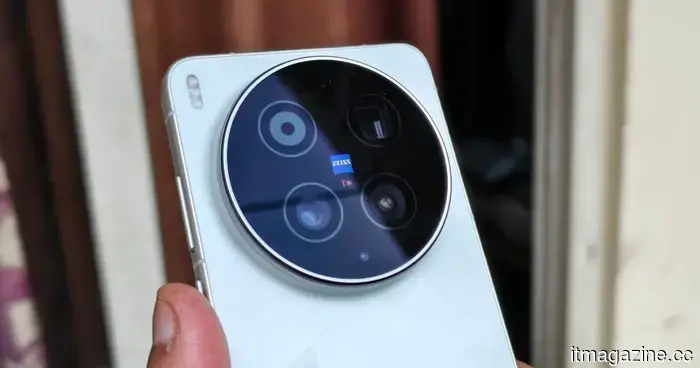
The Vivo X300 Ultra is putting other camera phones to shame, and here's the reason.
For several years, smartphone manufacturers have promised "DSLR-like" photography experiences. Many have improved image processing, incorporated larger sensors, or added multiple cameras to the rear. However, the Vivo X300 Ultra takes a unique approach—it aims not only to imitate a camera but to function like one.
With features such as external telephoto lenses, physical camera controls, filter compatibility, and tripod mounting, Vivo's latest Ultra flagship resembles a modular photography system more than a conventional smartphone. The brand is no longer just focused on better smartphone photography; it is appealing to creators who typically carry a mirrorless camera.
Introducing the ultimate smartphone for photography.
One of the most notable features is Vivo’s revamped Photography Kit. Rather than adding multiple telephoto cameras like other brands, Vivo enhances the X300 Ultra's existing 85mm telephoto system with external teleconverter lenses. This year, users can opt for a 200mm lens or a larger 400mm attachment specifically for extreme long-range photography.
These teleconverters magnify the phone’s existing telephoto camera instead of having their own focusing systems or apertures, which results in a more compact, lightweight design that simplifies portability while significantly extending zoom capabilities.
The Photography Kit also comes with a specialized protective case outfitted with a bayonet-style mounting system around the camera module, enabling users to attach filters, telephoto adapters, and other accessories directly to the device. Vivo supports ND, UV, and circular polarizer filters, providing creators with greater flexibility for outdoor shooting.
For those who use tripods, the telephoto lenses are equipped with Arca-Swiss compatible tripod collars, enhancing stability during long-range photography. An upgraded camera grip includes a dedicated video recording button, a zoom lever, a shutter key, a programmable function button, and a scroll wheel for an improved experience.
The camera specifications are impressive, and the camera performance exceeds expectations.
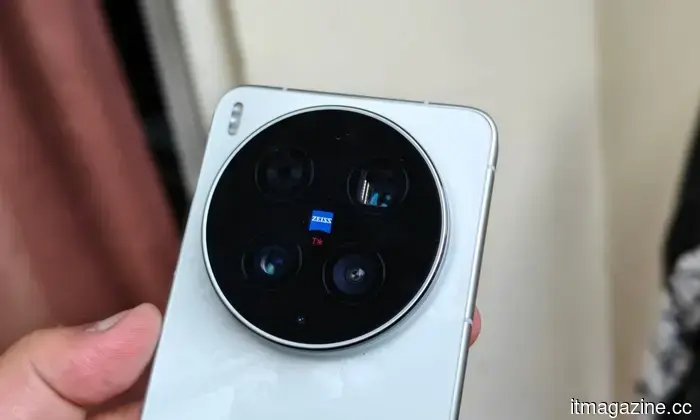
Vivo has maintained a 35mm equivalent focal length for the main camera, yielding a more focused and natural perspective compared to the ultra-wide lenses typically found on flagship smartphones. This year, the device upgrades to Sony's 200MP Lytia 901 sensor in a substantial 1/1.12-inch format, replacing last generation's 50MP configuration.
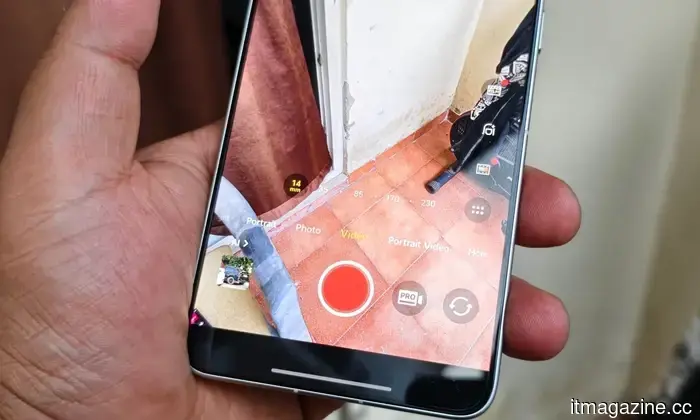
The telephoto system continues to be a significant asset of the device. Vivo features a single 85mm equivalent zoom camera with an f/2.7 aperture, powered by a large 200MP 1/1.4-inch Samsung HP0 sensor. The ultra-wide camera employs a sizeable 1/1.28-inch sensor paired with a 14mm lens, making it one of the most proficient ultra-wide systems on a smartphone today.
On the front, the X300 Ultra includes a 50MP selfie camera with autofocus and a 24mm equivalent lens for clearer selfies and video calls.
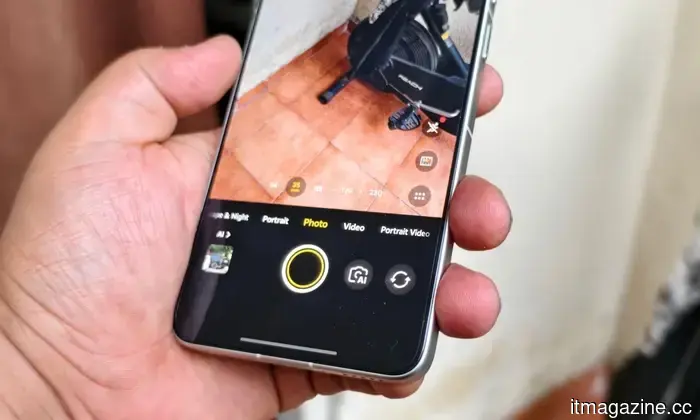
Now, we will focus on three main categories: portrait shots, long-range photography, and video stability. It’s worth noting that all testing was conducted at the default 12.5MP camera resolution, with additional photos taken at 50MP.
Starting with portrait mode, it functions as expected, though our findings indicate that better portrait shots were captured in Photo mode rather than the designated Portrait mode. The Portrait mode occasionally rendered images with overly soft edges or pronounced bokeh. However, traditional depth and bokeh shots were satisfactory using the standard 35mm lens, producing rich details and vibrant colors. Vivo seems to have included one of the finest displays for accurate color representation instead of merely enhancing images with warmer tones.
We have already discussed resolution options, which generally begin at 25MP, then 50MP, progressing directly to 200MP. We captured some images at 200MP and 50MP, but since maintaining a balance between quality and file size is crucial, we suggest staying at the default 12.5MP setting. Overall, dynamic range was outstanding, and white balance was consistently accurate across all photographs—whether taken in portrait mode or not—using just the 35mm lens.
Next, we explored 50mm, where photo quality remains excellent, exhibiting slightly increased detail. Portrait images appeared impressive, although we noted that edges were more aggressively softened in Portrait mode and appeared more natural in standard Photo mode.
Moving to 70mm, which is available only in Photo mode while Portrait mode switches to 85mm, the default 35mm focal length produces a 2x shot in 12.5MP, still showcasing high-quality images. The colors are vibrant, white balance is accurate, and edges remain sharp.
The 85mm shots provide a decent composition with tighter framing, suitable for telephoto portraits. Skin tones are rendered beautifully, and facial details are clear. However, portrait mode tends to reduce sharpness in certain areas of the image.
In Portrait mode, the 135mm level's overall quality slightly declines, yielding a processed appearance, although details remain acceptable. Sharpness is a bit lacking













Other articles
 Globally, electric cars are becoming more affordable, with the exception of buyers in the US.
In other parts of the world, electric vehicles became more affordable, but in the US, tax credits were eliminated, resulting in a 45% decline in EV sales in Q4 compared to the previous year.
Perplexity divides AI inference between personal computers and the cloud to reduce expenses.
Perplexity AI has developed a real-time routing system that distributes AI tasks between personal computers and cloud servers, which was disclosed at Computex in conjunction with Intel, as revenue reaches $500 million.
Globally, electric cars are becoming more affordable, with the exception of buyers in the US.
In other parts of the world, electric vehicles became more affordable, but in the US, tax credits were eliminated, resulting in a 45% decline in EV sales in Q4 compared to the previous year.
Perplexity divides AI inference between personal computers and the cloud to reduce expenses.
Perplexity AI has developed a real-time routing system that distributes AI tasks between personal computers and cloud servers, which was disclosed at Computex in conjunction with Intel, as revenue reaches $500 million.
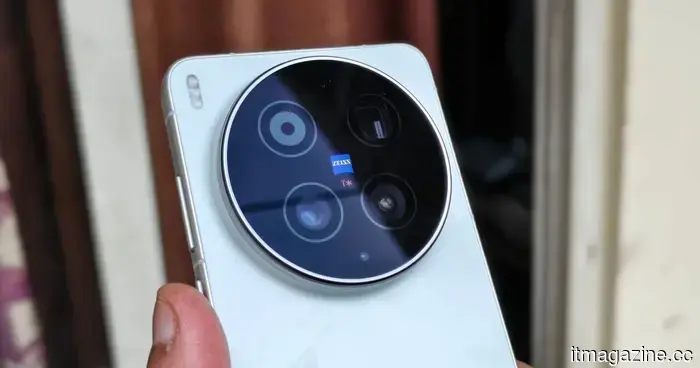 The Vivo X300 Ultra is outshining all other camera phones, and here's the reason.
The Vivo X300 Ultra integrates external lenses, accessories designed for creators, and top-tier camera hardware to bring smartphone photography nearer to the experience of using a professional camera.
The Vivo X300 Ultra is outshining all other camera phones, and here's the reason.
The Vivo X300 Ultra integrates external lenses, accessories designed for creators, and top-tier camera hardware to bring smartphone photography nearer to the experience of using a professional camera.
 Focused Energy secures $240 million to commercialize NIF laser fusion technology.
German fusion startup Focused Energy has secured $240 million in Series A funding, led by utility company RWE, to develop a laser-powered reactor inspired by the net energy gain breakthrough achieved by the NIF.
Focused Energy secures $240 million to commercialize NIF laser fusion technology.
German fusion startup Focused Energy has secured $240 million in Series A funding, led by utility company RWE, to develop a laser-powered reactor inspired by the net energy gain breakthrough achieved by the NIF.
 OpenAI Codex is extending its reach to enterprises through Sites, plugins, and support for non-developer users.
OpenAI has transformed Codex into an enterprise platform, featuring hosted web applications, 62 business application plugins, and 110 skills. Among the 5 million weekly users, non-developers make up 20% and are growing three times faster.
OpenAI Codex is extending its reach to enterprises through Sites, plugins, and support for non-developer users.
OpenAI has transformed Codex into an enterprise platform, featuring hosted web applications, 62 business application plugins, and 110 skills. Among the 5 million weekly users, non-developers make up 20% and are growing three times faster.
 Trump signs revised AI order featuring a voluntary 30-day model evaluation.
Trump signed a scaled-back AI executive order featuring a voluntary 30-day pre-release model review and a cybersecurity clearinghouse, a reduction from the previously mandatory 90-day draft that was eliminated in May.
Trump signs revised AI order featuring a voluntary 30-day model evaluation.
Trump signed a scaled-back AI executive order featuring a voluntary 30-day pre-release model review and a cybersecurity clearinghouse, a reduction from the previously mandatory 90-day draft that was eliminated in May.
The Vivo X300 Ultra is putting other camera phones to shame, and here's the reason.
The Vivo X300 Ultra integrates external lenses, accessories aimed at creators, and top-tier camera hardware to enhance smartphone photography towards a more professional camera experience.