
Microsoft reveals Project Solara: an operating system designed for agent-first devices.
**TL;DR** Microsoft introduced Project Solara at Build 2026, a chip-to-cloud platform aimed at “agent-first devices” that utilize AI agents rather than conventional applications. Two prototype devices, a wearable badge and a desk companion, are being tested with Best Buy, CVS Health, Levi’s, and Target.
Microsoft announced Project Solara during Build 2026, a newly developed chip-to-cloud platform tailored specifically for devices that operate using AI agents instead of traditional applications. This platform features a lightweight operating system based on AOSP, enterprise-level security and management through Intune and Entra ID, and a feature called “just-in-time UI,” which allows the agent interfaces to adapt dynamically to the device they’re functioning on. Two reference concept devices were showcased: a wearable badge and a desk companion, designed for enterprise workers.
This initiative is significant as it marks Microsoft's initial venture into creating an operating system and hardware platform based on the concept that AI agents are beginning to replace apps as the primary means of human-computer interaction. While Google, Salesforce, and OpenAI are developing agent platforms, Microsoft is the first to apply this idea to specialized hardware that isn't a phone, PC, or tablet.
**Appearance of the Devices**
The badge concept reimagines the corporate access badge as a constantly connected AI companion, featuring a touchscreen display, a fingerprint sensor for Hello for Business authentication, an array of far-field microphones and speakers for voice interaction, a side-facing camera, and connectivity options including WiFi, Bluetooth, 5G, and satellite, all powered by Qualcomm's wearable silicon. Users such as nurses, retail associates, or office workers can check upcoming meetings, record conversations with full transcription, or ask their agents questions using hands-free interaction.
The desk concept is a compact stationary device equipped with a touchscreen, dual microphone array, speaker, UWB presence sensor, and powered by MediaTek IoT silicon. It uses facial recognition for authentication (Hello for Business) and grants ambient access to AI agents during work. When connected to an external display via USB-C, it can function as a Windows 365 cloud PC client, offering enterprises a single device that operates as both an agent companion and a thin client.
Both devices are intentionally built not to support traditional applications. They lack an app store, a browser-first experience, or a conventional desktop. The interaction model is predicated on the assumption that users will interact with software through agents rather than by navigating individual applications.
**Platform Architecture**
Project Solara utilizes MDEP (Microsoft Device Ecosystem Platform), an enterprise-level operating system derived from the Android Open Source Project. This is particularly noteworthy as Microsoft is opting to build its next-generation device platform on Android’s open-source foundation rather than on Windows. This strategic decision enables the platform to leverage Android's hardware compatibility and driver ecosystem while allowing Microsoft to overlay its own agent framework, security model, and management stack.
The platform is structured around three main components: first, it is oriented towards enterprise readiness with Intune device management, Entra ID authentication, Hello for Business biometrics, and physical privacy controls such as a hardware microphone mute button; second, it employs an agent-driven interaction model featuring a just-in-time UI that adapts to various screen sizes, form factors, and input types; and third, it supports extensibility for multiple agents, including both Microsoft's own agents (Copilot, Researcher, Facilitator, and a new Priority Agent) and third-party agents built on the Microsoft 365 Agents SDK, Copilot Studio, or the Microsoft Agent Framework.
Enterprise AI agents are already in use across retail, financial services, and healthcare on existing devices. Project Solara posits that hardware purposefully designed around how agents operate, rather than traditional applications, can enhance experiences in specific workflows and environments.
**Just-in-Time UI**
The most technically ambitious aspect of this announcement is the just-in-time UI. Traditionally, each new device format necessitates developers to redesign applications for new sizes, resolutions, and input methods, which increases the cost of developing new device categories and complicates their market entry without a strong app ecosystem.
Microsoft's approach is that agents should autonomously generate their interfaces. For instance, on a small badge screen, an agent might display a simplistic card with a single action, while on a desk device, the same agent could provide a more elaborate visual interface. On a connected display, it would create a comprehensive dashboard, with the agent adjusting its presentation to the device instead of requiring developers to create distinct experiences for each form factor.
Currently, this is accomplished through semi-structured methods such as adaptive cards. As AI models become better at producing layouts and interfaces, Microsoft anticipates moving towards increasingly dynamic and ultimately fully generative UI. The company has explicitly stated that fully generative UI "is not here yet," but it is investing in the development between responsive design and unrestricted generation.
**Testing Partners**
Hundreds of Microsoft employees are already internally testing the
Other articles
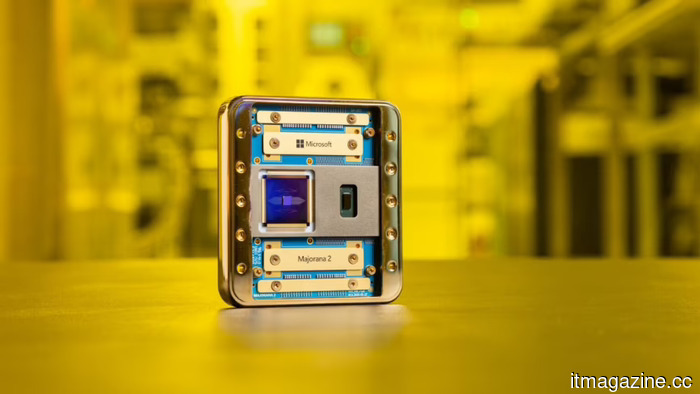 Microsoft's Majorana 2 quantum chip boasts a reliability improvement of 1,000 times and aims for a 2029 launch.
Microsoft's Majorana 2 qubits have a duration of 20 seconds, compared to microseconds for competitors, and are developed using agentic AI. The company aims to achieve a scalable quantum computer by 2029.
Microsoft's Majorana 2 quantum chip boasts a reliability improvement of 1,000 times and aims for a 2029 launch.
Microsoft's Majorana 2 qubits have a duration of 20 seconds, compared to microseconds for competitors, and are developed using agentic AI. The company aims to achieve a scalable quantum computer by 2029.
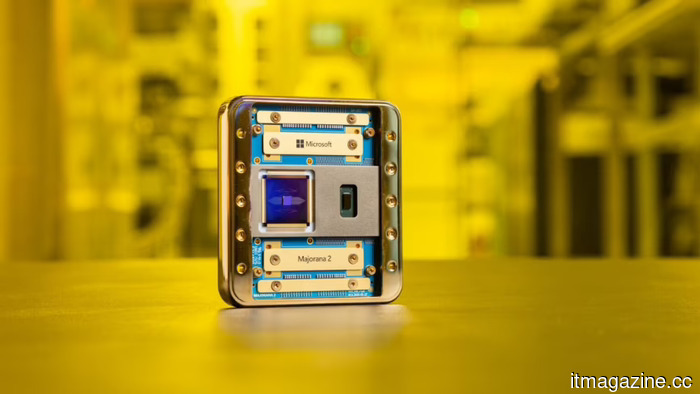 Microsoft's Majorana 2 quantum chip boasts reliability that is 1,000 times greater, with a goal set for 2029.
Microsoft's Majorana 2 qubits can last 20 seconds, compared to microseconds for competitors, and are developed using agentic AI. The company is now aiming to create a scalable quantum computer by 2029.
Microsoft's Majorana 2 quantum chip boasts reliability that is 1,000 times greater, with a goal set for 2029.
Microsoft's Majorana 2 qubits can last 20 seconds, compared to microseconds for competitors, and are developed using agentic AI. The company is now aiming to create a scalable quantum computer by 2029.
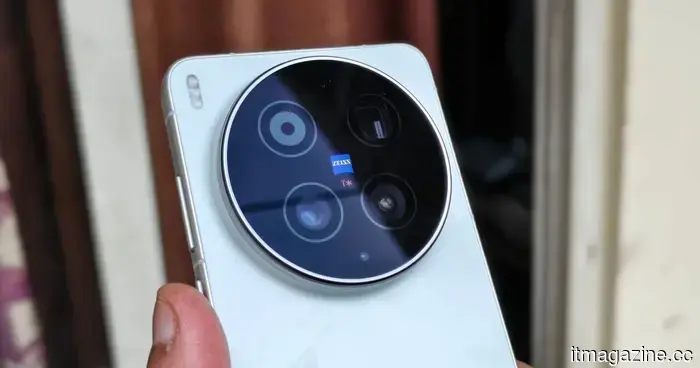 The Vivo X300 Ultra is outshining all other camera phones, and here's the reason.
The Vivo X300 Ultra integrates external lenses, accessories designed for creators, and top-tier camera hardware to bring smartphone photography nearer to the experience of using a professional camera.
The Vivo X300 Ultra is outshining all other camera phones, and here's the reason.
The Vivo X300 Ultra integrates external lenses, accessories designed for creators, and top-tier camera hardware to bring smartphone photography nearer to the experience of using a professional camera.
 RogueDB presents a streamlined database platform aimed at minimizing infrastructure tasks for startups and IT teams.
RogueDB provides a fully managed, API-centric database that eliminates the need for configuration and tuning, allowing startup engineering teams to focus on product development rather than infrastructure maintenance.
RogueDB presents a streamlined database platform aimed at minimizing infrastructure tasks for startups and IT teams.
RogueDB provides a fully managed, API-centric database that eliminates the need for configuration and tuning, allowing startup engineering teams to focus on product development rather than infrastructure maintenance.
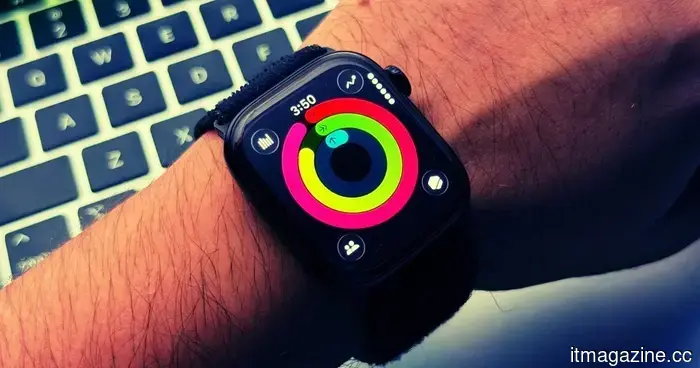 The upcoming Apple Watch may feature an enhanced OLED display along with improved battery life.
Apple is said to be assessing a new OLED display technology named HMO, which offers improved battery performance and reduced production expenses.
The upcoming Apple Watch may feature an enhanced OLED display along with improved battery life.
Apple is said to be assessing a new OLED display technology named HMO, which offers improved battery performance and reduced production expenses.
 RogueDB presents an easy-to-use database platform aimed at minimizing infrastructure tasks for startups and IT teams.
RogueDB provides a completely managed, API-based database that eliminates the need for configuration and tuning, allowing startup engineering teams to focus more on product development rather than infrastructure maintenance.
RogueDB presents an easy-to-use database platform aimed at minimizing infrastructure tasks for startups and IT teams.
RogueDB provides a completely managed, API-based database that eliminates the need for configuration and tuning, allowing startup engineering teams to focus more on product development rather than infrastructure maintenance.
Microsoft reveals Project Solara: an operating system designed for agent-first devices.
Microsoft's Project Solara is an innovative platform for devices that operate using AI agents in place of traditional apps. Two concept designs, one resembling a badge and the other a desk device, are currently being tested with Best Buy, CVS, Levi's, and Target.