
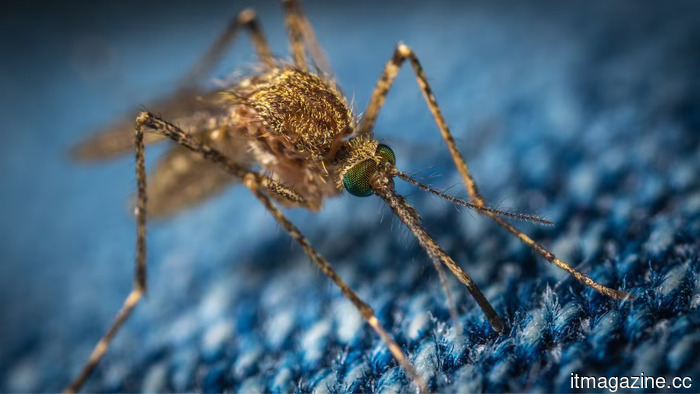
Google aims to deploy 32 million lab-grown mosquitoes to combat dengue and Zika viruses.
TL;DR: Verily, a health and life sciences subsidiary of Alphabet, is requesting EPA approval to release 64 million male mosquitoes carrying Wolbachia in Florida and California to reduce Aedes aegypti populations. Previous Debug trials showed up to 95% reductions in Fresno and over 70% reduction in dengue cases in Singapore.
Verily has approached the US Environmental Protection Agency for authorization to release as many as 64 million lab-bred mosquitoes over the next two years in Florida and California. This initiative, part of the Debug program, intends to introduce male Aedes aegypti mosquitoes that carry Wolbachia bacteria into regions affected by dengue fever, Zika virus, yellow fever, and chikungunya. The EPA is currently evaluating the application under an experimental use permit, with a public comment period extending through early June.
The biological mechanism is straightforward. Wolbachia is a naturally occurring bacterium present in about 60% of insect species but is absent in Aedes aegypti. When laboratory-mated males with Wolbachia breed with wild females that do not have it, their eggs fail to develop. These males do not bite, transmit diseases, or reproduce with each other, resulting in a self-limiting release. This strategy reduces the wild population with each generation of released males without causing lasting genetic alterations or introducing synthetic chemicals into the environment.
Progress to date
Since 2017, the Debug program has conducted field trials. In Fresno, California, the initiative achieved a reduction of 68% in biting female Aedes aegypti populations in its first year, with over 95% reductions in 2018 and 84% in 2019. These results rank it among the most effective methods for population control driven by biotech in the United States.
In Singapore, where the government has incorporated Wolbachia-based mosquito control into its national dengue strategy, the release of sterile males led to an 80% to 90% suppression of Aedes aegypti populations and a reduction of more than 70% in dengue cases within six to twelve months. The independent World Mosquito Program has utilized a different strategy, deploying Wolbachia in 14 countries to create self-sustaining wild populations by infecting both male and female mosquitoes.
Scaling the project
The main challenge with releasing mosquitoes lies more in logistics than biology. Distributing millions of male mosquitoes necessitates large-scale breeding, nearly perfect sex sorting to avoid releasing females, and precise distribution in targeted areas. Verily leverages its parent company's AI capabilities at each of these stages.
The Debug program employs AI-enhanced sorting systems to distinguish males from females, automated breeding technology to ensure colony health at an industrial level, and specialized release systems—such as drones and ground dispensers—to distribute mosquitoes effectively. The proposed release consists of 16 million mosquitoes per state each year over the two-year permit period.
The discussion
The notion of a tech company releasing millions of insects into the ecosystem does not sit well with everyone. The intersection of AI, biotech, and public health raises concerns about corporate engagement in ecological measures, potential long-term environmental impacts, and community approval. Critics worry about the consequences of decreasing one mosquito species on the food chain, the possibility of Wolbachia transferring to non-target species, and the need for stricter oversight of corporate-led biological initiatives compared to the current EPA process.
Supporters argue that Aedes aegypti is an invasive species in the Americas and not part of the native ecosystem, suggesting minimal ecological repercussions from its removal. This species is responsible for hundreds of millions of dengue cases yearly worldwide, with incidents increasing as climate change expands its reach into previously cooler areas. AI-driven solutions to biological and medical challenges are yielding results that traditional methods have not achieved.
Importance for technology
The Debug program is one of the few remaining initiatives from Verily’s original goal to apply technology effectively within life sciences. Alphabet has frequently restructured its health initiatives, closing or divesting various projects. While most major tech companies focus on AI infrastructure, Verily’s mosquito initiative signifies a unique application of technology: employing automation, computer vision, and logistics to address a public health issue that claims hundreds of thousands of lives annually.
If the EPA grants the permit, Florida and California would see the largest deployment of Wolbachia-based mosquito control in the United States to date. A decision is anticipated after the public comment period ends, with potential releases starting in late 2026 or early 2027.
Other articles
 Internal disputes within the White House are hindering the progress of AI regulation in the U.S. following the Mythos incident.
A "knife fight" among Commerce, intelligence agencies, and pro-industry groups has stalled US AI policy, leading to Trump cancelling an executive order and leaving no established framework.
Internal disputes within the White House are hindering the progress of AI regulation in the U.S. following the Mythos incident.
A "knife fight" among Commerce, intelligence agencies, and pro-industry groups has stalled US AI policy, leading to Trump cancelling an executive order and leaving no established framework.
 As Microsoft approaches Build, it's faced with the challenge of having AI integrated throughout its offerings and dealing with issues related to its paying customers.
Microsoft launches its Build developer conference in San Francisco, anticipated to integrate AI further into Windows and Copilot, while the rate of adoption remains uncertain.
As Microsoft approaches Build, it's faced with the challenge of having AI integrated throughout its offerings and dealing with issues related to its paying customers.
Microsoft launches its Build developer conference in San Francisco, anticipated to integrate AI further into Windows and Copilot, while the rate of adoption remains uncertain.
 Meta's AI bot assisted hackers in stealing Instagram accounts, and it was alarmingly simple to deceive.
Instagram has fixed a major security vulnerability that allowed hackers to utilize Meta's AI support chatbot to gain access to accounts without needing the victim’s password or email.
Meta's AI bot assisted hackers in stealing Instagram accounts, and it was alarmingly simple to deceive.
Instagram has fixed a major security vulnerability that allowed hackers to utilize Meta's AI support chatbot to gain access to accounts without needing the victim’s password or email.
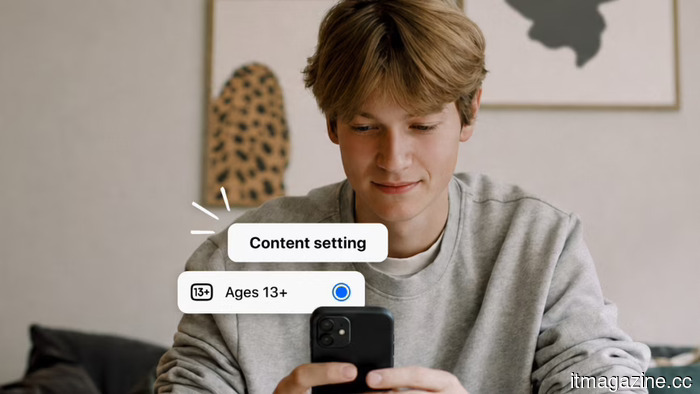 Meta expands its 13+ teen content settings to a global level on Instagram, Facebook, and Messenger.
Meta is broadening its 13+ content settings inspired by movie ratings for Teen Accounts globally and is experimenting with a method to prevent teens from viewing the same content repeatedly.
Meta expands its 13+ teen content settings to a global level on Instagram, Facebook, and Messenger.
Meta is broadening its 13+ content settings inspired by movie ratings for Teen Accounts globally and is experimenting with a method to prevent teens from viewing the same content repeatedly.
 Amazon's Ring is facing a lawsuit regarding its Familiar Faces facial-recognition function.
A man from Virginia is taking legal action against Amazon regarding the Familiar Faces feature of Ring, claiming that it scans and retains the faces of individuals passing by without their permission. He is requesting a minimum of $5 million.
Marvell sees an increase after Jensen Huang labels it the next trillion-dollar company.
Marvell's stock jumped approximately 25% in premarket trading after Nvidia's Jensen Huang forecasted at Computex that it would become the next $1 trillion company.
Amazon's Ring is facing a lawsuit regarding its Familiar Faces facial-recognition function.
A man from Virginia is taking legal action against Amazon regarding the Familiar Faces feature of Ring, claiming that it scans and retains the faces of individuals passing by without their permission. He is requesting a minimum of $5 million.
Marvell sees an increase after Jensen Huang labels it the next trillion-dollar company.
Marvell's stock jumped approximately 25% in premarket trading after Nvidia's Jensen Huang forecasted at Computex that it would become the next $1 trillion company.
Google aims to deploy 32 million lab-grown mosquitoes to combat dengue and Zika viruses.
Alphabet's Verily seeks EPA authorization to deploy 64 million mosquitoes that carry Wolbachia in Florida and California, utilizing AI-driven sorting and breeding on an industrial scale.