
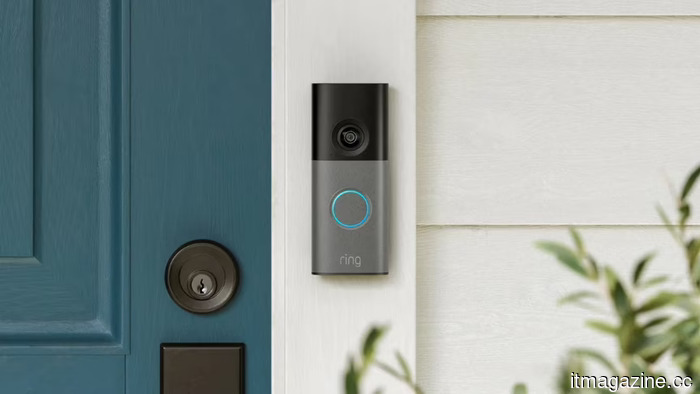
Amazon's Ring is facing a lawsuit regarding its Familiar Faces facial-recognition function.
Amazon faced a lawsuit on Monday concerning the facial-recognition feature recently added to its Ring doorbells, centering on a well-known imbalance: the purchaser of the camera consents to its use, while those who pass by do not.
Charles Sigwalt, a resident of Virginia, initiated the proposed class action in federal court in Seattle, claiming that Ring's “Familiar Faces” function captures and retains images of individuals without their consent. He is seeking a minimum of $5 million in damages on behalf of the class, as reported by Reuters.
Familiar Faces is an optional feature that utilizes AI to identify individuals the camera has previously seen, allowing notifications to specify who is at the door rather than simply indicating that someone is present. Ring introduced it late last year as part of a larger update of its cameras, enabling users to label recognized people while the system catalogs a certain number of faces over time.
For homeowners who activate the feature, it provides convenience. However, the lawsuit contends that for delivery drivers, neighbors, or strangers crossing the lawn, it results in facial data being collected and stored without their consent and without any practical means to opt out of a camera they do not own.
This concern is not new, and Amazon's actions imply that it was aware of the potential for legal issues. The company has indicated that Familiar Faces is not available in Illinois or Texas, the two U.S. states with the strictest laws regarding biometric privacy.
Illinois’ Biometric Information Privacy Act mandates written consent before a company collects someone’s facial geometry, permitting damages of $1,000 for each negligent violation and $5,000 for each intentional one, making it the most costly law in the country to violate.
Excluding the feature from these two states appears, to critics, less like a precaution and more like a response to an unspoken query.
The Sigwalt lawsuit adds to an existing series of controversies for Ring. The device has faced scrutiny for its facial-recognition initiatives for years, as well as its data-sharing practices with law enforcement and a 2023 settlement with the U.S. Federal Trade Commission regarding employee access to customers' video footage.
Since Amazon acquired Ring for approximately $1 billion in 2018, it has generally positioned the cameras as tools for neighborhood safety. Conversely, the plaintiffs characterize them as a privately operated surveillance system that happens to monitor public streets.
The next steps are procedural. The court must determine whether the case will move forward as a class action, and Amazon has yet to respond to the specific allegations.
A previous biometric lawsuit against Ring withstood a motion to dismiss in 2022, providing a precedent for the new claim, though not a definitive outcome. For now, there is a filed complaint, a specified damages amount, and a feature that continues to scan faces while legal representatives debate the necessary consent involved.
Other articles
 SoftBank is said to be in preliminary discussions to support an $800 million funding round for Agile Robots.
According to Bloomberg, SoftBank is in preliminary discussions to invest over $300 million in a funding round of approximately $800 million for the Munich-based robotics company Agile Robots.
SoftBank is said to be in preliminary discussions to support an $800 million funding round for Agile Robots.
According to Bloomberg, SoftBank is in preliminary discussions to invest over $300 million in a funding round of approximately $800 million for the Munich-based robotics company Agile Robots.
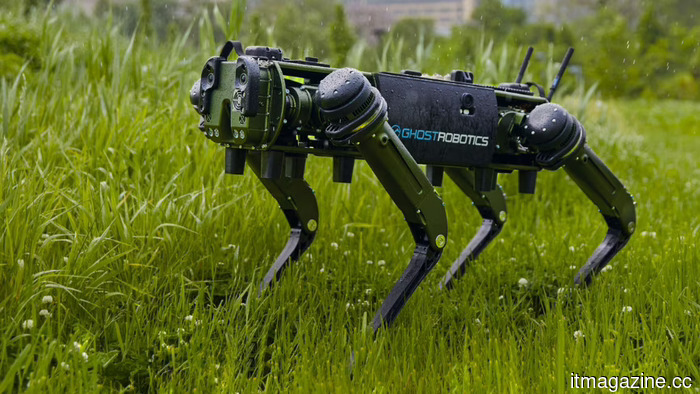 Taiwan unveils robotic patrol dogs capable of securing its islands in the South China Sea.
Taiwan's military research institute showcased three robot dogs from Ghost Robotics, one of which is armed, that may eventually be used to patrol the Pratas and Itu Aba.
Taiwan unveils robotic patrol dogs capable of securing its islands in the South China Sea.
Taiwan's military research institute showcased three robot dogs from Ghost Robotics, one of which is armed, that may eventually be used to patrol the Pratas and Itu Aba.
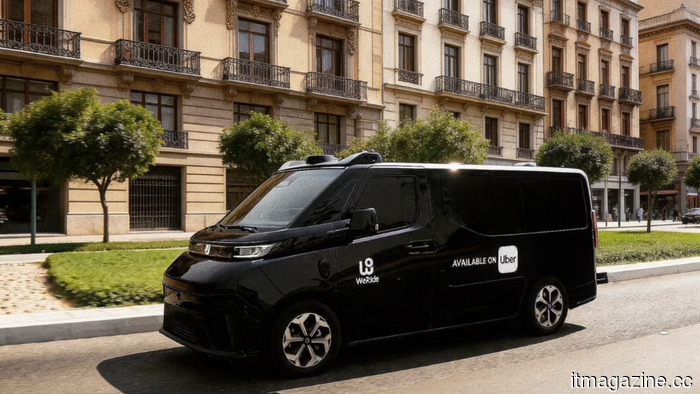 WeRide and Uber expand their robotaxi collaboration to Madrid.
WeRide, Uber, and fleet operator AVOMO are set to launch Madrid’s inaugural commercial robotaxi pilot later this year, initially featuring safety operators.
WeRide and Uber expand their robotaxi collaboration to Madrid.
WeRide, Uber, and fleet operator AVOMO are set to launch Madrid’s inaugural commercial robotaxi pilot later this year, initially featuring safety operators.
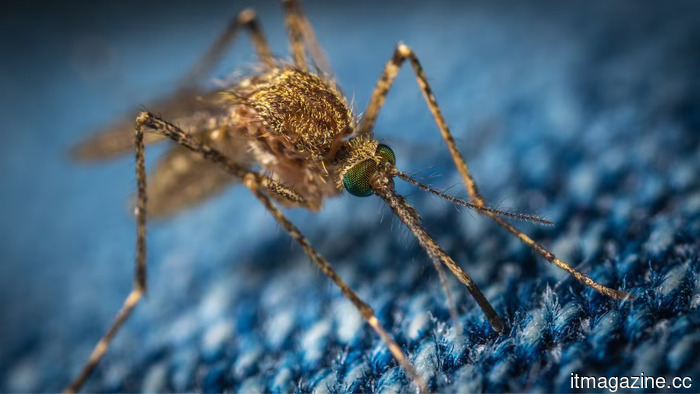 Google aims to deploy 32 million lab-grown mosquitoes to combat dengue and Zika viruses.
Alphabet's Verily seeks EPA authorization to deploy 64 million mosquitoes that carry Wolbachia in Florida and California, utilizing AI-driven sorting and breeding on an industrial scale.
Google aims to deploy 32 million lab-grown mosquitoes to combat dengue and Zika viruses.
Alphabet's Verily seeks EPA authorization to deploy 64 million mosquitoes that carry Wolbachia in Florida and California, utilizing AI-driven sorting and breeding on an industrial scale.
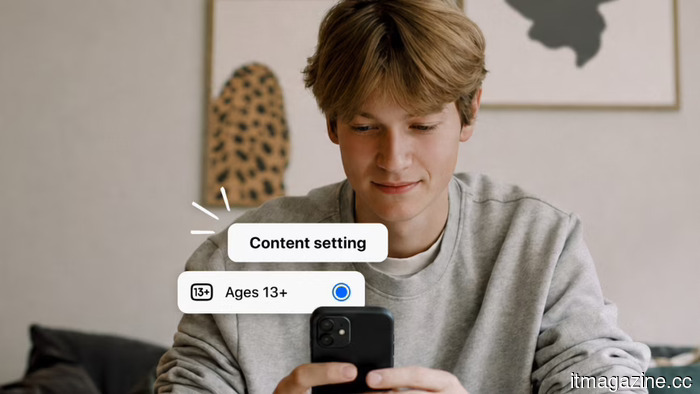 Meta expands its 13+ teen content settings to a global level on Instagram, Facebook, and Messenger.
Meta is broadening its 13+ content settings inspired by movie ratings for Teen Accounts globally and is experimenting with a method to prevent teens from viewing the same content repeatedly.
Meta expands its 13+ teen content settings to a global level on Instagram, Facebook, and Messenger.
Meta is broadening its 13+ content settings inspired by movie ratings for Teen Accounts globally and is experimenting with a method to prevent teens from viewing the same content repeatedly.
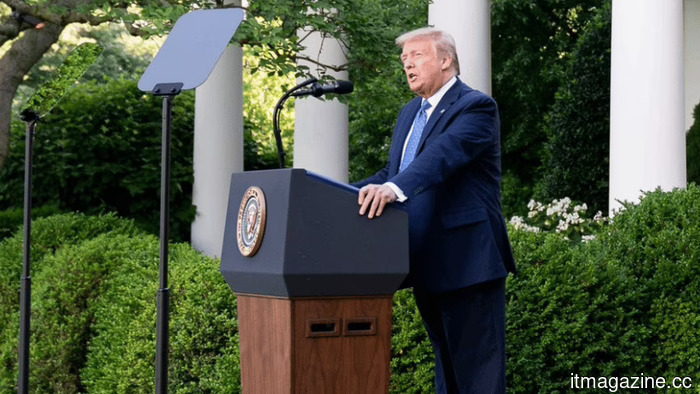 Internal disputes within the White House are hindering the progress of AI regulation in the U.S. following the Mythos incident.
A "knife fight" among Commerce, intelligence agencies, and pro-industry groups has stalled US AI policy, leading to Trump cancelling an executive order and leaving no established framework.
Internal disputes within the White House are hindering the progress of AI regulation in the U.S. following the Mythos incident.
A "knife fight" among Commerce, intelligence agencies, and pro-industry groups has stalled US AI policy, leading to Trump cancelling an executive order and leaving no established framework.
Amazon's Ring is facing a lawsuit regarding its Familiar Faces facial-recognition function.
A man from Virginia is taking legal action against Amazon regarding the Familiar Faces feature of Ring, claiming that it scans and retains the faces of individuals passing by without their permission. He is requesting a minimum of $5 million.