
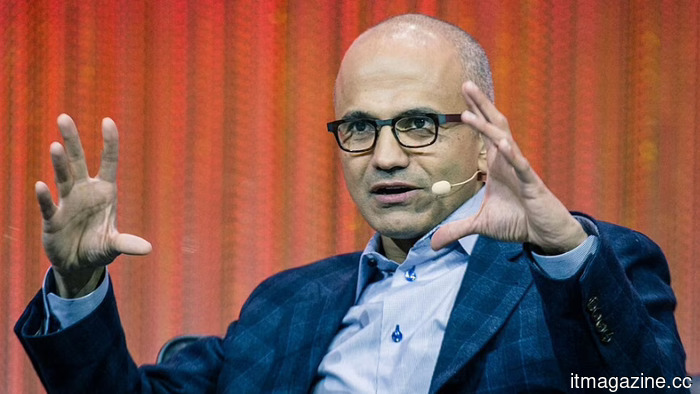
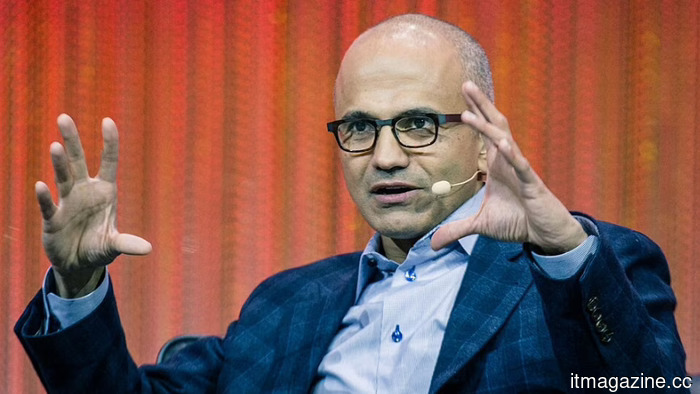
Nadella discreetly broke down Microsoft's leadership framework. The senior leadership team that managed the company for many years has been eliminated.
**TL;DR:** Nadella has dismantled Microsoft’s senior leadership team, replacing it with startup-like engineering groups. He reviews AI metrics on a weekly basis.
Satya Nadella has eliminated the senior leadership structure that has governed Microsoft for years. According to a source familiar with the CEO, the company has "quietly retired what’s known as the SLT." This senior leadership team, consisting of influential executives overseeing major business units and reporting directly to Nadella, is no longer in existence.
In its place, Nadella has introduced three new structures: a corporate leadership group comprising Nadella, Brad Smith, Amy Hood, Amy Coleman, and Judson Althoff, who meet weekly for governance; an engineering leadership group with around 35 product and engineering leaders collaborating closely rather than through extensive managerial layers; and a Copilot leadership team of three—Charles Lamanna, Jacob Andreou, and Ryan Roslansky—who meet with Nadella in a separate weekly session.
Nadella also reviews AI metrics weekly and engages with the Azure cloud infrastructure team biweekly. The new structure reflects the startup-style operational model he has endorsed, where engineers, researchers, and product developers work directly together. The extensive managerial chains from Microsoft’s cloud era have been streamlined.
According to a source close to the CEO, “the pace of this platform shift is occurring faster than anything we’ve seen,” and “Microsoft can’t afford to be slow.” The company experienced its worst quarterly stock performance since the 2008 financial crisis, with investors urging Nadella to show returns on the significant investments in AI.
Nadella has been examining startups, acknowledging that Microsoft’s size has become “a massive disadvantage” in the AI landscape. This restructuring follows a year-long initiative where Nadella encouraged leaders to either adopt a more rigorous culture or exit, resulting in several prominent departures.
The executive transitions are significant. Rajesh Jha, a key product leader, will retire on July 1. Yusuf Mehdi, who has been with the company for 35 years as consumer CMO, is leaving as well. Charlie Bell, known as an architect of AWS, joined Microsoft in 2021 to oversee 10,000 security staff but is now categorized as an “engineer” with no direct reports in the internal organization chart.
Mustafa Suleyman, co-founder of DeepMind and hired by Nadella in 2024 to lead a new AI division, now has a more focused role managing around 650 employees. While he continues to work closely with Nadella, the AI division he was intended to create has been integrated into the wider engineering framework.
In a surprising move for the gaming division, Asha Sharma succeeded longtime Xbox leader Phil Spencer as CEO of Microsoft Gaming in February. Sharma, who joined Microsoft’s Core AI group in 2024 from Instacart and Meta, has limited gaming experience. Nadella has been mentoring her and believes she is capable of modernizing the business.
Emerging leaders include Arun Ulag, a Microsoft veteran promoted to EVP in April who reports to cloud head Scott Guthrie but is regarded by Nadella as a direct report. Pavan Davuluri, a 25-year employee who was part of the original Surface team, now heads Windows and devices. Hayete Gallot, who briefly left Microsoft for Google Cloud, has returned to take Bell’s place as EVP of security.
Microsoft’s Trusted Technology Group, reported on earlier this month, fits within this restructured framework. Jenny Lay-Flurrie’s work in responsible AI now reports into a flatter organization where engineering leads rather than follows.
This restructuring reflects a trend in enterprise software. Salesforce saw a 51% drop in value as investors questioned whether traditional SaaS firms can compete in the AI era. Microsoft’s response is to eliminate the management layers that hindered its agility and rebuild around small teams, frequent AI reviews, and engineers who report more closely to the CEO.
Georgetown professor Jason Schloetzer noted that the rapid pace of technological change necessitates “senior-level executives to stay attuned to what’s happening at the very local levels.” When asked if any large company has successfully managed this, he replied, “I cannot think of a company among the four dozen I consult with regularly.”
Nadella aims to transform a 220,000-employee company into one that operates like a 35-person engineering team supported by a large workforce. Whether this vision can be realized is a question that will be reflected in Microsoft’s stock price. The SLT has been dissolved, AI metrics are reviewed weekly, the previous leadership is retiring, and a reboot is in progress.
Other articles
 A leak from Nvidia has revealed several versions of its forthcoming N1-series processors.
Nvidia's forthcoming PC processor plans appear to have been revealed earlier than expected, and the disclosure suggests that there is more at stake than just one flagship chip.
A leak from Nvidia has revealed several versions of its forthcoming N1-series processors.
Nvidia's forthcoming PC processor plans appear to have been revealed earlier than expected, and the disclosure suggests that there is more at stake than just one flagship chip.
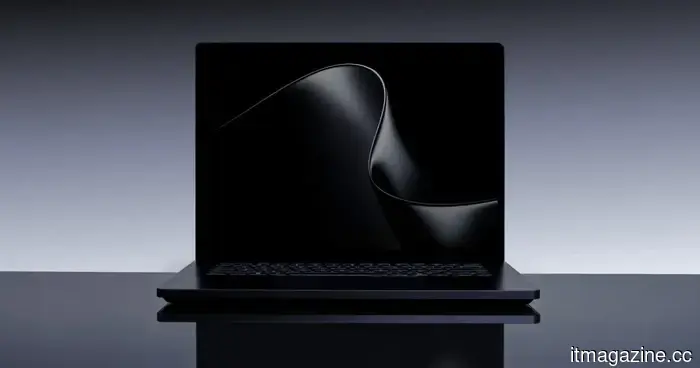 Microsoft unveils the Surface Laptop Ultra featuring Nvidia's RTX Spark chip.
Microsoft has just unveiled the Surface Laptop Ultra, its most powerful laptop to date. It is capable of handling intensive AI tasks entirely on the device without needing cloud support, and it can last all day on a single charge.
Microsoft unveils the Surface Laptop Ultra featuring Nvidia's RTX Spark chip.
Microsoft has just unveiled the Surface Laptop Ultra, its most powerful laptop to date. It is capable of handling intensive AI tasks entirely on the device without needing cloud support, and it can last all day on a single charge.
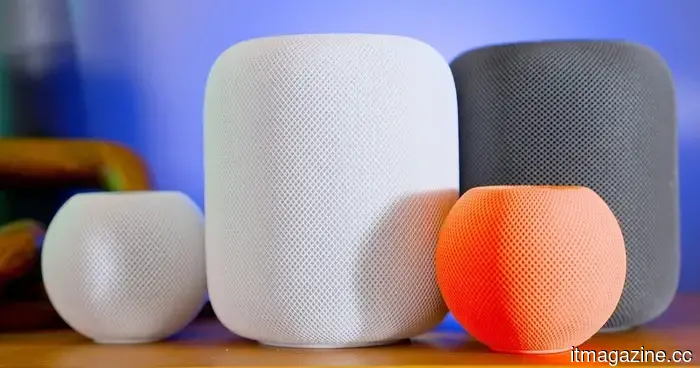 The new Apple TV and HomePod mini seem to be set for a launch this fall.
Apple is said to be readying updated Apple TV and HomePod mini devices featuring enhanced Siri and Apple Intelligence capabilities, anticipated to be launched this fall.
The new Apple TV and HomePod mini seem to be set for a launch this fall.
Apple is said to be readying updated Apple TV and HomePod mini devices featuring enhanced Siri and Apple Intelligence capabilities, anticipated to be launched this fall.
 AI surpasses nuclear weapons at the Shangri-La Dialogue defense summit.
High-ranking military leaders from Pakistan, the Netherlands, China, and the ICRC cautioned at the Shangri-La Dialogue that artificial intelligence is accelerating wartime decision-making beyond the capacity of human thought.
AI surpasses nuclear weapons at the Shangri-La Dialogue defense summit.
High-ranking military leaders from Pakistan, the Netherlands, China, and the ICRC cautioned at the Shangri-La Dialogue that artificial intelligence is accelerating wartime decision-making beyond the capacity of human thought.
 Nadella discreetly restructured Microsoft's leadership hierarchy. The senior leadership team that had been at the helm of the company for many years has been eliminated.
The CEO of Microsoft has substituted the senior leadership team with engineering groups resembling those in startups. He examines AI metrics on a weekly basis himself.
Nadella discreetly restructured Microsoft's leadership hierarchy. The senior leadership team that had been at the helm of the company for many years has been eliminated.
The CEO of Microsoft has substituted the senior leadership team with engineering groups resembling those in startups. He examines AI metrics on a weekly basis himself.
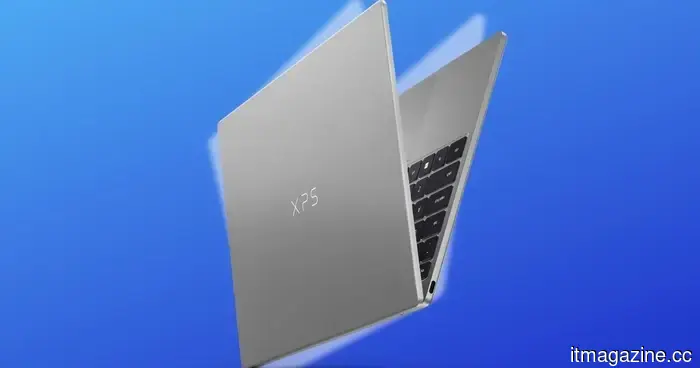 Dell introduces its slimmest and lightest XPS 13 priced at only $699 to compete with the MacBook Neo.
The Dell XPS 13 features a sharper 120Hz display, a backlit keyboard, quicker ports, and a biometric face scanning option to address the shortcomings of the MacBook Air.
Dell introduces its slimmest and lightest XPS 13 priced at only $699 to compete with the MacBook Neo.
The Dell XPS 13 features a sharper 120Hz display, a backlit keyboard, quicker ports, and a biometric face scanning option to address the shortcomings of the MacBook Air.
Nadella discreetly broke down Microsoft's leadership framework. The senior leadership team that managed the company for many years has been eliminated.
The CEO of Microsoft has substituted the senior leadership team with engineering groups modeled after startups. He conducts a personal review of AI metrics on a weekly basis.