
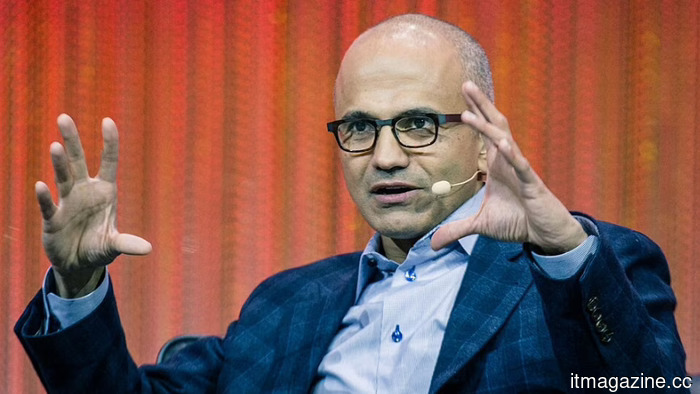
Nadella discreetly restructured Microsoft's leadership hierarchy. The senior leadership team that had been at the helm of the company for many years has been eliminated.
TL;DR: Satya Nadella has disbanded Microsoft's long-standing senior leadership team, replacing it with startup-style engineering groups and conducts weekly reviews of AI metrics.
Nadella has eliminated the senior leadership structure that has overseen Microsoft for many years. A source close to the CEO informed Business Insider that the company has "quietly retired what’s known as the SLT." The senior leadership team, comprised of influential executives managing large business divisions and directly accountable to Nadella, no longer exists.
In its place, Nadella has established three new groups. A corporate leadership group consisting of five members—Nadella, Brad Smith, Amy Hood, Amy Coleman, and Judson Althoff—meets weekly for governance. An engineering leadership group of about 35 product and engineering leaders collaborates closely, rather than through extensive managerial hierarchies. A separate Copilot leadership team, made up of Charles Lamanna, Jacob Andreou, and Ryan Roslansky, also has weekly meetings with Nadella.
Nadella reviews AI metrics personally each week and engages with the Azure cloud infrastructure team biweekly. This new structure aligns with the startup-style operational model he has publicly endorsed, enabling engineers, researchers, and product developers to work directly together. The lengthy managerial chains typical of Microsoft's cloud phase have been streamlined.
According to someone close to the CEO, "the pace of this platform shift is occurring faster than anything we've witnessed." They emphasized, "Microsoft cannot afford to be slow." The company's stock experienced its worst quarter since the 2008 financial crisis as investors pressured Nadella for returns on substantial investments in AI.
Recognizing that Microsoft's size has become “a massive disadvantage” in the current AI landscape, Nadella has been examining startups. The restructuring comes after he urged leaders over the past year to either adapt to a more rigorous culture or step down, leading to several high-profile exits.
The executive changes are significant. Rajesh Jha, a key product leader at Microsoft for years, is retiring on July 1. Yusuf Mehdi, a veteran consumer marketing executive with 35 years at the company, is departing. Charlie Bell, considered a crucial architect of AWS who joined Microsoft in 2021 to lead security teams, now holds the title of "engineer" with no direct reports listed.
Mustafa Suleyman, co-founder of DeepMind whom Nadella recruited in 2024 to establish a new AI division, now oversees a narrower range of approximately 650 employees. He remains close to Nadella and is focused on superintelligence, as his initial AI division role has been integrated into the larger engineering framework.
Perhaps the most unexpected change was in the gaming sector. Asha Sharma succeeded longtime Xbox leader Phil Spencer as CEO of Microsoft Gaming in February. Sharma, who transitioned from Instacart and Meta to Microsoft’s Core AI group in 2024, had limited gaming experience. Nadella has been mentoring her privately and believes she can modernize the business.
Emerging leaders include Arun Ulag, a Microsoft veteran promoted to EVP in April. Ulag reports to cloud chief Scott Guthrie but is treated by Nadella as a direct report. Pavan Davuluri, a 25-year Microsoft veteran involved with the original Surface team, now leads Windows and devices. Hayete Gallot, who briefly left Microsoft for Google Cloud, returned to succeed Bell as EVP of security.
Microsoft’s Trusted Technology Group, which we previously reported on, is part of this restructured framework. Jenny Lay-Flurrie's responsible AI initiatives report into a flatter organization, emphasizing engineering leadership.
This restructuring reflects a broader trend in enterprise software. Investors have doubted the ability of legacy SaaS companies to compete in the AI era, exemplified by Salesforce’s 51% drop in value. Microsoft’s solution is to dismantle slow management layers and rebuild with smaller teams, frequent AI evaluations, and closer reporting structures to the CEO.
Jason Schloetzer, a professor at Georgetown, stated that the rapid evolution in technology demands “senior-level executives to maintain a strong understanding of local dynamics.” When asked if any large company has successfully addressed this, he responded, “I cannot think of a company among the dozens I engage with regularly.”
Nadella aims to transform a 220,000-person organization into one that operates similarly to a 35-person engineering team with the support of 220,000 employees. Whether this transformation is feasible remains to be seen, as indicated by the company's stock price. The SLT is gone, AI metrics are reviewed weekly, the old leadership is retiring, and the reboot is in progress.
Other articles
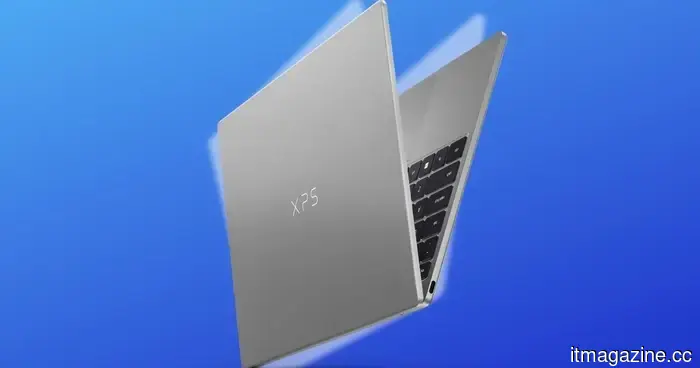 Dell unveils its slimmest and lightest XPS 13, priced at only $699, in an effort to outshine the MacBook Neo.
The Dell XPS 13 features a more vibrant 120Hz display, a backlit keyboard, quicker ports, and a biometric facial recognition option to cover the shortcomings of the MacBook Air.
Dell unveils its slimmest and lightest XPS 13, priced at only $699, in an effort to outshine the MacBook Neo.
The Dell XPS 13 features a more vibrant 120Hz display, a backlit keyboard, quicker ports, and a biometric facial recognition option to cover the shortcomings of the MacBook Air.
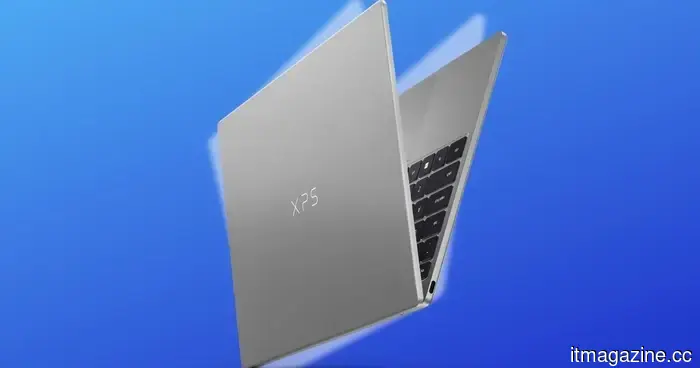 Dell introduces its slimmest and lightest XPS 13 priced at only $699 to compete with the MacBook Neo.
The Dell XPS 13 features a sharper 120Hz display, a backlit keyboard, quicker ports, and a biometric face scanning option to address the shortcomings of the MacBook Air.
Dell introduces its slimmest and lightest XPS 13 priced at only $699 to compete with the MacBook Neo.
The Dell XPS 13 features a sharper 120Hz display, a backlit keyboard, quicker ports, and a biometric face scanning option to address the shortcomings of the MacBook Air.
 LG Electronics has seen a fourfold increase this year, driven by a meeting with Jensen Huang regarding physical AI.
LG reached its 30% daily limit for two consecutive sessions following news that the chair of LG Group will meet with Nvidia's CEO to talk about robots and smart factories.
LG Electronics has seen a fourfold increase this year, driven by a meeting with Jensen Huang regarding physical AI.
LG reached its 30% daily limit for two consecutive sessions following news that the chair of LG Group will meet with Nvidia's CEO to talk about robots and smart factories.
 Asus may face a chip disappointment with its upcoming ROG Ally gaming handheld.
A recently uncovered ASUS handheld might introduce a quicker processor, but the absence of one upgrade could leave gamers desiring additional features.
Asus may face a chip disappointment with its upcoming ROG Ally gaming handheld.
A recently uncovered ASUS handheld might introduce a quicker processor, but the absence of one upgrade could leave gamers desiring additional features.
 A leak from Nvidia has revealed several versions of its forthcoming N1-series processors.
Nvidia's forthcoming PC processor plans appear to have been revealed earlier than expected, and the disclosure suggests that there is more at stake than just one flagship chip.
A leak from Nvidia has revealed several versions of its forthcoming N1-series processors.
Nvidia's forthcoming PC processor plans appear to have been revealed earlier than expected, and the disclosure suggests that there is more at stake than just one flagship chip.
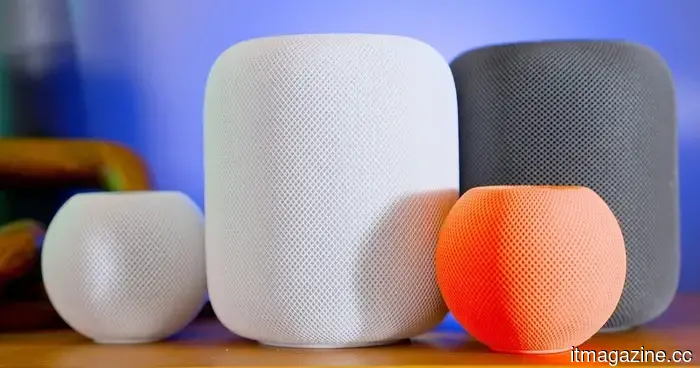 The new Apple TV and HomePod mini seem to be set for a launch this fall.
Apple is said to be readying updated Apple TV and HomePod mini devices featuring enhanced Siri and Apple Intelligence capabilities, anticipated to be launched this fall.
The new Apple TV and HomePod mini seem to be set for a launch this fall.
Apple is said to be readying updated Apple TV and HomePod mini devices featuring enhanced Siri and Apple Intelligence capabilities, anticipated to be launched this fall.
Nadella discreetly restructured Microsoft's leadership hierarchy. The senior leadership team that had been at the helm of the company for many years has been eliminated.
The CEO of Microsoft has substituted the senior leadership team with engineering groups resembling those in startups. He examines AI metrics on a weekly basis himself.