
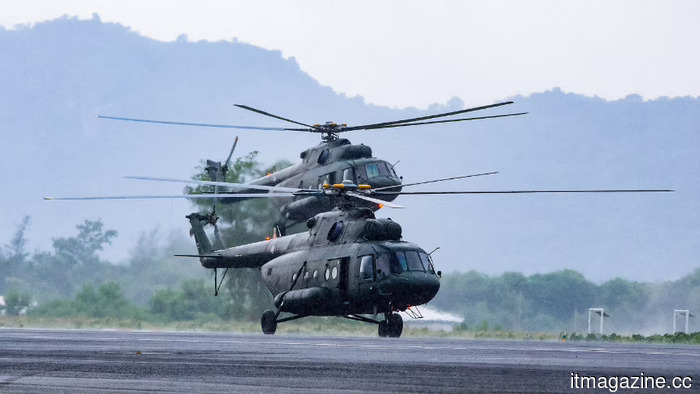
AI surpasses nuclear weapons at the Shangri-La Dialogue defense summit.
At the Shangri-La Dialogue in Singapore, senior military officials expressed concerns that AI is accelerating battlefield decision-making faster than human capabilities, surpassing nuclear weapons as the primary strategic worry. Examples from the Ukraine conflict and the US-Iran tensions were highlighted to illustrate AI's impact on combat operations.
During a strategic stability panel, the dangers posed by artificial intelligence took center stage, with military leaders cautioning that AI systems are significantly reducing the time available for humans to make decisions in conflict scenarios. This annual defense summit, which took place from May 29 to 31, gathered defense ministers and military leaders from the Indo-Pacific region and beyond.
Lieutenant General Nauman Zakria of the Pakistan Army explained the threat through the OODA loop framework—observe, orient, decide, and act—indicating that AI's speed condenses this process to the extent that "a human can’t evaluate the situation fast enough." He warned that this could lead to irrational and extreme actions.
The warnings are based on current realities. General Onno Eichelsheim, the chief of defence of the Netherlands, pointed out that AI is already present in active combat. Ukrainian forces are using AI to predict Russian assaults and coordinate drone operations on the front lines, utilizing machine learning from years of battlefield footage to identify targets and adapt in real-time.
The US also confirmed its use of AI in planning strikes against Iranian targets, with the Pentagon revealing that advanced AI tools were employed to analyze data and make quicker targeting decisions during Operation Epic Fury, which has hit over 13,000 targets.
Eichelsheim stated, “AI is a huge risk in escalation. I think that’s clear,” while acknowledging that it is already integrated into military operations.
Mirjana Spoljaric, president of the International Committee of the Red Cross and the sole panelist not directly involved in defense, provided a stark evaluation of AI's humanitarian risks. She cautioned that while technology can enhance lives, it is significantly amplifying the hazards of warfare. “We don’t know where the trigger is pulled,” she explained, noting that it could be thousands of kilometers away. She emphasized that although AI has potential benefits for civilian protection, the current reality predominantly shows its negative aspects.
The ICRC has consistently advocated for maintaining substantial human control over targeting decisions in autonomous weapons systems, a stance that is becoming increasingly urgent as AI technologies transition from experimental phases to active use. No major military power has yet committed to binding regulations concerning autonomous weapons, despite ongoing discussions at the United Nations Convention on Certain Conventional Weapons.
While nuclear weapons were still part of the discussion, Major General Meng Xiangqing of the People’s Liberation Army reiterated China’s no-first-use policy and encouraged all recognized nuclear states to agree on a mutual no-first-use treaty, expressing that achieving this could mitigate risks and enhance strategic stability.
China has also called for international regulations on the military use of AI, suggesting the need for binding legal frameworks. However, its stance on autonomous weapons remains unclear, as a position paper on military AI regulation did not address restrictions on lethal autonomous systems, and the PLA is heavily investing in AI-enhanced military capabilities.
The underlying issue highlighted in the panel discussions was not that AI itself is inherently perilous, but that its rapid pace creates fundamental challenges for managing conflict. Traditional deterrence relies on decision-makers having sufficient time to evaluate information, consult allies, and consider consequences before taking action. However, AI-enabled systems can identify targets, suggest responses, and execute operations more swiftly than any human oversight can manage.
This issue becomes critical during escalation moments. If one side's AI detects an incoming threat and recommends immediate action, decision-makers might only have seconds rather than minutes to determine the accuracy of the threat assessment. Military experts have long warned that this scenario could lead to misjudgments escalating into full-blown conflicts before timely interventions are possible.
The Shangri-La Dialogue did not yield new agreements or binding pledges regarding military AI, and efforts to create legal frameworks for AI governance continue to be disjointed across different jurisdictions. Nevertheless, the fact that a panel focused on strategic stability—historically a conversation regarding nuclear posture and missile defense—dedicated most of its time to discussing artificial intelligence reflects a significant shift in how global defense entities now perceive the most urgent threats to international security. The pressing concern is no longer whether AI will be incorporated into warfare but rather whether humans will maintain sufficient control to avert catastrophic errors.
Other articles
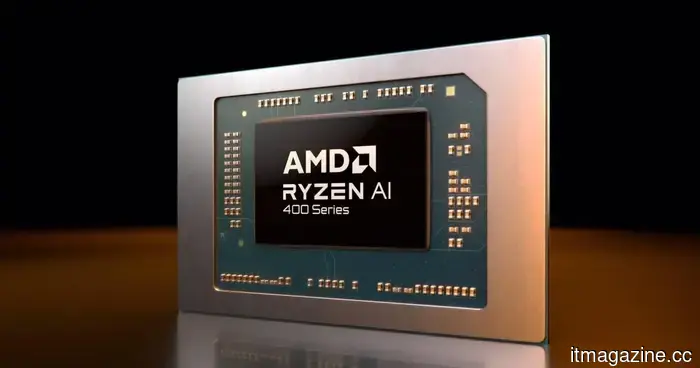 AMD has just provided PC gamers with a reason to relax about upgrading.
AMD announced two new X3D gaming processors, extended AM5 support until 2029, and presented a new Radeon GPU at Computex 2026. The more significant aspect might be the implications for future upgrades.
AMD has just provided PC gamers with a reason to relax about upgrading.
AMD announced two new X3D gaming processors, extended AM5 support until 2029, and presented a new Radeon GPU at Computex 2026. The more significant aspect might be the implications for future upgrades.
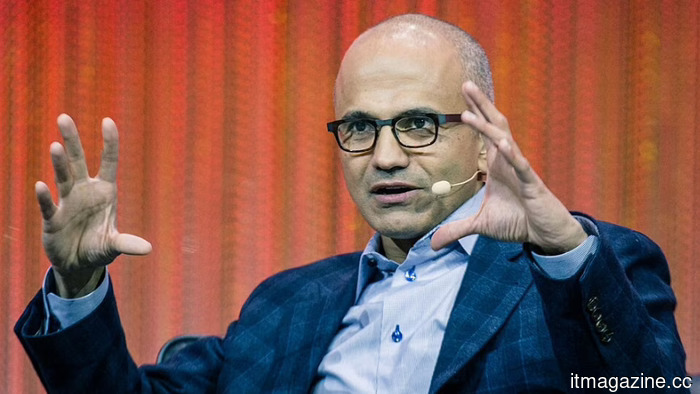 Nadella discreetly restructured Microsoft's leadership hierarchy. The senior leadership team that had been at the helm of the company for many years has been eliminated.
The CEO of Microsoft has substituted the senior leadership team with engineering groups resembling those in startups. He examines AI metrics on a weekly basis himself.
Nadella discreetly restructured Microsoft's leadership hierarchy. The senior leadership team that had been at the helm of the company for many years has been eliminated.
The CEO of Microsoft has substituted the senior leadership team with engineering groups resembling those in startups. He examines AI metrics on a weekly basis himself.
 Asus may face a chip disappointment with its upcoming ROG Ally gaming handheld.
A recently leaked ASUS handheld might offer a quicker chip, but the absence of one enhancement could leave gamers unsatisfied.
Asus may face a chip disappointment with its upcoming ROG Ally gaming handheld.
A recently leaked ASUS handheld might offer a quicker chip, but the absence of one enhancement could leave gamers unsatisfied.
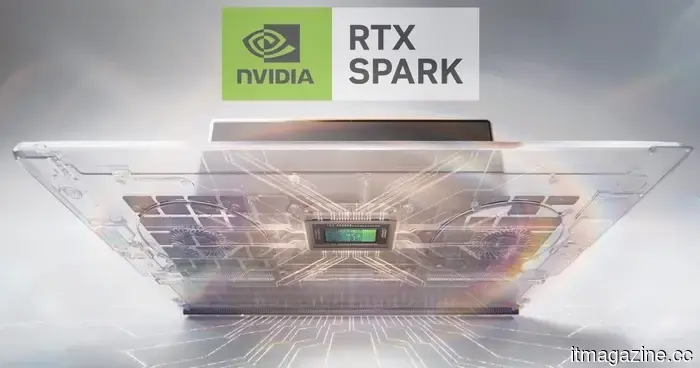 Nvidia introduces the RTX Spark processor for premium laptops, marking a significant advancement.
NVIDIA's latest RTX Spark superchip transforms Windows laptops into powerful personal AI machines, capable of managing agents, 3D rendering, video editing, and AAA gaming, all within a sleek design.
Nvidia introduces the RTX Spark processor for premium laptops, marking a significant advancement.
NVIDIA's latest RTX Spark superchip transforms Windows laptops into powerful personal AI machines, capable of managing agents, 3D rendering, video editing, and AAA gaming, all within a sleek design.
 A leak from Nvidia has revealed details about several versions of its forthcoming N1-series processors.
Nvidia's anticipated PC processor plans might have been revealed earlier than intended, and the leak suggests that there is something significantly larger than just one flagship chip.
A leak from Nvidia has revealed details about several versions of its forthcoming N1-series processors.
Nvidia's anticipated PC processor plans might have been revealed earlier than intended, and the leak suggests that there is something significantly larger than just one flagship chip.
 The new Apple TV and HomePod mini seem to be set for a launch this fall.
Apple is said to be readying updated Apple TV and HomePod mini devices featuring enhanced Siri and Apple Intelligence capabilities, anticipated to be launched this fall.
The new Apple TV and HomePod mini seem to be set for a launch this fall.
Apple is said to be readying updated Apple TV and HomePod mini devices featuring enhanced Siri and Apple Intelligence capabilities, anticipated to be launched this fall.
AI surpasses nuclear weapons at the Shangri-La Dialogue defense summit.
High-ranking military leaders from Pakistan, the Netherlands, China, and the ICRC cautioned at the Shangri-La Dialogue that artificial intelligence is accelerating wartime decision-making beyond the capacity of human thought.