
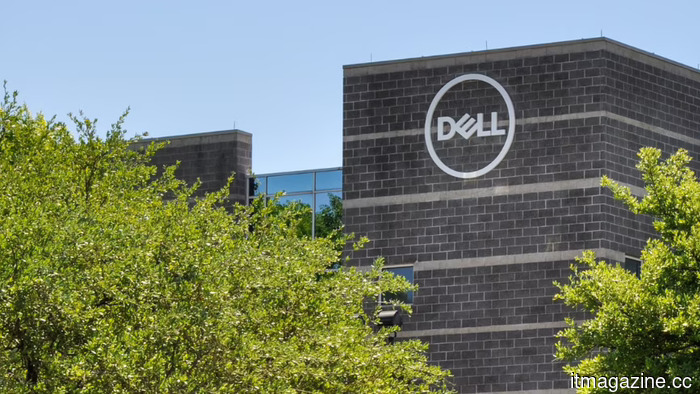
Dell's $699 XPS 13 directly enters the realm of MacBook Neo.
Dell introduced a new XPS 13 at Computex on Sunday, starting at $699 for general consumers and $599 for students aged 16 and older. This marks the first time the company's flagship thin-and-light laptop series has entered a price range close to that of the MacBook Neo.
The key highlight is the pricing strategy, placing Dell's prestigious consumer laptop sub-brand into a segment that Apple has previously dominated since the launch of the MacBook Neo earlier this year.
In terms of hardware, the new XPS 13 (model number DX13260) weighs 2.2 lbs (0.9kg) and is 0.5 inches (12.7mm) thick, making it the lightest and thinnest XPS model ever created by Dell. In contrast, the MacBook Neo and MacBook Air both weigh 2.7 lbs. The Dell laptop comes equipped with Intel's new Wildcat Lake CPU at the entry level, which is marketed as a low-power x86 processor optimized for battery life and thermal management, similar to Apple's Silicon since 2020. Dell claims up to 17 hours of battery life for streaming. The laptop features an aluminum chassis rather than the plastic commonly found in the sub-$700 laptop category, and it includes a touchscreen.
The competitive pricing of the XPS 13 is intended to challenge the structural pricing issues posed by the MacBook Neo. Apple's entry-level MacBook is priced at $599, with a reduced cost of $499 for education purchasers. While the XPS 13 is $100 more expensive for retail customers, it matches the educational pricing at $599. Thus, Dell is not underpricing Apple overall but is competing effectively in the student market with advantages such as weight and touchscreen capabilities, alongside the flexibility in the OEM ecosystem that Apple Silicon does not provide.
The touchscreen is particularly significant, as many macOS users state they would switch to a Windows laptop for that feature. Dell faces a tougher strategic scenario; the XPS line has been regarded as its premium consumer-laptop product line since the original ultrabook launch in 2013. The first XPS 13 debuted at $999, and later models generally maintained that price while introducing new features. Lowering the starting price by $300 to compete with Apple's aggressive entry-level pricing represents a meaningful strategic shift. This suggests that Dell's consumer laptop margins are transitioning from a focus on premium products to one based on volume, indicating the company believes the most viable strategy in the Apple-Silicon era is to aggressively price against Apple’s entry-level offerings rather than targeting the premium market that has largely shifted to Mac.
The Intel aspect of the situation is also important. Wildcat Lake represents Intel's new low-power x86 generation, specifically aimed at competing with the power efficiency and battery performance of Apple Silicon. The Dell XPS 13 is the most prominent launch featuring Wildcat Lake, serving as both a strategic announcement for Dell and a statement on Intel's performance credibility. Should the platform receive favorable reviews, it would be a significant victory for Intel in the x86 consumer laptop market, which has been overshadowed by Apple's Arm-based Silicon over the past five years. Conversely, if it falls short, the Dell-Intel collaboration would face challenges on both fronts.
The context of Computex is notable as well. This launch coincided with Jensen Huang’s keynote in Taipei, where he referred to Taiwan as the “epicenter” of the AI revolution and outlined Nvidia's $150 billion in annual spending in Taiwan. Dell's announcement can be seen as a counter-positioning strategy: while Nvidia and the AI-data-center sector consolidate in Taiwan, Dell argues there is still potential for the broader PC industry to release appealing consumer products, suggesting that the AI-data-center boom is one narrative and the consumer laptop refresh is another. The independence of these two narratives is a separate analytical consideration.
The XPS 13 is set to be available in June, with initial reviews anticipated around the same timeframe. Following the launch, Dell's shares rose modestly in pre-market trading.
Other articles
 Founders of Revolut, Mistral, and Wayve support Balderton’s initiative for ‘Built in Europe.’
Balderton Capital has initiated 'Built in Europe', a five-city advertising campaign and job platform supported by over 100 founders from companies including Revolut, Mistral, Wayve, among others.
Founders of Revolut, Mistral, and Wayve support Balderton’s initiative for ‘Built in Europe.’
Balderton Capital has initiated 'Built in Europe', a five-city advertising campaign and job platform supported by over 100 founders from companies including Revolut, Mistral, Wayve, among others.
 China formalizes stricter regulations on outbound investments following the Meta-Manus blockade.
China has established stricter regulations on outbound investments that formalise the technology-tracing method the NDRC employed to reverse Meta's $2 billion acquisition of Manus. As a result, cross-border AI transactions have become considerably more challenging.
China formalizes stricter regulations on outbound investments following the Meta-Manus blockade.
China has established stricter regulations on outbound investments that formalise the technology-tracing method the NDRC employed to reverse Meta's $2 billion acquisition of Manus. As a result, cross-border AI transactions have become considerably more challenging.
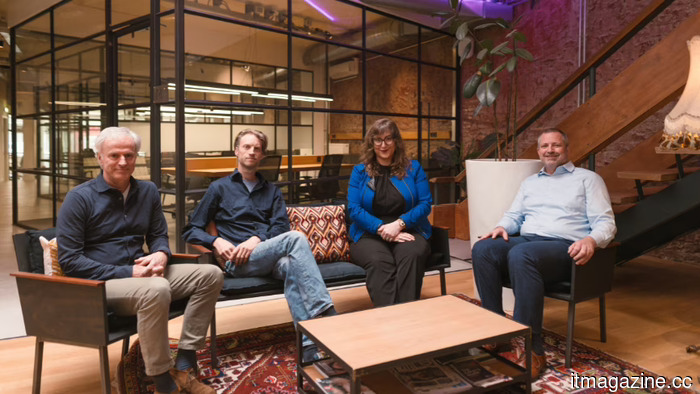 The ASML spinout Invisix has secured €20 million to explore areas within chips that optics cannot reveal.
Eindhoven's Invisix has secured a €20M seed funding round to introduce soft x-ray metrology, grounded in Nobel Prize-awarded physics, into high-volume chip production.
The ASML spinout Invisix has secured €20 million to explore areas within chips that optics cannot reveal.
Eindhoven's Invisix has secured a €20M seed funding round to introduce soft x-ray metrology, grounded in Nobel Prize-awarded physics, into high-volume chip production.
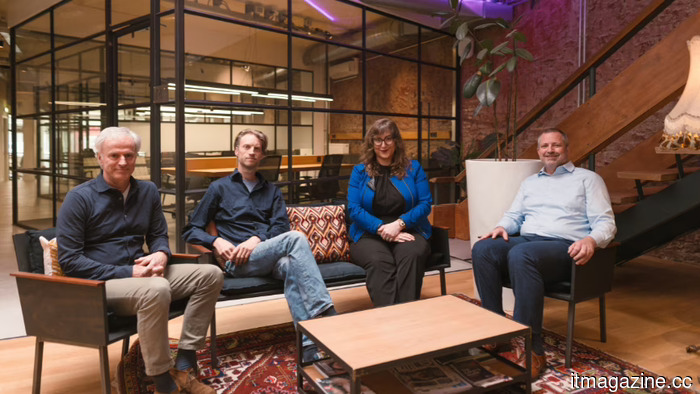 ASML spinout Invisix secures €20M to explore what the optics cannot reveal inside chips.
Eindhoven's Invisix has secured a €20M seed round to introduce soft x-ray metrology, based on Nobel-winning physics, to large-scale chip production.
ASML spinout Invisix secures €20M to explore what the optics cannot reveal inside chips.
Eindhoven's Invisix has secured a €20M seed round to introduce soft x-ray metrology, based on Nobel-winning physics, to large-scale chip production.
 Snapchat Planets: What is their sequence, and what do they represent?
Snapchat Planets transforms your friendship rankings into a miniature social solar system, where being Mercury is prestigious, while being Neptune could be a bit hurtful.
Snapchat Planets: What is their sequence, and what do they represent?
Snapchat Planets transforms your friendship rankings into a miniature social solar system, where being Mercury is prestigious, while being Neptune could be a bit hurtful.
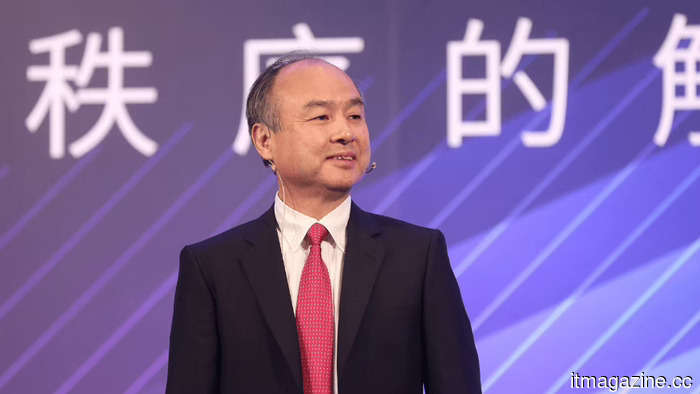 SoftBank surpasses Toyota to become Japan's most valuable company amid the AI surge.
On Monday, SoftBank's market capitalization surpassed Toyota's for the first time in 23 years, fueled by its $65 billion investment in OpenAI and a Nikkei 225 reaching over 67,000.
SoftBank surpasses Toyota to become Japan's most valuable company amid the AI surge.
On Monday, SoftBank's market capitalization surpassed Toyota's for the first time in 23 years, fueled by its $65 billion investment in OpenAI and a Nikkei 225 reaching over 67,000.
Dell's $699 XPS 13 directly enters the realm of MacBook Neo.
Dell introduced a new XPS 13 priced at $699 ($599 for students), targeting Apple’s MacBook Neo by offering a touchscreen, reduced weight, and Intel’s latest Wildcat Lake CPU.