
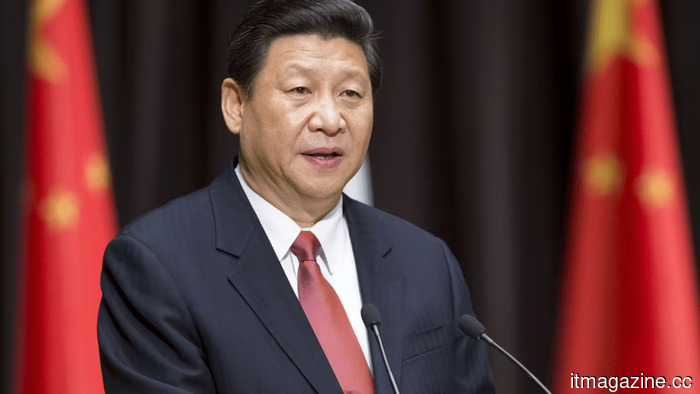
China formalizes stricter regulations on outbound investments following the Meta-Manus blockade.
Beijing has established a new framework for outbound investment review that formalizes the technology-tracing strategy employed by the National Development and Reform Commission (NDRC) to block Meta’s $2 billion acquisition of AI startup Manus. This development significantly complicates cross-border AI transactions.
The revised regulations, reported by Reuters on Monday, provide Chinese authorities with an enhanced toolkit for obstructing international AI and technology deals, especially those involving technology, talent, or intellectual property originating from China, regardless of the incorporation status of the company involved.
The situation with Meta and Manus serves as the model for this new framework. Manus, an AI-agent startup founded in China that moved its headquarters to Singapore before announcing the Meta acquisition in December 2025, was blocked by the NDRC on national security grounds in April.
The NDRC adopted an assertive approach, focusing not only on the company’s registered location but also on where Manus’s technology was developed, where its engineering team gained expertise, and how the intellectual property was transferred from the original Chinese entity.
The updated rules formalize this technology-tracing method, asserting Chinese jurisdiction over cross-border transactions based on the origin of technology instead of corporate registration.
As a result, the restructuring strategy employed by many Chinese AI startups—moving operations to Singapore or the Cayman Islands to evade regulatory scrutiny during foreign acquisitions—no longer guarantees protection from Chinese review.
Previously, Chinese AI talent typically followed a route of establishing a company in China, relocating it offshore, and then selling to a US buyer for global market monetization. However, under the newly formalized technology-tracing approach, Beijing retains effective veto power over such exits, irrespective of the jurisdiction of the involved corporate entity at the time of the transaction.
The Manus acquisition was the first instance publicly acknowledged of China’s foreign investment security review mechanism being used to dismantle a cross-border AI deal. Now, this method has become the standard procedure, with NDRC's framework explicitly considering technology, intellectual property, and critical personnel as factors for review even if the acquisition target is not Chinese.
This framework is part of a broader initiative in Beijing for 2026, which includes stricter travel limitations on top AI researchers at private companies, directives for leading AI startups like Moonshot and StepFun to decline US-origin investments without prior approval, and efforts to solidify Chinese AI firms within domestically incorporated structures.
In comparison, the US has been more transparent in its actions, tightening outbound investment regulations and semiconductor export controls over the past three years to slow down Chinese AI advancements. In contrast, Beijing’s approach, evidenced by the new framework, reflects a focus on restricting outbound exits instead of inbound capital.
While the US is creating barriers to prevent AI capabilities from reaching China, China is erecting barriers to stop AI capabilities from leaving. Both nations are training their technology workforces under the assumption that they can no longer rely on the bilateral commercial relationship.
For Meta, the Manus deal now appears definitively canceled, with the company reportedly writing off its $2 billion investment in the latest quarter and halting plans for operational integration.
Other US tech firms considering acquisitions of Chinese-origin AI companies through offshore entities now face significant regulatory challenges. Several similar pending deals are reportedly being restructured or abandoned as a result.
Consequently, the landscape for Chinese AI businesses is evolving. Companies like Moonshot AI and StepFun, which previously utilized offshore incorporation, are contemplating re-establishing themselves on the mainland, partly due to the weakening offshore protection strategy and also because of a more straightforward exit strategy offered by Beijing’s domestic IPO regulations.
As a result, China is also making efforts to retain its AI talent within the country more aggressively. The new outbound investment regulations are effective immediately, raising the regulatory hurdles for foreign buyers interested in acquiring Chinese AI-origin assets significantly compared to just four months ago.
Other articles
 The United States is taking steps to eliminate the loophole that allows Nvidia's leading chips to be sold to Chinese companies overseas.
The US Commerce Department has broadened its chip-export license regulations to apply to Chinese-based companies regardless of their location, eliminating a loophole that existed for a year.
The United States is taking steps to eliminate the loophole that allows Nvidia's leading chips to be sold to Chinese companies overseas.
The US Commerce Department has broadened its chip-export license regulations to apply to Chinese-based companies regardless of their location, eliminating a loophole that existed for a year.
 ASML spinout Invisix has secured €20 million to explore what optics cannot visualize within the chips.
Eindhoven's Invisix has secured a €20 million seed investment to introduce soft X-ray metrology, based on Nobel Prize-winning physics, into large-scale chip production.
ASML spinout Invisix has secured €20 million to explore what optics cannot visualize within the chips.
Eindhoven's Invisix has secured a €20 million seed investment to introduce soft X-ray metrology, based on Nobel Prize-winning physics, into large-scale chip production.
 The US takes steps to eliminate the loophole that allows Nvidia's leading chips to be shipped to Chinese companies overseas.
The US Commerce Department has broadened the chip-export license regulations to encompass Chinese-based companies regardless of their location, thereby addressing a loophole that has existed for a year.
The US takes steps to eliminate the loophole that allows Nvidia's leading chips to be shipped to Chinese companies overseas.
The US Commerce Department has broadened the chip-export license regulations to encompass Chinese-based companies regardless of their location, thereby addressing a loophole that has existed for a year.
 ASML spinout Invisix secures €20M to explore what the optics cannot reveal inside chips.
Eindhoven's Invisix has secured a €20M seed round to introduce soft x-ray metrology, based on Nobel-winning physics, to large-scale chip production.
ASML spinout Invisix secures €20M to explore what the optics cannot reveal inside chips.
Eindhoven's Invisix has secured a €20M seed round to introduce soft x-ray metrology, based on Nobel-winning physics, to large-scale chip production.
 The ASML spinout Invisix has secured €20 million to explore areas within chips that optics cannot reveal.
Eindhoven's Invisix has secured a €20M seed funding round to introduce soft x-ray metrology, grounded in Nobel Prize-awarded physics, into high-volume chip production.
The ASML spinout Invisix has secured €20 million to explore areas within chips that optics cannot reveal.
Eindhoven's Invisix has secured a €20M seed funding round to introduce soft x-ray metrology, grounded in Nobel Prize-awarded physics, into high-volume chip production.
 Founders of Revolut, Mistral, and Wayve support Balderton’s initiative for ‘Built in Europe.’
Balderton Capital has initiated 'Built in Europe', a five-city advertising campaign and job platform supported by over 100 founders from companies including Revolut, Mistral, Wayve, among others.
Founders of Revolut, Mistral, and Wayve support Balderton’s initiative for ‘Built in Europe.’
Balderton Capital has initiated 'Built in Europe', a five-city advertising campaign and job platform supported by over 100 founders from companies including Revolut, Mistral, Wayve, among others.
China formalizes stricter regulations on outbound investments following the Meta-Manus blockade.
China has established stricter regulations on outbound investments that formalise the technology-tracing method the NDRC employed to reverse Meta's $2 billion acquisition of Manus. As a result, cross-border AI transactions have become considerably more challenging.