
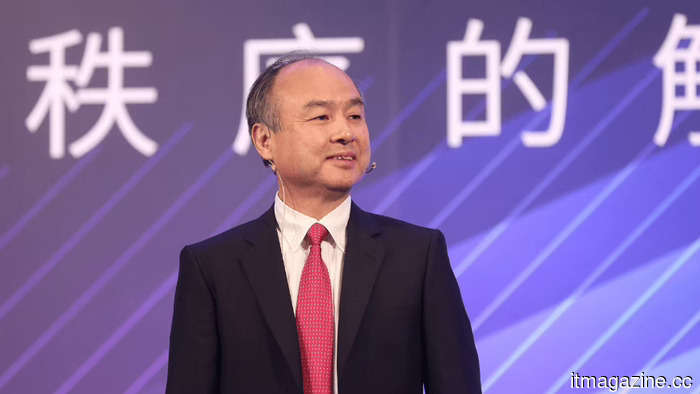
SoftBank surpasses Toyota to become Japan's most valuable company amid the AI surge.
On Monday, SoftBank’s market capitalization surpassed Toyota’s for the first time in 23 years, buoyed by its approximately $65 billion investment in OpenAI and the Nikkei index breaking the 67,000 mark for the first time.
SoftBank Group overtook Toyota Motor to become Japan's most valuable publicly listed company, marking the first time the automotive giant has been displaced from the top of the Japanese business hierarchy in 23 years. SoftBank's market cap reached approximately ¥47.2 trillion (about $296 billion), surpassing Toyota’s ¥45.7 trillion following a 4.8% drop in the carmaker's stock. This crossover was confirmed during trading on the Tokyo Stock Exchange.
This transition has symbolic significance that goes beyond just the numbers. Toyota has maintained the top position in Japan’s market-cap rankings since 2003, and its replacement by Masayoshi Son’s technology and investment conglomerate signifies a structural shift in Japanese corporate leadership from the post-war manufacturing-export model to one focused on AI investment and licensing.
Toyota’s shareholders may view the development as a single poor trading day; however, the broader implications for corporate Japan are more complex. The primary driver behind this shift is SoftBank’s investment in OpenAI. The Japanese company has invested around $65 billion in a series of funding rounds for OpenAI, with the latest round closing on December 31, 2025, at $22.5 billion.
SoftBank now owns approximately 13% of OpenAI on a pro forma basis, a stake whose value fluctuates with new valuations from OpenAI. With OpenAI reportedly preparing for an IPO targeting a trillion-dollar valuation, SoftBank’s stake could be worth more than $130 billion at that implied valuation. The market is currently viewing SoftBank more as a publicly traded proxy for OpenAI rather than as a Japanese technology conglomerate.
The broader context of the Japanese market also plays a role. The Nikkei 225 index reached 67,000 for the first time on Monday, driven by the same AI-related momentum lifting SoftBank. SoftBank’s share price gained as much as 10% during the session, making it the largest contributor to the index rise; the overall AI-related stocks on the Tokyo Stock Exchange have rallied about 30% year-to-date, significantly outperforming the broader Topix.
The planned spin-off of SB Energy Corp., which is reportedly preparing for a US listing, has added another catalyst alongside the OpenAI investment. SoftBank’s recent capital investments have been notably aggressive, even by Son’s standards. The group concluded its $22.5 billion OpenAI investment at the end of 2025, invested $2 billion in Intel, completed the acquisition of Ampere Computing, expanded its holding in Arm during the rally of listed shares, and committed €75 billion ($87.3 billion) over five years for AI infrastructure development in France.
The overarching narrative Son has presented, which posits that “artificial superintelligence” will emerge within a decade and that SoftBank should aim to own as much of the relevant supply chain as possible by then, has become the defining strategic direction for the company.
With the increased size of the position, the risk profile has changed. SoftBank's valuation is now significantly influenced by OpenAI's implied valuation, Arm’s listed share price, and the overall sentiment regarding AI-related capital expenditures. The 60% rally in SoftBank’s shares over the past four trading days reflects optimism regarding all three factors; however, a reversal in any of these areas could lead to a swift decline in valuation.
Historically, Toyota’s ¥45.7 trillion market cap was based on a global vehicle sales operation generating around ¥45 trillion in annual revenue, while SoftBank's ¥47.2 trillion market cap is based primarily on the implied valuations of portfolio companies it doesn't control.
The political and cultural implications are also noteworthy. Toyota’s longstanding position at the pinnacle of the Japanese corporate structure has been regarded internally as a stabilizing element of national industrial identity for two decades. Its replacement by SoftBank, a company structured as an investment holding rather than an operating manufacturer, hints that the post-war corporate-state partnership, centered on the export of physical goods, may be transitioning to a new paradigm.
Whether this new model proves sustainable will depend on future OpenAI valuations and the direction of the Nikkei index in the coming quarters.
SoftBank shares ended the day up 10%, while Toyota's shares closed down 4.8%. The Nikkei 225 finished at 67,011.
Other articles
 Apple's smart glasses are anticipated to be released toward the end of 2027 following some delays.
According to Bloomberg's Gurman, Apple's smart glasses have been postponed from an initial shipping date in early 2027 to late 2027.
Apple's smart glasses are anticipated to be released toward the end of 2027 following some delays.
According to Bloomberg's Gurman, Apple's smart glasses have been postponed from an initial shipping date in early 2027 to late 2027.
 ASML spinout Invisix has secured €20 million to explore what optics cannot visualize within the chips.
Eindhoven's Invisix has secured a €20 million seed investment to introduce soft X-ray metrology, based on Nobel Prize-winning physics, into large-scale chip production.
ASML spinout Invisix has secured €20 million to explore what optics cannot visualize within the chips.
Eindhoven's Invisix has secured a €20 million seed investment to introduce soft X-ray metrology, based on Nobel Prize-winning physics, into large-scale chip production.
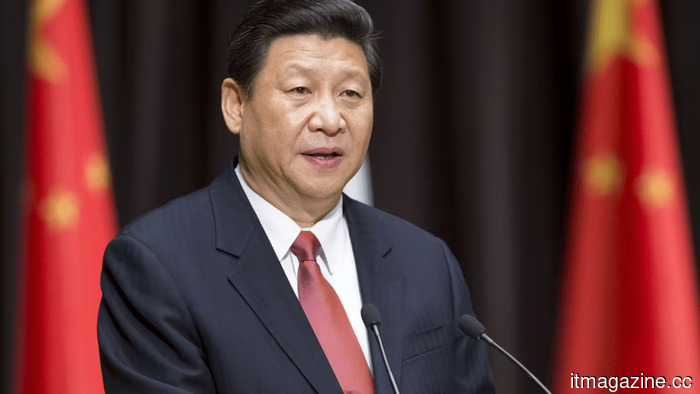 China formalizes stricter regulations on outbound investments following the Meta-Manus blockade.
China has established stricter regulations on outbound investments that formalise the technology-tracing method the NDRC employed to reverse Meta's $2 billion acquisition of Manus. As a result, cross-border AI transactions have become considerably more challenging.
China formalizes stricter regulations on outbound investments following the Meta-Manus blockade.
China has established stricter regulations on outbound investments that formalise the technology-tracing method the NDRC employed to reverse Meta's $2 billion acquisition of Manus. As a result, cross-border AI transactions have become considerably more challenging.
 The prompt box is consuming Photoshop.
AI image editors are transforming creative tasks, making them feel less like traditional software use and more akin to providing instructions. However, the prompt box introduces its own type of challenge.
The prompt box is consuming Photoshop.
AI image editors are transforming creative tasks, making them feel less like traditional software use and more akin to providing instructions. However, the prompt box introduces its own type of challenge.
 The prompt box is consuming Photoshop.
AI image editors are shifting the creative process to feel more like providing directives rather than operating software. However, the prompt box introduces its own set of challenges.
The prompt box is consuming Photoshop.
AI image editors are shifting the creative process to feel more like providing directives rather than operating software. However, the prompt box introduces its own set of challenges.
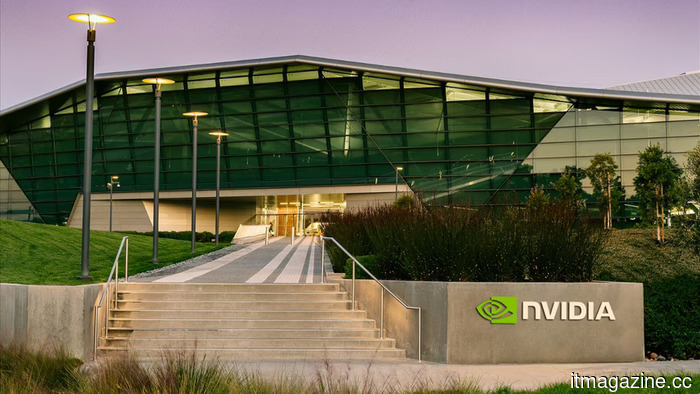 The United States is taking steps to eliminate the loophole that allows Nvidia's leading chips to be sold to Chinese companies overseas.
The US Commerce Department has broadened its chip-export license regulations to apply to Chinese-based companies regardless of their location, eliminating a loophole that existed for a year.
The United States is taking steps to eliminate the loophole that allows Nvidia's leading chips to be sold to Chinese companies overseas.
The US Commerce Department has broadened its chip-export license regulations to apply to Chinese-based companies regardless of their location, eliminating a loophole that existed for a year.
SoftBank surpasses Toyota to become Japan's most valuable company amid the AI surge.
On Monday, SoftBank's market capitalization surpassed Toyota's for the first time in 23 years, fueled by its $65 billion investment in OpenAI and a Nikkei 225 reaching over 67,000.