
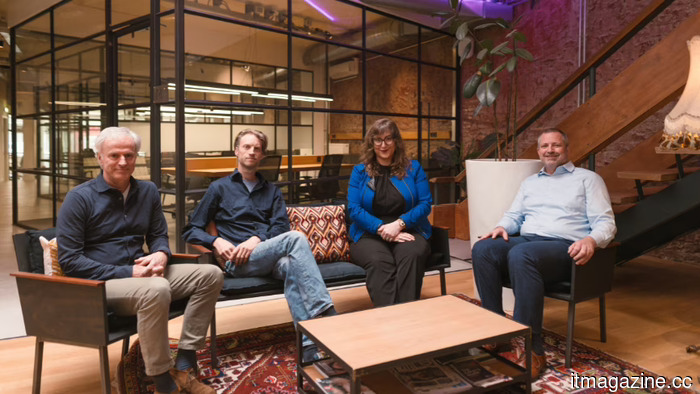
The ASML spinout Invisix has secured €20 million to explore areas within chips that optics cannot reveal.
Modern chips are facing a measurement challenge that feels almost philosophical: their complexity has outstripped our ability to assess them visually. As logic and memory components are layered in three dimensions and miniaturized to just a few nanometers, the optical instruments used to examine each layer can no longer discern the structures hidden within.
Invisix, a startup based in Eindhoven that originated from ASML, has secured €20 million to address this issue. The oversubscribed seed funding round attracted investors such as Hitachi Ventures, Transition Ventures, imec.xpand, Doosan Investment Co., and, as the company describes, a tier-1 semiconductor manufacturer. This last unnamed investor is a significant indication in an industry where chip producers seldom invest in tools they don't plan to utilize; previous reports suggest that Samsung has taken an interest in the company while it develops yields for its 2nm process. Invisix intends to use the funds to expand its team, create its first marketable system, and conduct customer demonstrations from a new cleanroom in Eindhoven.
The challenge it addresses is a yield issue, which translates to a financial problem in the semiconductor sector. Chip production occurs in layers, and without the ability to verify that one layer has been correctly printed prior to adding the next, the process is essentially blind. Currently, this often involves slow, expensive, and potentially destructive evaluations, such as cutting a finished wafer apart to inspect it. In a field where even a slight increase in yield can represent billions in value and competitive advantage goes to those who reach the next technology node first, this challenge is critical.
Invisix’s solution draws on the same principles that underpin lithography: to view smaller entities, one must utilize smaller wavelengths. The system employs high-harmonic generation, a scientific principle acknowledged by the 2023 Nobel Prize in Physics awarded to Pierre Agostini, Ferenc Krausz, and Anne L’Huillier from Lund University. A short-pulse laser energizes noble-gas atoms, prompting them to emit soft x-rays across a broad spectrum of wavelengths simultaneously, yielding a richer three-dimensional signal compared to a single-color laser. The company then combines this with reconstruction algorithms and machine learning to reassemble a device’s internal structure without causing damage.
What makes this investment particularly notable for a seed-stage hardware company is the extent to which the risk has already been mitigated. Invisix has licensed a comprehensive soft x-ray technology suite that was developed over more than a decade at ASML, and its team comprises veterans from that initiative alongside seasoned professionals like COO Roald Dogge, who previously worked at the contract manufacturer NTS.
The company claims it showcased this approach publicly in 2023 alongside Intel and imec, measuring features in gate-all-around transistors, which represent some of the most challenging targets for current metrology techniques.
The broader context involves a continent striving to maintain its leadership in the chip supply chain. The Netherlands houses ASML and is home to a network of Dutch and Belgian deep-tech funds, including imec.xpand, which now supports the emerging startups within this ecosystem. Invisix possesses the testing framework, credibility, and cleanroom; the crucial test ahead is the demanding task for any tool company of transforming a demonstration into a system that can be operated at scale in a fabrication facility.
Другие статьи
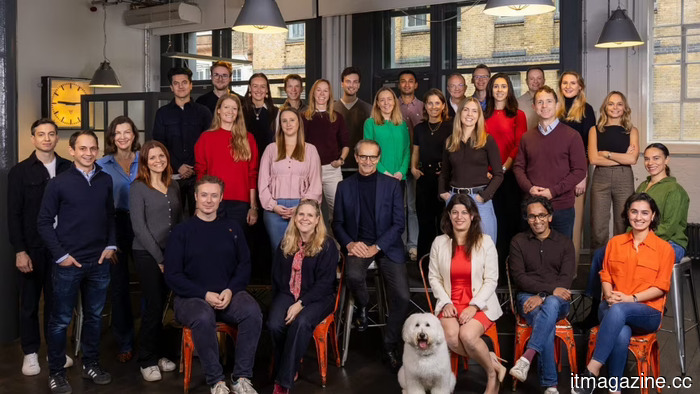 Founders of Revolut, Mistral, and Wayve support Balderton’s initiative for ‘Built in Europe.’
Balderton Capital has initiated 'Built in Europe', a five-city advertising campaign and job platform supported by over 100 founders from companies including Revolut, Mistral, Wayve, among others.
Founders of Revolut, Mistral, and Wayve support Balderton’s initiative for ‘Built in Europe.’
Balderton Capital has initiated 'Built in Europe', a five-city advertising campaign and job platform supported by over 100 founders from companies including Revolut, Mistral, Wayve, among others.
 The US takes steps to eliminate the loophole that allows Nvidia's leading chips to be shipped to Chinese companies overseas.
The US Commerce Department has broadened the chip-export license regulations to encompass Chinese-based companies regardless of their location, thereby addressing a loophole that has existed for a year.
The US takes steps to eliminate the loophole that allows Nvidia's leading chips to be shipped to Chinese companies overseas.
The US Commerce Department has broadened the chip-export license regulations to encompass Chinese-based companies regardless of their location, thereby addressing a loophole that has existed for a year.
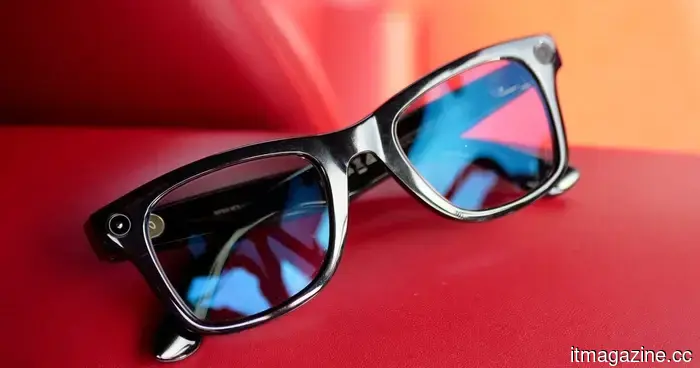 Apple's smart glasses are anticipated to arrive towards the end of 2027 following some delays.
According to Bloomberg's Gurman, the release date for Apple's smart glasses has been pushed back from early 2027 to late 2027.
Apple's smart glasses are anticipated to arrive towards the end of 2027 following some delays.
According to Bloomberg's Gurman, the release date for Apple's smart glasses has been pushed back from early 2027 to late 2027.
 The prompt box is consuming Photoshop.
AI image editors are shifting the creative process to feel more like providing directives rather than operating software. However, the prompt box introduces its own set of challenges.
The prompt box is consuming Photoshop.
AI image editors are shifting the creative process to feel more like providing directives rather than operating software. However, the prompt box introduces its own set of challenges.
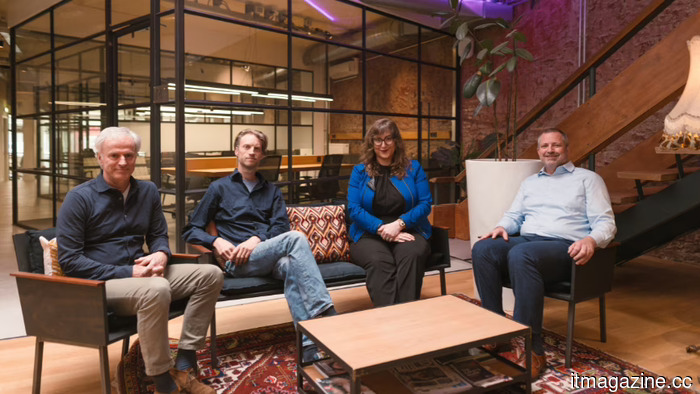 ASML spinout Invisix has secured €20 million to explore what optics cannot visualize within the chips.
Eindhoven's Invisix has secured a €20 million seed investment to introduce soft X-ray metrology, based on Nobel Prize-winning physics, into large-scale chip production.
ASML spinout Invisix has secured €20 million to explore what optics cannot visualize within the chips.
Eindhoven's Invisix has secured a €20 million seed investment to introduce soft X-ray metrology, based on Nobel Prize-winning physics, into large-scale chip production.
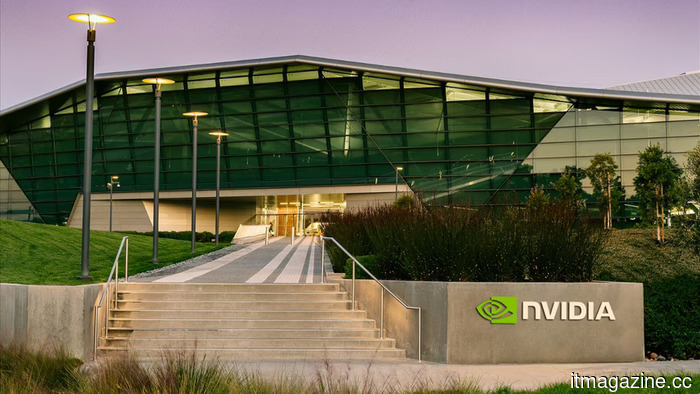 The United States is taking steps to eliminate the loophole that allows Nvidia's leading chips to be sold to Chinese companies overseas.
The US Commerce Department has broadened its chip-export license regulations to apply to Chinese-based companies regardless of their location, eliminating a loophole that existed for a year.
The United States is taking steps to eliminate the loophole that allows Nvidia's leading chips to be sold to Chinese companies overseas.
The US Commerce Department has broadened its chip-export license regulations to apply to Chinese-based companies regardless of their location, eliminating a loophole that existed for a year.
The ASML spinout Invisix has secured €20 million to explore areas within chips that optics cannot reveal.
Eindhoven's Invisix has secured a €20M seed funding round to introduce soft x-ray metrology, grounded in Nobel Prize-awarded physics, into high-volume chip production.