
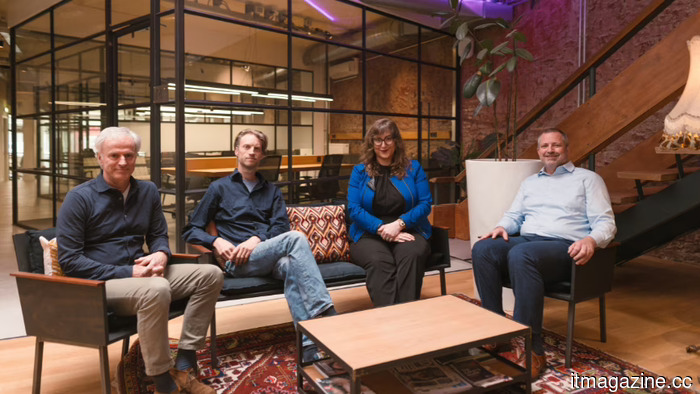
ASML spinout Invisix secures €20M to explore what the optics cannot reveal inside chips.
Modern chips face an almost philosophical measurement challenge: their complexity has reached a point where they are difficult to inspect. As logic and memory devices are layered in three dimensions and miniaturized to mere nanometers, the optical equipment used to examine each layer can no longer discern the intricate structures hidden within.
Invisix, a startup from Eindhoven that originated from ASML, has secured €20 million to address this oversight. The seed funding round, which saw high interest from investors, included participation from Hitachi Ventures, Transition Ventures, imec.xpand, Doosan Investment Co., and what the company describes as a tier-1 semiconductor manufacturer.
The identity of this anonymous investor is significant, particularly in an industry where chipmakers typically do not invest in tools unless they anticipate using them; earlier reports suggested that Samsung might have taken an equity stake in the company as it seeks improvements in yields for its 2nm process. Invisix plans to utilize the funds to expand its team, develop its first market-ready system, and conduct customer demos from a new cleanroom in Eindhoven.
The issue it aims to tackle relates to yield, which equates to financial implications in the semiconductor industry. Chip manufacturing involves a meticulous layer-by-layer approach, and without the ability to verify the correctness of each printed layer before proceeding, one operates without clear visibility.
Currently, this often entails lengthy, expensive, and sometimes destructive inspection processes, such as slicing through a completed wafer for analysis. In a sector where even minor yield improvements can translate into billions of dollars, this blind spot is costly.
Invisix's solution draws on the principles that underlie lithography: to observe smaller entities, one must utilize shorter wavelengths. The company’s system employs high-harmonic generation, a phenomenon acknowledged by the 2023 Nobel Prize in Physics awarded to Pierre Agostini, Ferenc Krausz, and Anne L’Huillier from Lund University. A short-pulse laser energizes noble gas atoms, causing them to emit soft x-rays at multiple wavelengths simultaneously, which produces a richer 3D signal compared to a single-color laser. This is then combined with reconstruction algorithms and machine learning to reconstruct a device’s internal structure without damaging it.
What makes this investment striking for an early-stage hardware company is that much of the risk has already been mitigated. Invisix has licensed a comprehensive package of soft x-ray technology that was cultivated over more than ten years at ASML, and its team is composed of seasoned professionals from that program, as well as senior recruits like COO Roald Dogge, who previously worked at the contract manufacturer NTS.
The company claims to have publicly demonstrated its method in 2023 in collaboration with Intel and imec, successfully measuring features in gate-all-around transistors, which represent some of the most challenging targets for current measurement techniques.
The broader scenario involves a continent striving to retain its leadership in certain segments of the chip supply chain. The Netherlands hosts ASML and a collection of Dutch and Belgian deep-tech funds, including imec.xpand, which now support the startups emerging around this ecosystem.
Invisix possesses the test bench, the expertise, and the cleanroom; the critical challenge ahead remains the demanding task for any tool company: transforming a demonstration into a production-ready system suitable for volume operation in a fabrication facility.
Other articles
 The prompt box is consuming Photoshop.
AI image editors are shifting the creative process to feel more like providing directives rather than operating software. However, the prompt box introduces its own set of challenges.
The prompt box is consuming Photoshop.
AI image editors are shifting the creative process to feel more like providing directives rather than operating software. However, the prompt box introduces its own set of challenges.
 SoftBank surpasses Toyota to become Japan's most valuable company amid the AI surge.
On Monday, SoftBank's market capitalization surpassed Toyota's for the first time in 23 years, fueled by its $65 billion investment in OpenAI and a Nikkei 225 reaching over 67,000.
SoftBank surpasses Toyota to become Japan's most valuable company amid the AI surge.
On Monday, SoftBank's market capitalization surpassed Toyota's for the first time in 23 years, fueled by its $65 billion investment in OpenAI and a Nikkei 225 reaching over 67,000.
 The prompt box is consuming Photoshop.
AI image editors are transforming creative tasks, making them feel less like traditional software use and more akin to providing instructions. However, the prompt box introduces its own type of challenge.
The prompt box is consuming Photoshop.
AI image editors are transforming creative tasks, making them feel less like traditional software use and more akin to providing instructions. However, the prompt box introduces its own type of challenge.
 Snapchat Planets: What is their sequence, and what do they represent?
Snapchat Planets transforms your friendship rankings into a miniature social solar system, where being Mercury is prestigious, while being Neptune could be a bit hurtful.
Snapchat Planets: What is their sequence, and what do they represent?
Snapchat Planets transforms your friendship rankings into a miniature social solar system, where being Mercury is prestigious, while being Neptune could be a bit hurtful.
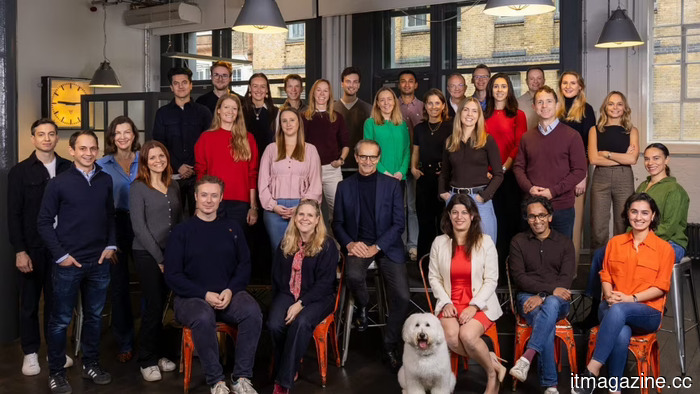 Founders of Revolut, Mistral, and Wayve support Balderton’s initiative for ‘Built in Europe.’
Balderton Capital has initiated 'Built in Europe', a five-city advertising campaign and job platform supported by over 100 founders from companies including Revolut, Mistral, Wayve, among others.
Founders of Revolut, Mistral, and Wayve support Balderton’s initiative for ‘Built in Europe.’
Balderton Capital has initiated 'Built in Europe', a five-city advertising campaign and job platform supported by over 100 founders from companies including Revolut, Mistral, Wayve, among others.
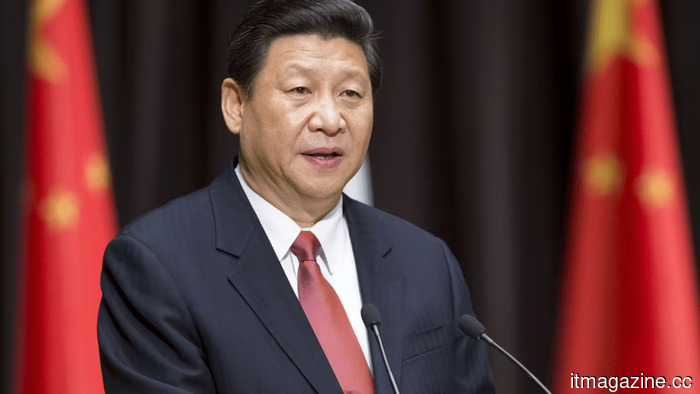 China formalizes stricter regulations on outbound investments following the Meta-Manus blockade.
China has established stricter regulations on outbound investments that formalise the technology-tracing method the NDRC employed to reverse Meta's $2 billion acquisition of Manus. As a result, cross-border AI transactions have become considerably more challenging.
China formalizes stricter regulations on outbound investments following the Meta-Manus blockade.
China has established stricter regulations on outbound investments that formalise the technology-tracing method the NDRC employed to reverse Meta's $2 billion acquisition of Manus. As a result, cross-border AI transactions have become considerably more challenging.
ASML spinout Invisix secures €20M to explore what the optics cannot reveal inside chips.
Eindhoven's Invisix has secured a €20M seed round to introduce soft x-ray metrology, based on Nobel-winning physics, to large-scale chip production.