
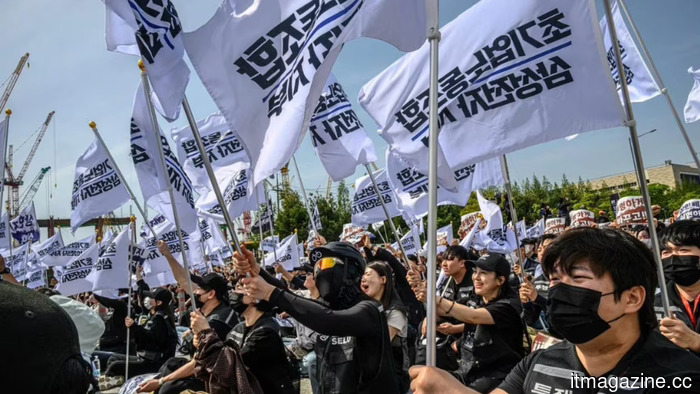
The Samsung Pay agreement marked a pivotal moment for Korean unions.
Samsung’s profit-sharing bonus formula, which allocates 10.5% of profits, is only the second written agreement of its kind at a major Korean company. Meanwhile, Kakao's union is already pushing for increased benefits.
On Wednesday, Samsung Electronics' unionized employees approved a government-mediated pay agreement, officially finalizing a deal that barely avoided an injunction from a smaller non-chip union the day before. This vote resolves, for now, the largest labor dispute in the global semiconductor sector.
The broader implications are more lasting: this agreement represents a significant victory for a Samsung union in the company's 56-year history and is viewed across Korean industries as a fundamental change in labor negotiation practices.
What makes this deal particularly notable is its content. Samsung has committed in writing to distribute 10.5% of its operating profit from semiconductors as special bonuses for chip employees. According to Reuters, this is only the second instance where a major South Korean company has included a fixed-percentage profit-share commitment in a binding labor agreement.
Some employees from the memory division are set to receive total bonus packages amounting to about $416,000 during the agreement period. The non-chip Donghaeng union, which initiated the injunction at Suwon District Court, has indicated it will continue to push for changes in allocation despite the outcome of the vote.
The overall labor situation in Korea has also been influenced. Workers at Kakao and four of its subsidiaries have threatened to strike if their demands, which include a profit-share allocation of 13–15%, are not addressed. Other significant Korean employers are reportedly facing similar demands from their unions.
The Samsung agreement has effectively established a benchmark that the rest of the chaebol system will be evaluated against.
Two key factors enabled this deal to come to fruition. The first is the AI-driven memory supercycle, which has allowed Samsung’s memory division to achieve unprecedented profits, revealing a noticeable disparity between production profits and worker compensation.
The second factor is the loss of workforce to SK Hynix, where the AI-memory boom has centered and where bonus levels have surpassed Samsung’s for years. According to the Samsung union, an increasing number of chip workers have been leaving for SK Hynix, making the gap in bonuses untenable.
Historically, the chaebol bargaining model has resisted implementing fixed-percentage profit-sharing, reasoning that it exposes labor costs to the cyclical nature of the business. The Samsung deal, however, accepts this trade-off: the bonus pool will automatically decrease when memory profits decline.
In return, workers have agreed to a conditional minimum for their payouts (memory must generate at least 200 trillion won from 2026 to 2028 and 100 trillion won from 2029 to 2035 for full bonuses). This is a modern profit-sharing structure, similar to those used by Western tech companies, now applied to a chaebol setup for the first time.
The key political issue is whether this signifies a fundamental shift or is merely a byproduct of the memory cycle. Korean economists have suggested that the chaebol system’s weak wage growth during prosperous years is more a consequence of the labor-bargaining framework than of profitability itself.
The Samsung agreement puts this argument to the test. If memory profits persist, the formula will yield substantial payouts for workers, and this new trend may spread. Conversely, if memory profits decline, the union's long-held concern—that a one-time cycle-dependent bonus is not a sustainable wage strategy—will resurface.
Samsung shares had a modest increase on Wednesday. The Korean labor ministry, which facilitated the original agreement, anticipates similar mediated agreements at other major companies in the upcoming months.
Other articles
 Micron nears $1 trillion as UBS identifies a route to $1.8 trillion within a year.
UBS analyst Timothy Arcuri increased his price target for Micron to $1,625 on Tuesday, suggesting a valuation of $1.8 trillion, based on the premise that long-term HBM agreements will shorten the memory cycle.
Micron nears $1 trillion as UBS identifies a route to $1.8 trillion within a year.
UBS analyst Timothy Arcuri increased his price target for Micron to $1,625 on Tuesday, suggesting a valuation of $1.8 trillion, based on the premise that long-term HBM agreements will shorten the memory cycle.
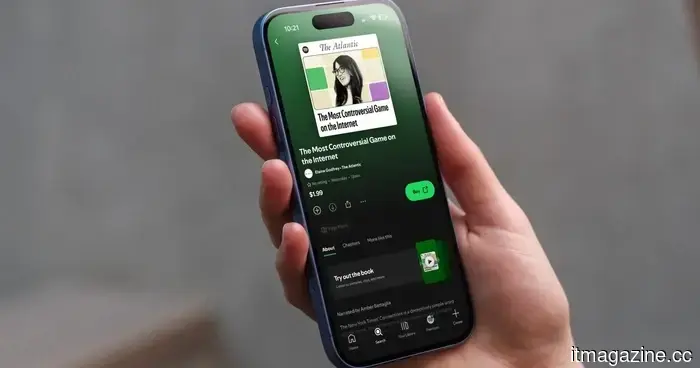 Spotify has simplified the process of staying updated on lengthy articles without the need to read them.
Spotify is launching over 650 narrated magazine articles from publications such as Rolling Stone, Vogue, WIRED, and others. Premium subscribers can begin listening to these articles using their audiobook credits starting today.
Spotify has simplified the process of staying updated on lengthy articles without the need to read them.
Spotify is launching over 650 narrated magazine articles from publications such as Rolling Stone, Vogue, WIRED, and others. Premium subscribers can begin listening to these articles using their audiobook credits starting today.
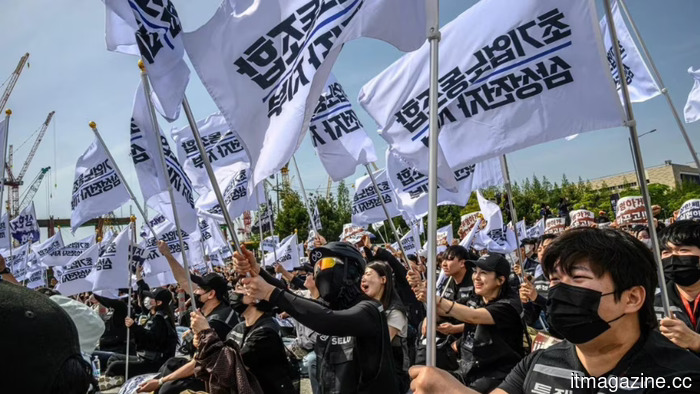 The Samsung Pay agreement marks the point at which Korean unions shifted their approach.
Samsung's 10.5%-of-profit bonus structure resolves its labor conflict and sets a standard that other companies within the Korean chaebol system will use as a reference.
The Samsung Pay agreement marks the point at which Korean unions shifted their approach.
Samsung's 10.5%-of-profit bonus structure resolves its labor conflict and sets a standard that other companies within the Korean chaebol system will use as a reference.
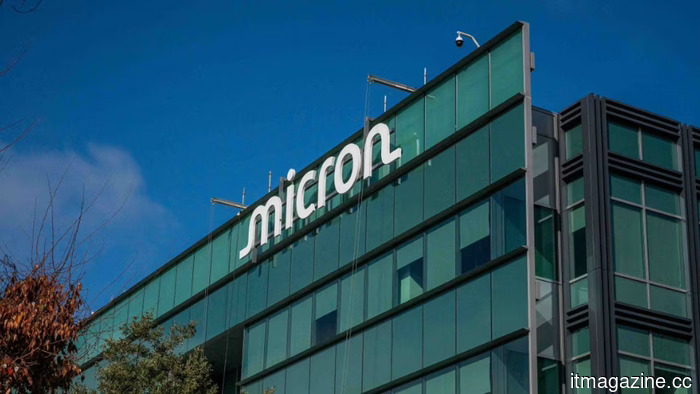 Micron nears $1 trillion as UBS envisions a trajectory towards $1.8 trillion within a year.
UBS analyst Timothy Arcuri raised his price target for Micron to $1,625 on Tuesday, suggesting a valuation of $1.8 trillion, due to the expectation that long-term HBM agreements will shorten the memory cycle.
Micron nears $1 trillion as UBS envisions a trajectory towards $1.8 trillion within a year.
UBS analyst Timothy Arcuri raised his price target for Micron to $1,625 on Tuesday, suggesting a valuation of $1.8 trillion, due to the expectation that long-term HBM agreements will shorten the memory cycle.
 The CEO of Barnes & Noble believes that AI-generated books are acceptable. He is mistaken.
The CEO of Barnes & Noble claims he has no issues with selling books written by AI. This may seem reasonable at first glance, but it's actually problematic, and here's why it poses a threat to all authors.
The CEO of Barnes & Noble believes that AI-generated books are acceptable. He is mistaken.
The CEO of Barnes & Noble claims he has no issues with selling books written by AI. This may seem reasonable at first glance, but it's actually problematic, and here's why it poses a threat to all authors.
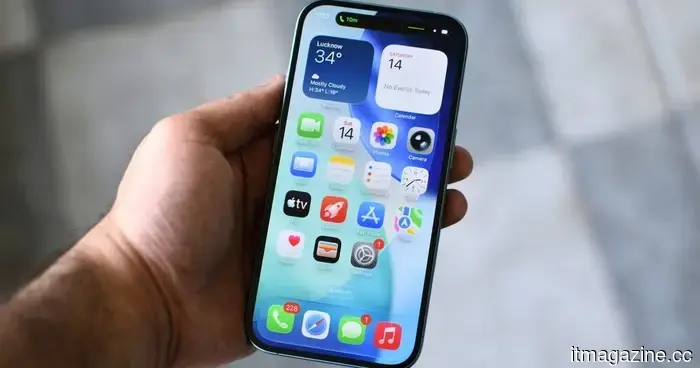 iOS 26.6 notifies you when you reach the limit of blocked contacts, and that's an issue.
The initial feature of iOS 26.6 by Apple is a notification that informs you when you have reached the maximum number of blocked contacts.
iOS 26.6 notifies you when you reach the limit of blocked contacts, and that's an issue.
The initial feature of iOS 26.6 by Apple is a notification that informs you when you have reached the maximum number of blocked contacts.
The Samsung Pay agreement marked a pivotal moment for Korean unions.
Samsung's formula for a 10.5% profit bonus resolves its labor conflict and sets a standard that other companies in the Korean chaebol system will likely use as a benchmark.