

The CEO of Barnes & Noble believes that AI-generated books are acceptable. He is mistaken.
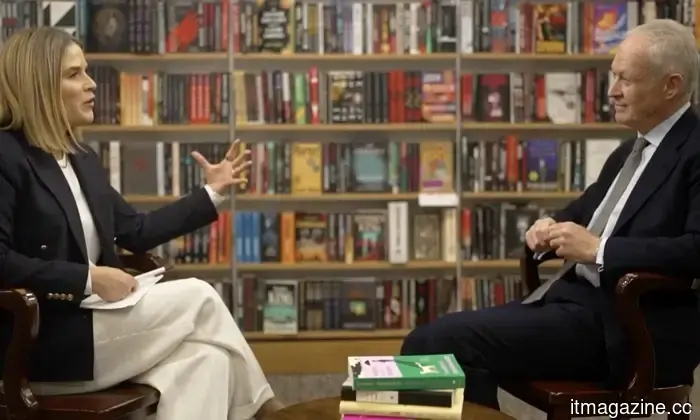
James Daunt, the CEO of Barnes & Noble, recently spoke with NBC News, and he made a statement that has lingered in my thoughts. When queried about books written by AI, Daunt responded, “Yes, I have actually no problem selling any book, as long as it doesn’t masquerade or pretend to be something that it isn’t, and that it has an essential quality to it, and that the customer, the reader, wants it.”
At first glance, this appears quite reasonable. If readers are able to clearly see the labeling, they can make an informed choice. However, upon further reflection, this perspective raises several significant questions.
Is simply labeling them truly sufficient?
Barnes & Noble ranks as one of the most influential retailers in the publishing industry. When the largest book retailer in the U.S. indicates that it is open to AI-generated books, it communicates to publishers, agents, and authors that this is a valid category of products.
Consider the significance of a real book. An author dedicates months, sometimes years, to research, writing, revising, and creating a cohesive work, while infusing it with their unique experiences. This human aspect is what differentiates books, prompting readers to explore various authors' takes on the same subject.
In contrast, AI takes the knowledge it has gleaned from human experiences, removes the human element, and produces something devoid of that essence. While it may achieve grammatical precision, structural excellence, and even an engaging narrative, it lacks the human touch that gives books their distinctive quality. At most, it can simulate that touch, drawing from the wisdom embedded in books authored by humans.
When a major retailer simply accepts AI books as long as they come with a label, it undermines the understanding of a book as a product of human creativity. Moreover, who determines the criteria for labeling what constitutes an AI-written book? Is a subtle label on an obscure page sufficient, only discoverable to those actively seeking it?
Even if there is a clear label, does it really matter? Would you allow a thief into your home just because they have a label indicating their intentions? The analogy is absurd. Any AI-generated book, regardless of its quality, is akin to a thief in disguise, having appropriated narratives from human-written works without permission.
The human cost of allowing AI books in our bookstores
Every bookstore has finite space. Permitting AI books into our stores means that each one displaces a book written by a human. Without an effective system to distinguish between the two, which Barnes & Noble appears to lack, it would be challenging for readers to tell them apart.
Daunt even conceded that Barnes & Noble may unknowingly be selling AI-generated books. “We have 300,000 titles across all of our stores. Do we think that some of those may be AI? The chances are that they are, but we’re not really conscious of them,” he stated in the NBC News interview. This is hardly the reassuring revelation he believes it is.
What you see is what you purchase. If numerous readers enter the store and notice AI books prominently displayed, some will inevitably pick them up. This could result in profits for a large corporation or an AI entrepreneur treating books as a new venture. That represents a sale that could have gone to a deserving author.
I’m not suggesting that all human-written books are exceptional. I’ve penned some mediocre ones myself. However, even if a book is poor or not to your liking, it’s evident that real effort went into it, so the financial impact isn’t as harsh.
Consider how you would feel if your books were written by a prompt. Moreover, given that AI can produce books considerably faster than humans, the market will become inundated with these publications if we allow them in. The e-book market is already saturated with AI-generated content; we certainly wouldn’t want our bookstores to reflect that.
This is not occurring in isolation
It would be one thing if Barnes & Noble were making this decision alone. However, it’s part of a broader and troubling trend.
Vox Media and The Atlantic both entered into agreements with OpenAI, permitting the company to use their entire content archives for training its models. The New York Times has signed its first AI content licensing deal with Amazon, and similar multi-year deals have been made by USA Today, Condé Nast, and Hearst with Amazon.
AI licensing agreements are rapidly becoming a significant revenue stream for publishers. Thus, publishers receive compensation, making these arrangements seem justified. Meanwhile, the writers whose work is utilized to train these models are largely compensated.
The pattern is unmistakable. Initially, media companies license their content to AI. Following that, AI generates new content from the licensed material, which retailers then sell. This cycle will continue until human authors are obsolete, leaving us with a flood of AI-generated content and reflecting on how we arrived at this point.
Books represent one of the last areas where human creativity is not


Other articles
 The Samsung Pay agreement marks the point at which Korean unions shifted their approach.
Samsung's 10.5%-of-profit bonus structure resolves its labor conflict and sets a standard that other companies within the Korean chaebol system will use as a reference.
The Samsung Pay agreement marks the point at which Korean unions shifted their approach.
Samsung's 10.5%-of-profit bonus structure resolves its labor conflict and sets a standard that other companies within the Korean chaebol system will use as a reference.
 XREAL's $299 glasses have made it significantly simpler for casual AR users to enter the market.
The XREAL a01 glasses are lightweight augmented reality glasses priced at $299, featuring a built-in MicroOLED display, a 50-degree field of view, interchangeable front frames, and additional functionalities suited for travel and gaming.
XREAL's $299 glasses have made it significantly simpler for casual AR users to enter the market.
The XREAL a01 glasses are lightweight augmented reality glasses priced at $299, featuring a built-in MicroOLED display, a 50-degree field of view, interchangeable front frames, and additional functionalities suited for travel and gaming.
 Apple might incorporate Android’s most intelligent anti-theft feature into future iPhones.
Apple is said to be working on a theft detection feature that utilizes motion sensors, AI, and proximity data from Apple Watches to automatically lock stolen iPhones.
Apple might incorporate Android’s most intelligent anti-theft feature into future iPhones.
Apple is said to be working on a theft detection feature that utilizes motion sensors, AI, and proximity data from Apple Watches to automatically lock stolen iPhones.
 Luna is wagering that you're weary of fitness subscriptions and suggesting its screenless band as the answer.
Luna's initial screenless fitness band will be launched in July, featuring no subscription fee. It includes voice-activated health logging, a battery life of 10 days, and is compatible with LifeOS for support with Siri and Gemini.
Luna is wagering that you're weary of fitness subscriptions and suggesting its screenless band as the answer.
Luna's initial screenless fitness band will be launched in July, featuring no subscription fee. It includes voice-activated health logging, a battery life of 10 days, and is compatible with LifeOS for support with Siri and Gemini.
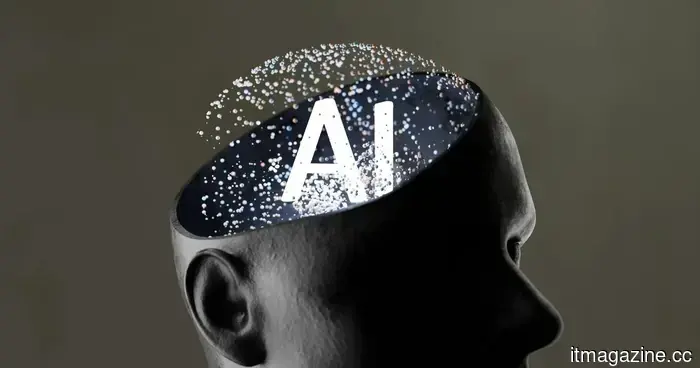 AI models exhibit a bias toward certain religions, and recent research has revealed this issue.
Researchers evaluated 14 prominent AI models for religious bias and identified a consistent trend: the models subtly prioritize certain religions over others, with Grok exhibiting the most pronounced bias, while Anthropic and Meta achieved the best performance.
AI models exhibit a bias toward certain religions, and recent research has revealed this issue.
Researchers evaluated 14 prominent AI models for religious bias and identified a consistent trend: the models subtly prioritize certain religions over others, with Grok exhibiting the most pronounced bias, while Anthropic and Meta achieved the best performance.
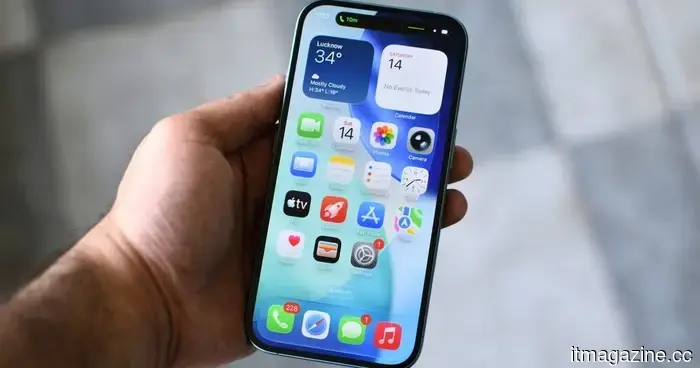 iOS 26.6 notifies you when you reach the limit of blocked contacts, and that's an issue.
The initial feature of iOS 26.6 by Apple is a notification that informs you when you have reached the maximum number of blocked contacts.
iOS 26.6 notifies you when you reach the limit of blocked contacts, and that's an issue.
The initial feature of iOS 26.6 by Apple is a notification that informs you when you have reached the maximum number of blocked contacts.
The CEO of Barnes & Noble believes that AI-generated books are acceptable. He is mistaken.
The CEO of Barnes & Noble claims he has no issues with selling books written by AI. This may seem reasonable at first glance, but it's actually problematic, and here's why it poses a threat to all authors.