
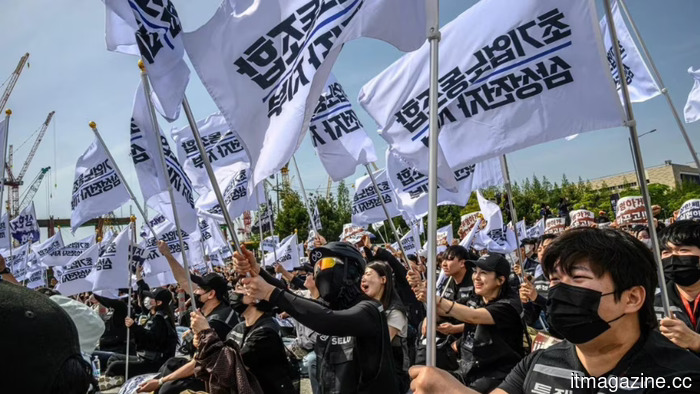
The Samsung Pay agreement marks the point at which Korean unions shifted their approach.
Samsung’s 10.5% profit-sharing bonus formula is only the second documented profit-sharing agreement at a significant South Korean company. The Kakao union is already pushing for more benefits.
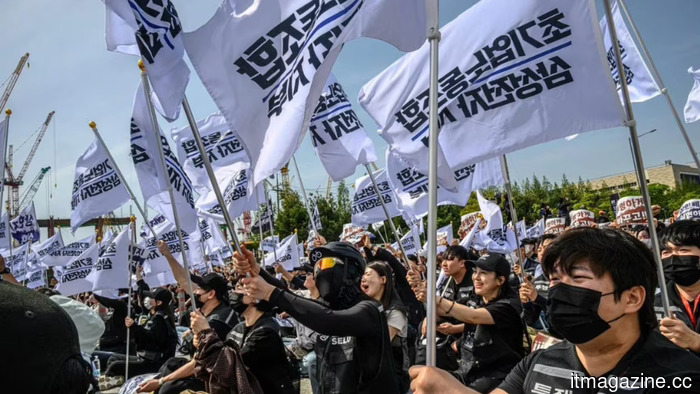
The unionized employees of Samsung Electronics voted on Wednesday in favor of the government-mediated pay agreement, officially concluding a deal that narrowly escaped an injunction filed by a smaller non-chip union on Tuesday. This vote addresses, at least temporarily, the largest labor dispute in the global semiconductor sector.
The broader implications are more significant: this agreement represents the first major victory for a Samsung union in the company’s 56-year existence, signaling a structural change in labor negotiations across the Korean industry.
What makes the deal distinctive is its content. Samsung has committed in writing to allocate 10.5% of its semiconductor operating profit to special bonuses for chip employees. According to Reuters, this is only the second instance where a major South Korean firm has incorporated a fixed-percentage profit-sharing commitment into a binding labor agreement.
Some employees in the memory division will receive total bonus packages valued at approximately $416,000 over the duration of the agreement. The non-chip Donghaeng union, which filed the injunction in Suwon District Court, has indicated its intention to continue advocating for a revised allocation regardless of the outcome of the vote.
The broader labor landscape in Korea has shifted in response. Workers at Kakao and four of its affiliates have threatened to strike unless their demands, which include a 13–15% profit-sharing allocation, are fulfilled. Other significant Korean employers are reportedly facing similar demands from their unions.
The Samsung agreement has effectively set a new benchmark for the entire chaebol system.
Two structural factors enabled this deal. The first is the AI-driven memory supercycle. Samsung’s memory division has been generating profits at levels the company has seldom experienced, leading to a noticeable disparity between the division's production and the compensation received by its workers.
The second factor is the loss of employees to SK Hynix, where the AI-memory boom has been concentrated and where bonuses have been higher for years. According to the Samsung union, chip workers began leaving for SK Hynix in numbers that made the bonus disparity commercially unsustainable.
Historically, the chaebol bargaining model has resisted fixed-percentage profit-sharing because it ties labor costs to the underlying business' cyclicality. The Samsung agreement accepts this trade-off: the bonus pool decreases automatically when memory profits decline.
In return, workers have agreed to a contingent minimum on their payouts (memory profits must reach at least 200 trillion won between 2026 and 2028 and 100 trillion won between 2029 and 2035 for the full payout). This structure resembles the modern profit-sharing models used by Western tech firms, marking its first adoption within a chaebol framework.
The political issue is whether this represents the beginning of a fundamental change or a temporary anomaly related to the memory cycle. Korean economists have long claimed that the chaebol system's relatively weak wage growth during prosperous years is a result of its labor-bargaining framework rather than its profitability.
The Samsung agreement puts this argument to the test. If memory profits remain strong, the formula will yield genuinely substantial payouts for workers, and this new trend could proliferate. Conversely, if memory profits decline, the union’s structural concern—that a one-off cycle-linked bonus isn’t a viable wage policy—will resurface.
On Wednesday, Samsung shares experienced a modest increase. The Korean labor ministry, which facilitated the initial agreement, anticipates similar mediated settlements at other major firms within the coming months.
Other articles
 The CEO of Barnes & Noble believes that AI-generated books are acceptable. He is mistaken.
The CEO of Barnes & Noble claims he has no issues with selling books written by AI. This may seem reasonable at first glance, but it's actually problematic, and here's why it poses a threat to all authors.
The CEO of Barnes & Noble believes that AI-generated books are acceptable. He is mistaken.
The CEO of Barnes & Noble claims he has no issues with selling books written by AI. This may seem reasonable at first glance, but it's actually problematic, and here's why it poses a threat to all authors.
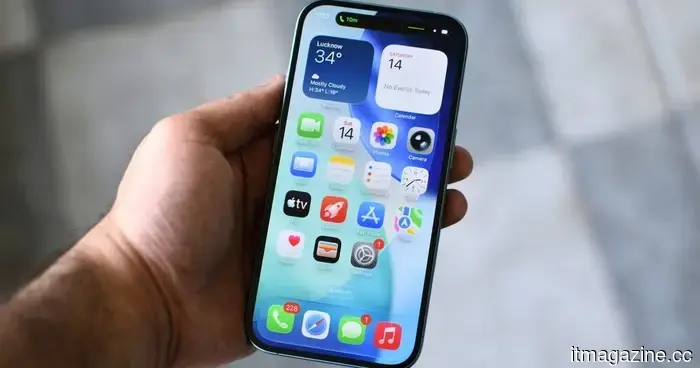 iOS 26.6 notifies you when you reach the limit of blocked contacts, and that's an issue.
The initial feature of iOS 26.6 by Apple is a notification that informs you when you have reached the maximum number of blocked contacts.
iOS 26.6 notifies you when you reach the limit of blocked contacts, and that's an issue.
The initial feature of iOS 26.6 by Apple is a notification that informs you when you have reached the maximum number of blocked contacts.
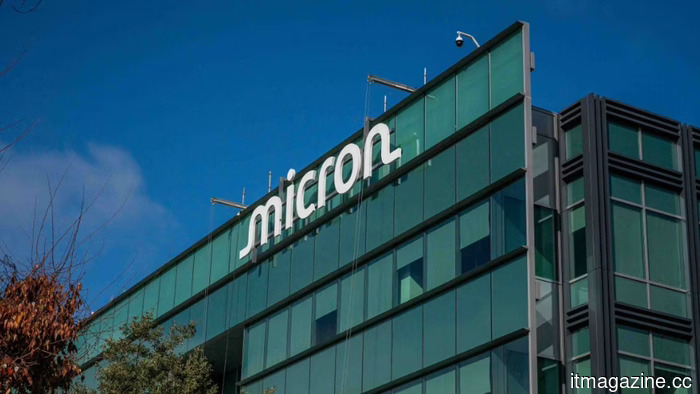 Micron nears $1 trillion while UBS forecasts a potential increase to $1.8 trillion within a year.
UBS analyst Timothy Arcuri increased his price target for Micron to $1,625 on Tuesday, suggesting a valuation of $1.8 trillion, due to the expectation that long-term HBM agreements will shorten the memory cycle.
Micron nears $1 trillion while UBS forecasts a potential increase to $1.8 trillion within a year.
UBS analyst Timothy Arcuri increased his price target for Micron to $1,625 on Tuesday, suggesting a valuation of $1.8 trillion, due to the expectation that long-term HBM agreements will shorten the memory cycle.
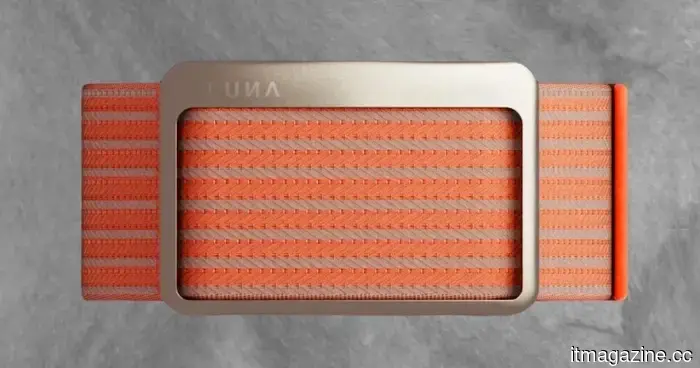 Luna believes you might be weary of fitness subscriptions and is presenting its screenless band as a solution.
Luna's initial screenless fitness band will launch in July, featuring no subscription fee. It offers voice-activated health logging, a 10-day battery life, and supports LifeOS for both Siri and Gemini.
Luna believes you might be weary of fitness subscriptions and is presenting its screenless band as a solution.
Luna's initial screenless fitness band will launch in July, featuring no subscription fee. It offers voice-activated health logging, a 10-day battery life, and supports LifeOS for both Siri and Gemini.
 The Samsung Pay agreement marked a pivotal moment for Korean unions.
Samsung's formula for a 10.5% profit bonus resolves its labor conflict and sets a standard that other companies in the Korean chaebol system will likely use as a benchmark.
The Samsung Pay agreement marked a pivotal moment for Korean unions.
Samsung's formula for a 10.5% profit bonus resolves its labor conflict and sets a standard that other companies in the Korean chaebol system will likely use as a benchmark.
 Micron nears $1 trillion, while UBS predicts a trajectory towards $1.8 trillion within the next year.
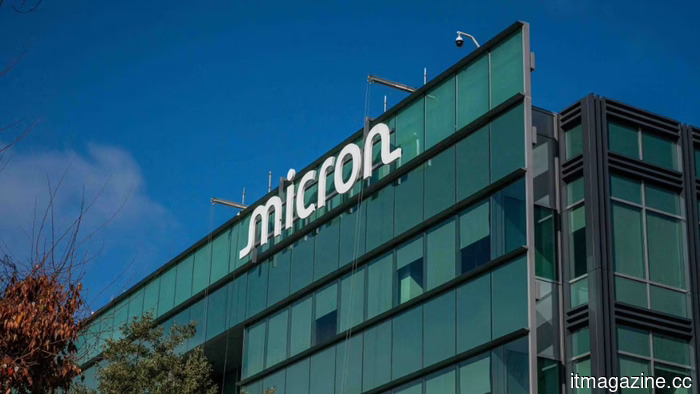
On Tuesday, UBS analyst Timothy Arcuri raised his price target for Micron to $1,625, suggesting a valuation of $1.8 trillion, due to the expectation that long-term HBM agreements will shorten the memory cycle.
Micron nears $1 trillion, while UBS predicts a trajectory towards $1.8 trillion within the next year.
On Tuesday, UBS analyst Timothy Arcuri raised his price target for Micron to $1,625, suggesting a valuation of $1.8 trillion, due to the expectation that long-term HBM agreements will shorten the memory cycle.
The Samsung Pay agreement marks the point at which Korean unions shifted their approach.
Samsung's 10.5%-of-profit bonus structure resolves its labor conflict and sets a standard that other companies within the Korean chaebol system will use as a reference.