
SK Hynix enters the trillion-dollar club, boosted by orders for Nvidia's HBM4.
A surge of over 10% in Seoul's trading on Wednesday propelled SK Hynix past a market capitalization of $1 trillion, making it the third chip manufacturer, following Nvidia and TSMC, to achieve this milestone. The Korean memory company's market cap surpassed $1 trillion during the morning session, supported by a single-day rally that triggered circuit breakers on South Korea's Kospi index.
SK Hynix joins the ranks of only two other chipmakers to reach the trillion-dollar valuation, becoming the first dedicated memory specialist to do so. This achievement comes at the conclusion of a period that, by typical standards, seems structurally improbable. Over the last two years, SK Hynix’s stock price has surged by about 900%. Last month, the firm was approximately $50 billion below the trillion-dollar mark, highlighting the extreme compression of the high-bandwidth memory (HBM) cycle reflected in its financials. The company's HBM capacity for the full year of 2026 is already sold out, with shortages expected to last through 2027.
The foundation of SK Hynix’s success lies in its crucial role within Nvidia’s supply chain. According to UBS, the company commands around 70% of HBM4 orders for the Nvidia Vera Rubin platform, which Jensen Huang referred to in Taipei as “probably the largest product launch in the history of Taiwan.” Each Rubin unit utilizes 288GB of HBM4 across eight stacks, with the system providing a remarkable 22 TB/s of bandwidth. The economic implications for SK Hynix are substantial, as HBM4 stacks sell at considerable premiums compared to standard DRAM, and Nvidia's Rubin orders amount to hundreds of thousands of units.
The competitive environment is particularly favorable for SK Hynix. Samsung, the largest memory manufacturer globally, has lagged in HBM4 qualification and is facing a labor dispute that has hindered its memory production ramp-up. Micron, the third major player in the global memory market, has a lower share of Rubin design wins and a smaller segment of the overall HBM market. Presently, SK Hynix is the producer in demand.
This market capitalization achievement coincides with SK Hynix's serious consideration of a dual listing in the US, which could potentially raise around $14 billion based on current discussions. Reaching the trillion-dollar milestone enhances the pricing power of that listing and provides a compelling narrative for Seoul’s capital markets, which will be cautious about diluting this domestic flagship story. How the dual listing issue is resolved will be a significant development to monitor.
The more challenging question concerns sustainability. The memory sector is well-known for its cyclical nature, and the current upswing is being valued as if it will continue indefinitely. SK Hynix's capacity expansion, including the $13 billion P&T7 HBM packaging facility, is designed for sustained demand through the latter half of the decade. If Nvidia's anticipated demand for the Rubin Ultra materializes, the trillion-dollar valuation is likely to hold. If it doesn't, history suggests that memory stocks often experience a rapid reversal of gains.
On Wednesday, SK Hynix shares closed up by 9.8%, after reaching intraday gains of up to 15%.
Other articles
 Europe's efforts to reduce the control of Big Tech face challenges from its own internal divisions.
The EU’s Tech Sovereignty Package, set to be released on Wednesday, has been moderated by internal discussions between advocates of European preferences and supporters of interoperability.
Europe's efforts to reduce the control of Big Tech face challenges from its own internal divisions.
The EU’s Tech Sovereignty Package, set to be released on Wednesday, has been moderated by internal discussions between advocates of European preferences and supporters of interoperability.
 Samsung pledges $1.5 billion to establish a chip-testing facility in Vietnam, with an additional $2.5 billion available for future investments.
Samsung is allocating $1.5 billion for its inaugural specialized chip-testing facility in Vietnam, which is set to be operational by November 2027. A subsequent phase, potentially worth up to $2.5 billion, will depend on the completion of the first phase.
Samsung pledges $1.5 billion to establish a chip-testing facility in Vietnam, with an additional $2.5 billion available for future investments.
Samsung is allocating $1.5 billion for its inaugural specialized chip-testing facility in Vietnam, which is set to be operational by November 2027. A subsequent phase, potentially worth up to $2.5 billion, will depend on the completion of the first phase.
 Aurzen merges Roku TV with SGS-certified brightness for large-screen applications.
The D1R lineup from Aurzen features a built-in Roku TV, native 1080P resolution, and confirmed brightness ratings, offering a more practical approach to contemporary home projection.
Aurzen merges Roku TV with SGS-certified brightness for large-screen applications.
The D1R lineup from Aurzen features a built-in Roku TV, native 1080P resolution, and confirmed brightness ratings, offering a more practical approach to contemporary home projection.
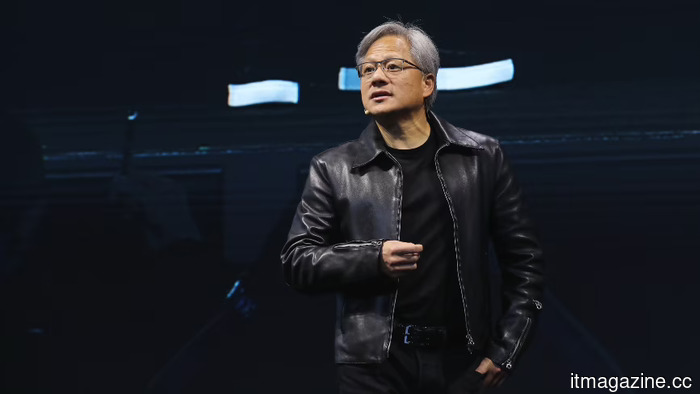 NVIDIA's Jensen Huang refers to Taiwan as the 'epicenter' of the AI revolution, noting that spending has reached $150 billion annually.
During Computex 2026, Jensen Huang announced that Nvidia's annual expenditure in Taiwan will hit $150 billion, positioning Taiwan as the "epicenter" of the AI revolution.
Apple and Google are advocating for court supervision of Canada’s lawful-access legislation.
Apple and Google have requested that Parliament modify Canada’s lawful-access Bill C-22 to mandate a court review prior to allowing ministers to enforce changes to encryption.
NVIDIA's Jensen Huang refers to Taiwan as the 'epicenter' of the AI revolution, noting that spending has reached $150 billion annually.
During Computex 2026, Jensen Huang announced that Nvidia's annual expenditure in Taiwan will hit $150 billion, positioning Taiwan as the "epicenter" of the AI revolution.
Apple and Google are advocating for court supervision of Canada’s lawful-access legislation.
Apple and Google have requested that Parliament modify Canada’s lawful-access Bill C-22 to mandate a court review prior to allowing ministers to enforce changes to encryption.
SK Hynix enters the trillion-dollar club, boosted by orders for Nvidia's HBM4.
On Wednesday, SK Hynix's market capitalization exceeded $1 trillion during trading in Seoul, positioning the South Korean memory company as the third chip manufacturer to reach this milestone, following Nvidia and TSMC.