
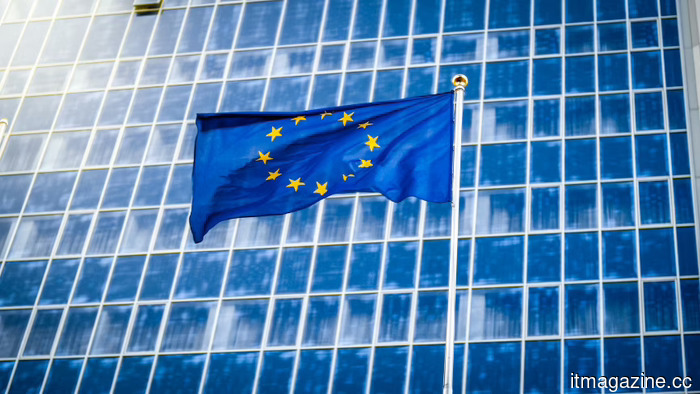
Europe's efforts to reduce the control of Big Tech face challenges from its own internal divisions.
The Tech Sovereignty Package is set to be released on Wednesday, but the EU is still in internal discussions about what ‘digital sovereignty’ should truly entail. The European Commission plans to unveil its Tech Sovereignty Package on Wednesday afternoon, representing the most significant effort to diminish Europe's dependence on American infrastructure in cloud computing, AI, and chip technologies. According to a report from Reuters on Tuesday, the contents of the package have been notably shaped by disputes over how assertive the EU's sovereignty approach should be.
The documents to be published are anticipated to include the Cloud and AI Development Act, an update to the original Chips Act, and the first official EU definition of “digital sovereignty,” a term the EU has employed for years without a legal definition. The Cloud Act would prohibit EU member states from utilizing US cloud service providers for processing sensitive data in sectors such as healthcare, finance, and judicial systems. Current drafts suggest that the private sector will remain unaffected.
The internal discussions focus on whether sovereignty necessitates a solely European supply chain or if it can be accomplished through interoperability and managed reliance. EU digital commissioner Henna Virkkunen stated to Euronews last week that “technological sovereignty is not about isolation,” emphasizing that the initiative aims to enhance European capabilities in crucial sectors rather than retreating from US technologies.
This perspective appears to have influenced the discussions; reports indicate that initial drafts of the Cloud Act were significantly more limiting for US vendors than what the commissioners will review on Wednesday.
Member states are divided. France and Germany advocate for a stricter European-preference approach, particularly concerning data hosted by major cloud providers like Microsoft Azure and Google Cloud. In contrast, the Nordics and Ireland, where US cloud companies have a substantial presence and tax base, argue for a more lenient interpretation.
The Commission's compromise is to impose strictest restrictions solely on government-controlled sensitive data, while leaving the much larger private sector untouched for the time being.
The sovereignty package aligns with several related actions taken recently. The Commission is preparing to issue substantial DMA fines against Google, has engaged in stalled discussions with Anthropic regarding access to its Mythos cybersecurity model, and is expected this week to allocate two-thirds of the 2 GHz mobile-satellite spectrum band for European operators.
While each of these initiatives has its own rationale, the overall trend is clear: a European policy framework that, by 2026, has determined that the cost of dependence now outweighs the cost of developing alternatives.
However, the Tech Sovereignty Package will not compel European firms to abandon their current US providers. That political barrier remains in place: all European member state governments utilize Microsoft 365 or Google Workspace, and every European bank relies on US-built cloud services, while the region's domestic alternatives are not yet equipped to take on that burden.
The actual measures in the package will work at the margins by restricting new deployments of sensitive data, redirecting public procurement, and fostering European cloud and AI capabilities over the medium term.
The more significant question is whether the resulting incentive structure is sufficient to cultivate European hyperscalers within the available timeframe. Past European industrial policies in areas such as lithium-ion batteries, telecommunications equipment, and cloud infrastructure under the Gaia-X program have not succeeded in doing so.
Ultimately, the Tech Sovereignty Package represents a bet that the political motivations and public spending commitments backing it in 2026 are fundamentally different from those seen previously. The announcement on Wednesday will reveal whether this bet has been made in full or cautiously hedged.
Other articles
 Europe's efforts to ease Big Tech's control face internal divisions within the region.
The EU's Tech Sovereignty Package, set to be released on Wednesday, has been softened due to internal discussions between those advocating for European preferences and those supporting interoperability.
SK Hynix enters the trillion-dollar club, fueled by orders for Nvidia's HBM4.
On Wednesday, SK Hynix's market capitalization exceeded $1 trillion in trading in Seoul, making the Korean memory company the third chip manufacturer, following Nvidia and TSMC, to reach this milestone.
Europe's efforts to ease Big Tech's control face internal divisions within the region.
The EU's Tech Sovereignty Package, set to be released on Wednesday, has been softened due to internal discussions between those advocating for European preferences and those supporting interoperability.
SK Hynix enters the trillion-dollar club, fueled by orders for Nvidia's HBM4.
On Wednesday, SK Hynix's market capitalization exceeded $1 trillion in trading in Seoul, making the Korean memory company the third chip manufacturer, following Nvidia and TSMC, to reach this milestone.
 PlayStation Plus subscribers can expect a month focused on co-op games in June following the increase in prices.
PlayStation Plus will offer a co-op-focused lineup for June following the price increase, featuring Grounded, Darktide, and Nickelodeon All-Star Brawl 2 as the highlights.
PlayStation Plus subscribers can expect a month focused on co-op games in June following the increase in prices.
PlayStation Plus will offer a co-op-focused lineup for June following the price increase, featuring Grounded, Darktide, and Nickelodeon All-Star Brawl 2 as the highlights.
 My lawn was once an ongoing weekend chore until the LEBOSBO V3 came into play.
Many homeowners aspire to have a pristine, well-kept outdoor area, but the effort involved in maintaining that ideal lawn is frequently underestimated. The demanding weekend mowing routines and ongoing maintenance can easily become burdensome. The LEBOSBO V3 addresses this challenge with smart automation, wireless ease, and a significantly more hands-off mowing experience that necessitates minimal to no manual effort.
My lawn was once an ongoing weekend chore until the LEBOSBO V3 came into play.
Many homeowners aspire to have a pristine, well-kept outdoor area, but the effort involved in maintaining that ideal lawn is frequently underestimated. The demanding weekend mowing routines and ongoing maintenance can easily become burdensome. The LEBOSBO V3 addresses this challenge with smart automation, wireless ease, and a significantly more hands-off mowing experience that necessitates minimal to no manual effort.
 Introducing the speakers: Who will be on stage at the gathering organized by TNW, Oneflow, and Flexas in Amsterdam?
Four guests, one question: what will distinguish a SaaS company in a world where everyone has AI? Introducing the panel for the gathering on June 3, 2026, in Amsterdam.
Introducing the speakers: Who will be on stage at the gathering organized by TNW, Oneflow, and Flexas in Amsterdam?
Four guests, one question: what will distinguish a SaaS company in a world where everyone has AI? Introducing the panel for the gathering on June 3, 2026, in Amsterdam.
Europe's efforts to reduce the control of Big Tech face challenges from its own internal divisions.
The EU’s Tech Sovereignty Package, set to be released on Wednesday, has been moderated by internal discussions between advocates of European preferences and supporters of interoperability.