
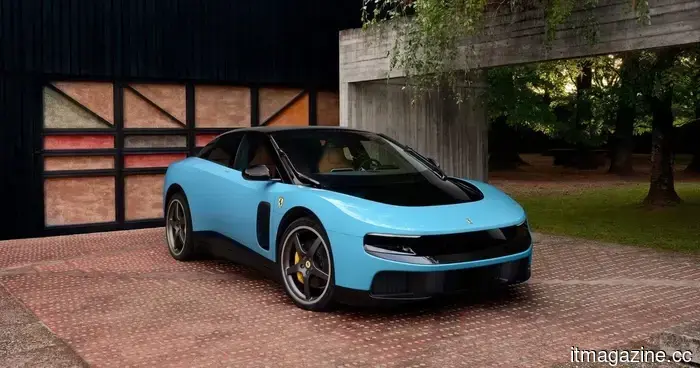
Samsung's OLED technology provides the Ferrari Luce with a dashboard that is unrivaled by any other car.
Samsung Display has showcased its finest display technology, not in a smartphone, but rather in a Ferrari.
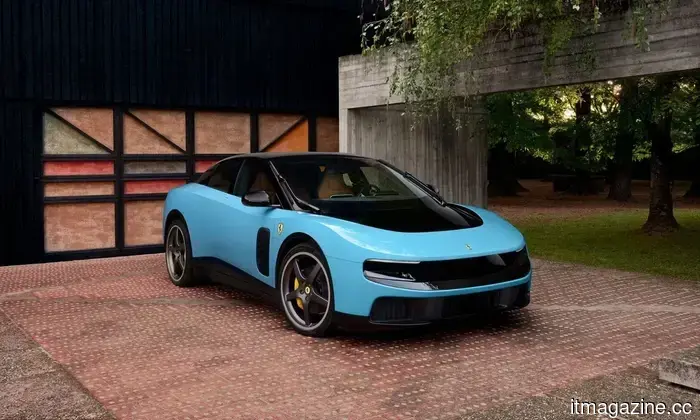
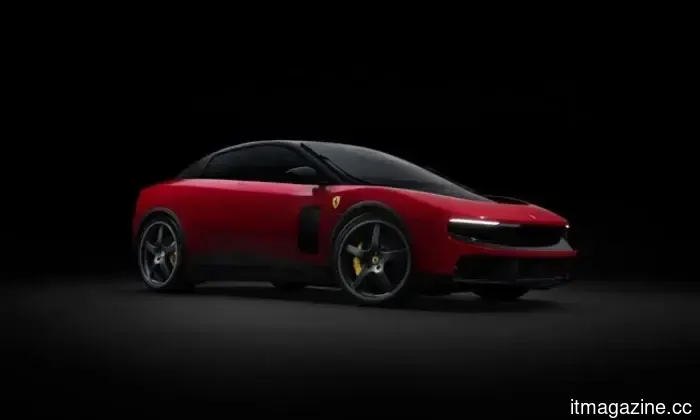
Ferrari has just revealed the Luce, its inaugural all-electric vehicle, and its design has stirred up quite a debate. Created by former Apple design chief Jony Ive, the car is certainly attracting attention, though not all of it is positive.
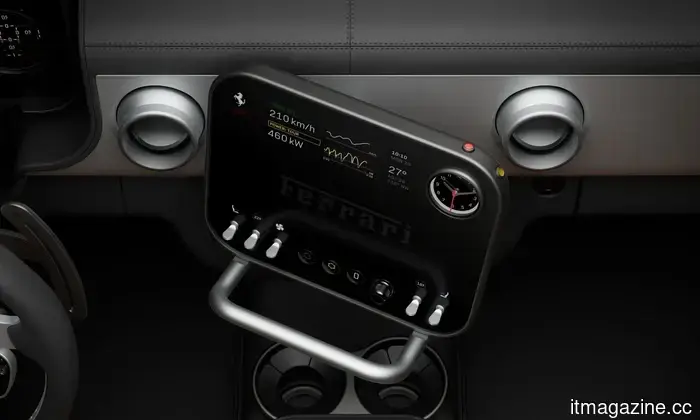
Despite the exterior design being contentious, it's hard for anyone to argue against the interior's uniqueness. One of the standout features is the cutting-edge display design.
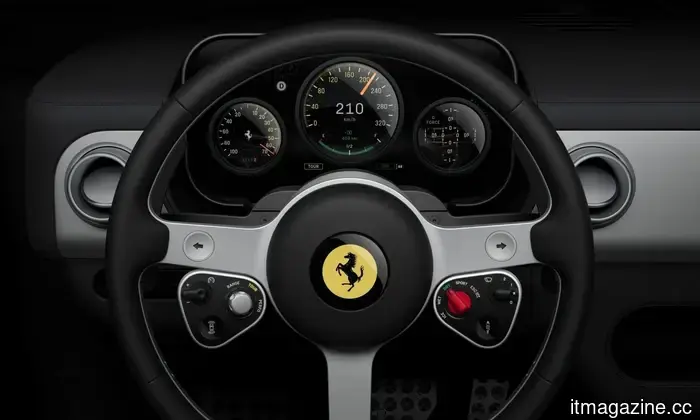
The dashboard truly deserves special recognition. Samsung Display exclusively equips the Luce's interior with four OLED panels, and what they've accomplished is truly impressive.
So, what makes this dashboard particularly remarkable?
The highlight is the driver’s binnacle, the display panel before the driver that shows speed and driving data. Ferrari and Samsung have cleverly layered two OLED panels—one 12-inch panel at the bottom and another 12.9-inch panel above it.
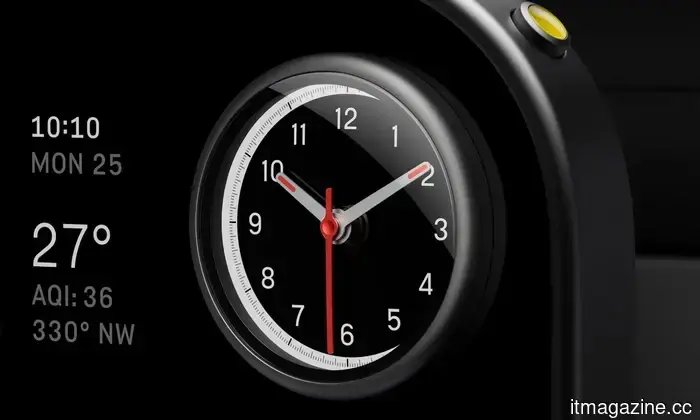
The upper panel features three circular cutouts that expose parts of the display underneath, while mechanical hands move within the space between the two panels. It has a digital appearance but an analog feel, which is precisely the intention. This innovative design is unlike anything seen in other cars, and it's genuinely astounding.
The remaining two displays consist of a 10.1-inch panel in the central control area, which also showcases rotating mechanical hands through small cutouts, and a 6.3-inch screen for rear passengers to manage climate controls and view driving information.
Additionally, I appreciate the physical buttons on the secondary display for adjusting fan speed, temperature, and seat heating. The interaction between these physical buttons and the digital interface is quite impressive.
How did Samsung accomplish this?
Creating large openings in an active display region without compromising image quality is challenging. The hole in the Ferrari Luce's binnacle is about 100mm wide, which is roughly 20 times larger than the minuscule front camera hole found in smartphones. This size makes it quite difficult to route signals around the opening without introducing distortion or lag.
Samsung’s HIAA (Hole in Active Area) technology addresses this issue by individually optimizing each signal design, ensuring that the image remains consistent and stable across the display, regardless of hole size.
Whatever method Samsung employed to achieve this, it was evidently successful. I've viewed demos of the car's interior, and the displays appear clear and defined. Who would have thought that one of the most thrilling aspects of a brand-new Ferrari design in 2026 would be the dashboard?
Rachit is an experienced tech journalist with over seven years of expertise in the consumer technology sector.
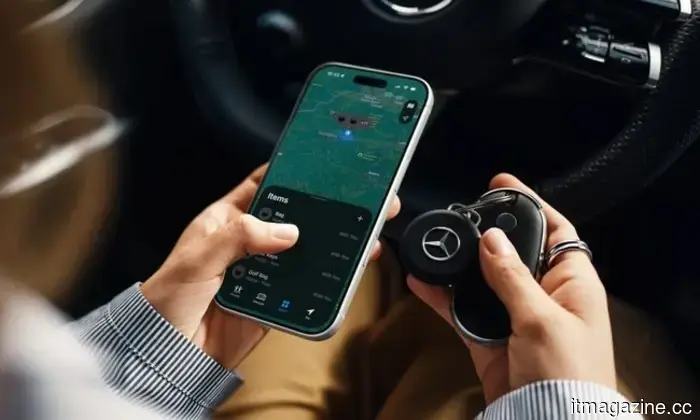
Mercedes-Benz and Chipolo have developed a key tracker to complement your car fob.
Chipolo’s Mercedes-Benz tracker is compatible with Apple Find My and Google Find Hub.
If you own a Mercedes-Benz or simply appreciate the brand enough to want matching accessories, Chipolo’s new Loop tracker is tailored for you. The two companies have collaborated on a new premium Bluetooth tracker specifically designed for Mercedes-Benz car keys. The tracker features a black matte exterior, a brushed metal key hook, and a chrome Mercedes-Benz logo on the front.
In addition to being used for car keys, it can also be attached to your handbag, backpack, suitcase, or travel pouch, serving as a versatile tracking device.
Ferrari has officially entered the electric vehicle market with the launch of the all-new Ferrari Luce, the company's first fully electric production car. Unveiled in Rome, the Luce signifies one of the most significant changes the Maranello-based automaker has undergone since its founding in 1939.
For many years, Ferrari hesitated to go completely electric. The company consistently claimed that emotion, sound, and driver involvement were crucial to the Ferrari experience—factors that enthusiasts believed couldn't exist without a combustion engine. Even as competitors like Porsche introduced electric vehicles such as the Porsche Taycan and brands like Lamborghini discussed electrification, Ferrari maintained its focus on hybrids and traditional performance vehicles.
Citroën is reviving the iconic 2CV as an electric vehicle priced under $18,000.
Affordable electric vehicles have become surprisingly hard to find. However, Citroën is reaching into its history for a solution. The company has recently confirmed that the cherished Citroën 2CV will return as a fully electric car, more than three decades after the original model ceased production. Citroën CEO Xavier Chardon announced this revival at a Stellantis investor event in Michigan, stating that the new 2CV will be 100% electric, manufactured in Europe, and offered at a price below €15,000, or roughly $17,400.
The people's car is going electric.

Other articles
 SPARQ has launched an $8.5 million seed funding round for its AI-native game engine, with a16z's scout fund included in the capitalization table.
SPARQ, based in the UAE, has launched an $8.5 million seed funding round for its AI-focused game engine, with early involvement from the a16z Scout Fund.
SPARQ has launched an $8.5 million seed funding round for its AI-native game engine, with a16z's scout fund included in the capitalization table.
SPARQ, based in the UAE, has launched an $8.5 million seed funding round for its AI-focused game engine, with early involvement from the a16z Scout Fund.
 Apple AirPods Pro 3 review: After eight months, still a great choice that continues to impress
With the AirPods Pro 3, Apple aimed to establish a new standard. The company came quite close to achieving this goal, but also secured some surprising victories along the journey.
Apple AirPods Pro 3 review: After eight months, still a great choice that continues to impress
With the AirPods Pro 3, Apple aimed to establish a new standard. The company came quite close to achieving this goal, but also secured some surprising victories along the journey.
 Ozzy Osbourne's upcoming live performance will feature an AI avatar, and opinions among fans are divided.
Ozzy Osbourne's family is collaborating with Hyperreal and Proto Hologram to create a realistic AI avatar that can interact with fans and respond in real-time.
Ozzy Osbourne's upcoming live performance will feature an AI avatar, and opinions among fans are divided.
Ozzy Osbourne's family is collaborating with Hyperreal and Proto Hologram to create a realistic AI avatar that can interact with fans and respond in real-time.
 Data from CAICT indicates that shipments of foreign-brand phones to China increased by 1.8% in April.
Shipments of foreign-brand smartphones to China increased by 1.8% year-on-year in April, reaching 3.59 million units. This marks a significant slowdown following a first quarter where iPhone sales surged over 40%.
Data from CAICT indicates that shipments of foreign-brand phones to China increased by 1.8% in April.
Shipments of foreign-brand smartphones to China increased by 1.8% year-on-year in April, reaching 3.59 million units. This marks a significant slowdown following a first quarter where iPhone sales surged over 40%.
 Spain halts Polymarket and Kalshi due to lack of gambling licenses.
Spain has put a temporary halt to Polymarket and Kalshi for operating without a gambling license, becoming part of a growing European effort to regulate US prediction markets.
Spain halts Polymarket and Kalshi due to lack of gambling licenses.
Spain has put a temporary halt to Polymarket and Kalshi for operating without a gambling license, becoming part of a growing European effort to regulate US prediction markets.
 SPARQ has launched an $8.5 million seed round for its AI-driven game engine, featuring a16z’s scout fund as part of its investor lineup.
UAE-based SPARQ has launched an $8.5 million seed round for its AI-driven game engine, with early participation from the a16z Scout Fund.
SPARQ has launched an $8.5 million seed round for its AI-driven game engine, featuring a16z’s scout fund as part of its investor lineup.
UAE-based SPARQ has launched an $8.5 million seed round for its AI-driven game engine, with early participation from the a16z Scout Fund.
Samsung's OLED technology provides the Ferrari Luce with a dashboard that is unrivaled by any other car.
Samsung Display is exclusively equipping the interior of the Ferrari Luce with four OLED panels, featuring an innovative layered display that incorporates real mechanical clock hands.