

McKinsey developed a no-cost AI tool to help candidates avoid spending $500 per hour on interview coaching.
TL;DR McKinsey has introduced a complimentary AI practice tool for interview case studies, which evaluates candidates on their ability to interact with its AI assistant Lilli.
In April, McKinsey rolled out a free AI practice tool that allows candidates unlimited tries at the quantitative case study portion of their interviews. This tool is accessible globally to applicants vying for entry-level business analyst and associate positions. The firm aims to equalize opportunities for candidates who cannot afford expensive consulting coaching services, which typically charge between $200 and $500 per hour. This free resource enables candidates to repeatedly practice the same quantitative scenarios they will face during their interviews. Marie Christine Padberg, co-leader of global talent attraction at McKinsey, noted in an interview with Business Insider that the tool also helps alleviate anxiety: “Doing quantitative tasks is one thing, but performing them under observation is quite another.”
This practice tool is part of a larger integration of AI into McKinsey’s hiring process. The second aspect, which has more significant implications, involves the firm's pilot program using its internal AI assistant Lilli during final-round interviews for business school graduates, initiated in January. In this pilot, candidates utilize Lilli to analyze case studies and enhance their conclusions. Interviewers assess how applicants engage with the system, evaluate its outputs, and use them in specific client scenarios. This assessment focuses on curiosity and judgment rather than just prompt engineering skills.
McKinsey is not gauging whether candidates can avoid using AI but rather if they can collaborate with it effectively. This approach mirrors the evolution of consulting work, where professionals are increasingly expected to focus on problem framing, judgment, and implementation beyond the analytical tasks that clients can handle internally.
The extensive use of AI at McKinsey makes this hiring shift sensible. CEO Bob Sternfels mentioned at CES in January that the firm now employs around 25,000 AI agents to assist its 60,000 human employees, a significant increase from 3,000 just 18 months prior. Over 75% of McKinsey staff engage with Lilli monthly.
Furthermore, McKinsey has eliminated around 200 technology positions as AI takes over non-client-facing tasks. The firm's overall workforce decreased by over 10% from 2023 to 2025, with entry-level positions being the most significantly impacted—precisely the roles that the AI practice tool aims to help candidates secure.
The dynamics of AI creating and eliminating jobs are evident across the hiring landscape. There has been a 19-fold increase in postings for forward-deployed engineers year over year, with Claude Evangelists earning $240,000 and Chief AI Officers nearly $500,000. The new roles created by AI offer higher pay and demand different skills compared to those lost.
McKinsey's interview strategy reinforces this transition. The firm no longer questions whether candidates can utilize AI; instead, it incorporates AI fluency as a prerequisite for entry. Consulting interview prep company CaseBasix predicts that BCG and Bain may implement similar AI components in their interviews.
This trend is consistent across industries. Automakers in Detroit are downsizing white-collar jobs while announcing new AI positions. Salesforce cut 4,000 support roles following the implementation of AI agents. McKinsey is simultaneously reducing its workforce and revamping its hiring processes to attract individuals who can collaborate with the technologies that are making other jobs obsolete.
The quantitative aspect is particularly crucial, Padberg emphasized, since “even in an AI-driven workplace, consultants must grasp how numbers relate and what they signify.” While AI can produce analyses, it cannot yet evaluate their relevance to a client's specific issue. This gap in judgment is what McKinsey’s interview aims to assess now.
Graduates from the classes of 2025 and 2026 will enter a job market where AI fluency is no longer considered an optional skill; at McKinsey, it has become a requirement for applicants. The free practice tool facilitates preparation, while the Lilli interview sets a clear standard: those who cannot work effectively with AI under pressure will not secure the position.
Other articles
 HP released a crucial BIOS update via Windows Update, which ended up disabling its most high-end laptops.
Owners of ZBook Ultra and EliteBook X devices are experiencing issues with their devices being unbootable following the automatic installation of a critical BIOS patch. HP has stated that they are "investigating the matter."
HP released a crucial BIOS update via Windows Update, which ended up disabling its most high-end laptops.
Owners of ZBook Ultra and EliteBook X devices are experiencing issues with their devices being unbootable following the automatic installation of a critical BIOS patch. HP has stated that they are "investigating the matter."
 Corsair is introducing Chinese RAM into the mainstream market. However, it isn't likely to resolve the crisis completely.
Chinese manufacturers of memory products are introducing lower-cost RAM and storage chips into the market, attracting the attention of leading PC brands. This shift has the potential to significantly alter hardware pricing, though it may encounter various complications along the way.
Corsair is introducing Chinese RAM into the mainstream market. However, it isn't likely to resolve the crisis completely.
Chinese manufacturers of memory products are introducing lower-cost RAM and storage chips into the market, attracting the attention of leading PC brands. This shift has the potential to significantly alter hardware pricing, though it may encounter various complications along the way.
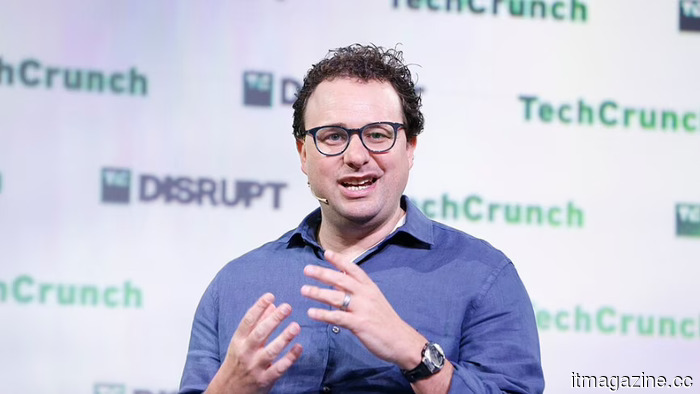 The US has placed Anthropic on its blacklist due to security concerns. Nevertheless, its intelligence agencies are still utilizing Claude.
A shortage of chips compelled the White House to permit the NSA to utilize Anthropic's AI. An emergency request for $9 billion will finance classified data centers for Nvidia chips.
The US has placed Anthropic on its blacklist due to security concerns. Nevertheless, its intelligence agencies are still utilizing Claude.
A shortage of chips compelled the White House to permit the NSA to utilize Anthropic's AI. An emergency request for $9 billion will finance classified data centers for Nvidia chips.
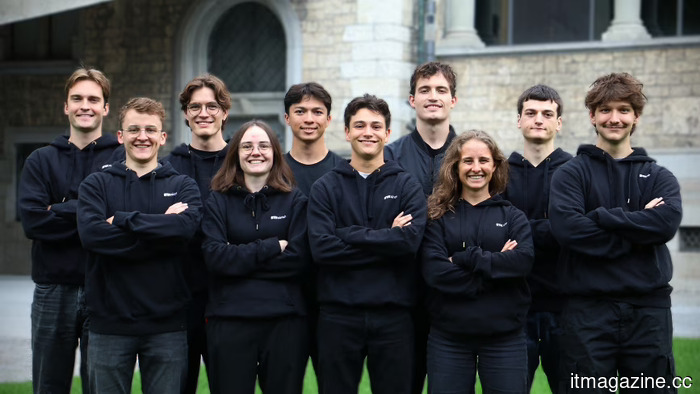 This startup in Zurich has developed a robot with four arms designed for space stations. Each hour it saves for astronauts is valued at $140,000.
Orbit Robotics' Helios employs tendon-driven arms to navigate through microgravity and manage cargo. Maintenance accounts for 35% of crew time in orbit.
This startup in Zurich has developed a robot with four arms designed for space stations. Each hour it saves for astronauts is valued at $140,000.
Orbit Robotics' Helios employs tendon-driven arms to navigate through microgravity and manage cargo. Maintenance accounts for 35% of crew time in orbit.
 iOS 27 might simplify the management of your AirPods significantly.
Apple might be getting ready for a long-awaited overhaul of the cluttered AirPods settings interface. For users who have been frustrated with navigating through Bluetooth menus, these updates could be quite impactful.
iOS 27 might simplify the management of your AirPods significantly.
Apple might be getting ready for a long-awaited overhaul of the cluttered AirPods settings interface. For users who have been frustrated with navigating through Bluetooth menus, these updates could be quite impactful.
 iOS 27 may significantly simplify the management of your AirPods.
Apple might be getting ready to tidy up the chaotic settings experience for AirPods, which has been needed for a while. For those who are weary of sifting through Bluetooth menus, these updates could seem quite impactful.
iOS 27 may significantly simplify the management of your AirPods.
Apple might be getting ready to tidy up the chaotic settings experience for AirPods, which has been needed for a while. For those who are weary of sifting through Bluetooth menus, these updates could seem quite impactful.
McKinsey developed a no-cost AI tool to help candidates avoid spending $500 per hour on interview coaching.
The consulting firm introduced an AI practice tool that allows for unlimited attempts at case studies. Additionally, it evaluates candidates on their ability to work together with its AI assistant, Lilli.