
The US has placed Anthropic on its blacklist due to security concerns. Nevertheless, its intelligence agencies are still utilizing Claude.
A shortage of chips has compelled the NSA to continue utilizing Anthropic's AI despite the Pentagon's ban. The White House has approved $9 billion for classified data centers.
The US government faces a public relations challenge. The Pentagon has officially blacklisted Anthropic, citing national security risks related to its supply chain. Nevertheless, the NSA is using Anthropic's AI, given that there are no viable alternatives.
According to the New York Times, White House chief of staff Susie Wiles has authorized the National Security Agency to keep using an advanced AI model from Anthropic, a decision prompted by a severe scarcity of the sophisticated chips required to operate frontier AI systems within classified networks.
This compromise coincides with a secret $9 billion emergency funding request approved by the White House, intended to assist leading US intelligence agencies, including the CIA and NSA, in acquiring the high-performance semiconductors necessary for generative AI on highly classified infrastructure.
The computational demands of current AI technologies have exceeded expectations from defense experts and congressional committees. Frontier models utilize processing capabilities that far surpass the original design of classified networks. As the government struggles to obtain adequate physical chips, intelligence agencies have been hindered from fully implementing or testing the latest AI solutions.
The $9 billion will finance specialized federal data centers configured for Nvidia's Grace Blackwell superchip infrastructure, which requires unique builds with significant electrical power and specialized liquid cooling systems, making them incompatible with standard government computing grids.
Congress will formally vote on the funding package, while the White House is reallocating $800 million from other government budgets to start acquiring computing resources immediately, motivated by concerns that China may gain a strategic edge in global intelligence efforts.
Military and intelligence agencies increasingly rely on AI to analyze vast amounts of intercepted communications, satellite images, and data points. AI is capable of identifying anomalies and potential threats that human analysts may overlook. Consequently, a chip shortage hindering these capabilities is perceived as a national security crisis by the government.
This situation embodies a stark contradiction; the same government that has classified Anthropic as a risk is now reliant on its models due to a lack of available hardware for alternatives. The blacklisting stemmed from worries about Anthropic's corporate structure and foreign investment associations, while the dependency arises because Claude is one of the most competent reasoning models available.
Anthropic's Project Glasswing, which allows 50 selected partners access to Claude Mythos for vulnerability assessment, identified over 10,000 critical vulnerabilities in just one month. The company stands as both a premier AI security resource for Western defenders and as an entity the Pentagon views as a supply chain threat.
The chip crisis extends beyond just the intelligence sector. The same memory reallocation that is negatively impacting affordable smartphones—due to companies like Samsung, SK Hynix, and Micron diverting wafers from consumer electronics to AI—is also hampering the government's efforts to construct classified AI frameworks. The $9 billion appeal mirrors the challenges facing consumer electronics worldwide.
Anthropic's revenue is projected to soar from $9 billion to $30 billion annually between late 2025 and early April 2026. The company is gearing up for a possible initial public offering later this year, with a valuation that may reach $800 billion. Despite being blacklisted by the Pentagon, it remains essential to the NSA.
This situation highlights a fundamental tension within US AI policy; the government aims to regulate which AI companies can access sensitive operations. However, advanced AI capabilities are concentrated within a few private firms. When the necessary hardware for alternatives is not available, the government loses its control over its own supply chain.
The $9 billion initiative seeks to address this hardware gap. Once the classified data centers are established, they will provide the intelligence community with the infrastructure to operate whichever models they desire, eliminating reliance on any single provider. Until these facilities become operational, the NSA will persist in using the AI solution that the Pentagon has deemed untrustworthy due to the chip shortage dictating their options.
Otros artículos
 The Apple Watch is now 11 years old and is starting to lose its appeal. Competitors without screens are gaining traction in the next phase of the market.
Whoop, Oura, and Google's Fitbit Air are transforming wearables with a focus on AI coaching and passive tracking. Meanwhile, Apple's Health app seems to lack momentum.
The Apple Watch is now 11 years old and is starting to lose its appeal. Competitors without screens are gaining traction in the next phase of the market.
Whoop, Oura, and Google's Fitbit Air are transforming wearables with a focus on AI coaching and passive tracking. Meanwhile, Apple's Health app seems to lack momentum.
 Good Lock is the reason I continue to return to the Galaxy S26.
After using Good Lock on my Galaxy S26, Samsung's software transitioned from feeling like a static interface to something that I could genuinely customize to match my personal preferences.
Good Lock is the reason I continue to return to the Galaxy S26.
After using Good Lock on my Galaxy S26, Samsung's software transitioned from feeling like a static interface to something that I could genuinely customize to match my personal preferences.
 This "ordinary" USB cable has hidden aspirations of transforming into a hacking device.
A new Kickstarter initiative named Hacknect conceals a Wi-Fi-capable hacking and automation platform within what seems to be a typical USB cable.
This "ordinary" USB cable has hidden aspirations of transforming into a hacking device.
A new Kickstarter initiative named Hacknect conceals a Wi-Fi-capable hacking and automation platform within what seems to be a typical USB cable.
 3 MacBook games that are more impactful than many films and don’t require gaming skills.
If you own a MacBook and have never considered yourself a gamer, these three narrative-driven games are simple to dive into, emotionally impactful, and unexpectedly memorable.
3 MacBook games that are more impactful than many films and don’t require gaming skills.
If you own a MacBook and have never considered yourself a gamer, these three narrative-driven games are simple to dive into, emotionally impactful, and unexpectedly memorable.
 The AI security gap that no one is willing to acknowledge is already present.
The leak of the Anthropic Claude Code source code uncovered more than just a packaging mistake; it highlighted the significant lead attackers have with AI compared to the challenges defenders face in keeping up.
The AI security gap that no one is willing to acknowledge is already present.
The leak of the Anthropic Claude Code source code uncovered more than just a packaging mistake; it highlighted the significant lead attackers have with AI compared to the challenges defenders face in keeping up.
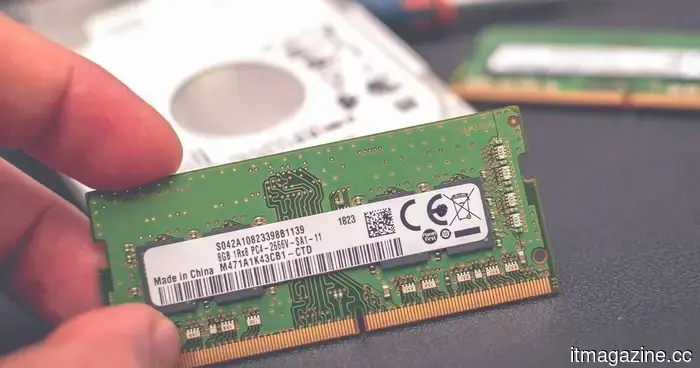 Corsair is introducing Chinese RAM into the mainstream market. However, it isn't likely to resolve the crisis completely.
Chinese manufacturers of memory products are introducing lower-cost RAM and storage chips into the market, attracting the attention of leading PC brands. This shift has the potential to significantly alter hardware pricing, though it may encounter various complications along the way.
Corsair is introducing Chinese RAM into the mainstream market. However, it isn't likely to resolve the crisis completely.
Chinese manufacturers of memory products are introducing lower-cost RAM and storage chips into the market, attracting the attention of leading PC brands. This shift has the potential to significantly alter hardware pricing, though it may encounter various complications along the way.
The US has placed Anthropic on its blacklist due to security concerns. Nevertheless, its intelligence agencies are still utilizing Claude.
A shortage of chips compelled the White House to permit the NSA to utilize Anthropic's AI. An emergency request for $9 billion will finance classified data centers for Nvidia chips.