
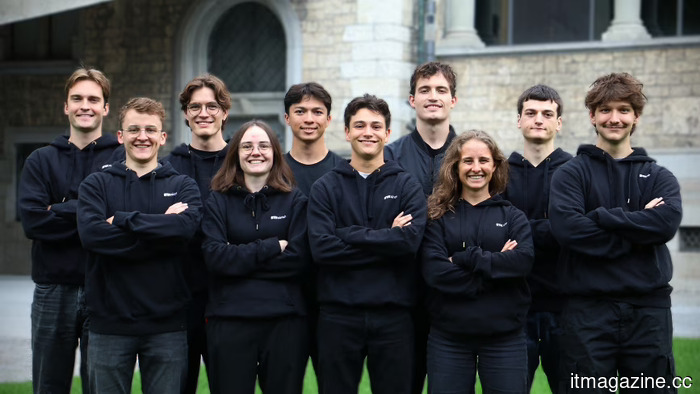
This startup in Zurich has developed a robot with four arms designed for space stations. Each hour it saves for astronauts is valued at $140,000.
TL;DR: Orbit Robotics, a startup from Zurich, has developed a four-armed space robot named Helios, aimed at addressing the 35% of crew time spent on maintenance, valued at $140K per hour.
Orbit Robotics has introduced Helios, a robot equipped with four arms intended for use inside space stations. In microgravity, traditional legs are ineffective; instead, Helios incorporates two additional arms that facilitate both movement and operational tasks.
The design rationale is straightforward: two arms secure the robot to the interior of the station, while the other two manage cargo, tools, or other equipment. This four-arm setup enables Helios to stabilize itself and perform tasks simultaneously, a capability that a two-armed humanoid robot lacks in a zero-gravity environment.
The robot's arms utilize tendon-driven mechanics rather than relying on motors at each joint. Motors are positioned near the shoulders, transmitting force through cables and spools, which reduces arm weight while preserving the necessary range of motion for tasks aboard the station.
Helios features a rolling-contact elbow joint, which allows for smoother and more controlled movements. In microgravity, abrupt or uneven motions can destabilize the robot and any objects it is handling. This seemingly ordinary joint design is a crucial engineering choice for the entire system.
The economic argument is strong: maintenance constitutes about 35% of the crew's time on the International Space Station, with a single cargo unloading cycle potentially lasting nearly 50 hours. At around $140,000 per hour for an astronaut, routine logistical tasks in space are extremely costly.
Tasks such as unloading cargo, organizing supplies, tracking inventory, relocating equipment, and performing basic maintenance do not necessitate human decision-making. They demand the capacity to navigate narrow spaces, remain stable without gravity, and handle objects with precision. Helios is specifically engineered for these functions.
The wider robotics industry is swiftly transitioning towards specialized designs instead of general-purpose humanoid models. Companies like 1X are producing bipedal humanoids for home applications, and the founder of iRobot is working on an AI companion robot resembling a bear cub. In contrast, Helios embodies a philosophy of constructing the robot to fit the environment rather than adapting the environment to a humanoid structure.
Most humanoid robots, such as Unitree’s G1 and Tesla’s Optimus, are designed for movement on Earth, focusing on walking, balancing, and navigating flat terrains—none of which are relevant in orbit. Orbit Robotics began with the limitations posed by microgravity, developing the robot’s design accordingly, resulting in a shape that may appear unconventional on Earth but is highly functional in space.
SpaceX’s Starship program aims to significantly boost the volume of cargo and personnel sent to orbit. If launch costs decrease as anticipated, the number of space stations and orbital habitats will increase, each requiring maintenance and logistics support. The demand for a robot capable of performing these tasks at a significantly lower cost than human crew members rises with each successful Starship mission.
Orbit Robotics has not revealed any pricing, production schedules, or funding details. Nestled in Zurich, one of Europe’s premier robotics engineering centers alongside Munich and Delft, the future of Helios in orbit hinges on establishing partnerships with space agencies or commercial station operators such as Axiom Space. The engineering proposition—four arms designed for zero gravity, saving $140,000 per hour of human labor—presents a compelling case.
Other articles
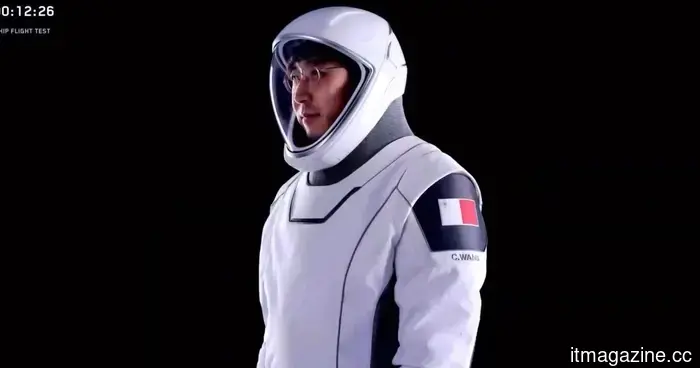 A billionaire from the cryptocurrency world will guide humanity to Mars aboard Musk's Starship.
The inaugural human journey to Mars by SpaceX might be commanded by Chun Wang, a cryptocurrency billionaire who has already completed one private astronaut mission.
A billionaire from the cryptocurrency world will guide humanity to Mars aboard Musk's Starship.
The inaugural human journey to Mars by SpaceX might be commanded by Chun Wang, a cryptocurrency billionaire who has already completed one private astronaut mission.
 The Apple Watch is now 11 years old and is losing its edge. Competitors without screens are taking the lead in the upcoming phase.
Whoop, Oura, and Google's Fitbit Air are transforming wearables through AI coaching and passive tracking, while Apple's Health app seems to be in a state of limbo.
The Apple Watch is now 11 years old and is losing its edge. Competitors without screens are taking the lead in the upcoming phase.
Whoop, Oura, and Google's Fitbit Air are transforming wearables through AI coaching and passive tracking, while Apple's Health app seems to be in a state of limbo.
 The Apple Watch is now 11 years old and is starting to lose its appeal. Competitors without screens are gaining traction in the next phase of the market.
Whoop, Oura, and Google's Fitbit Air are transforming wearables with a focus on AI coaching and passive tracking. Meanwhile, Apple's Health app seems to lack momentum.
The Apple Watch is now 11 years old and is starting to lose its appeal. Competitors without screens are gaining traction in the next phase of the market.
Whoop, Oura, and Google's Fitbit Air are transforming wearables with a focus on AI coaching and passive tracking. Meanwhile, Apple's Health app seems to lack momentum.
 This "ordinary" USB cable has a hidden desire to function as a hacking tool.
A new Kickstarter initiative named Hacknect conceals a Wi-Fi-enabled hacking and automation platform within what seems to be a regular USB cable.
This "ordinary" USB cable has a hidden desire to function as a hacking tool.
A new Kickstarter initiative named Hacknect conceals a Wi-Fi-enabled hacking and automation platform within what seems to be a regular USB cable.
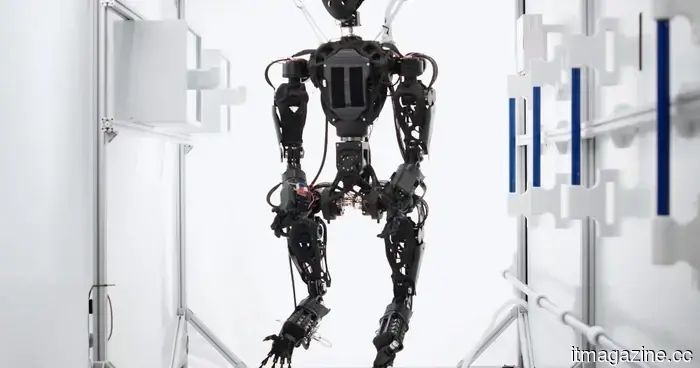 The space robot created by Orbot Robotics is equipped with four arms, and its Goro-like structure serves a specific function.
In microgravity, legs have limited functionality. Orbit Robotics' Helios substitutes them with four specially designed arms for mobility and tasks aboard the station.
The space robot created by Orbot Robotics is equipped with four arms, and its Goro-like structure serves a specific function.
In microgravity, legs have limited functionality. Orbit Robotics' Helios substitutes them with four specially designed arms for mobility and tasks aboard the station.
 3 MacBook games that are more impactful than many films and don’t require gaming skills.
If you own a MacBook and have never considered yourself a gamer, these three narrative-driven games are simple to dive into, emotionally impactful, and unexpectedly memorable.
3 MacBook games that are more impactful than many films and don’t require gaming skills.
If you own a MacBook and have never considered yourself a gamer, these three narrative-driven games are simple to dive into, emotionally impactful, and unexpectedly memorable.
This startup in Zurich has developed a robot with four arms designed for space stations. Each hour it saves for astronauts is valued at $140,000.
Orbit Robotics' Helios employs tendon-driven arms to navigate through microgravity and manage cargo. Maintenance accounts for 35% of crew time in orbit.