

iOS 27 may significantly simplify the management of your AirPods.
Digital Trends might receive a commission if you make a purchase through links on our website. Why should you trust us?
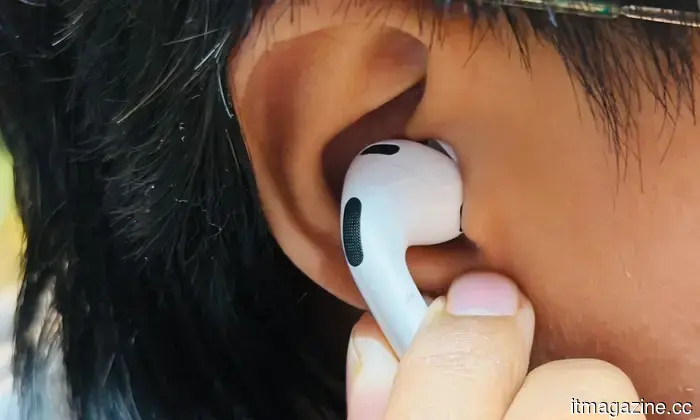
For years, users of AirPods Pro have been requesting Apple for a straightforward solution to manage their earbuds—rather than having to navigate buried menus or scattered toggles deep within Bluetooth settings. They want a clean, dedicated interface that makes controlling AirPods feel as refined as the hardware itself. Now, according to Mark Gurman from Bloomberg, Apple is reportedly working on a significant redesign of the AirPods settings interface for iOS 27, iPadOS 27, and macOS 27.
AirPods have progressed well beyond just being basic wireless earbuds. With features like head gesture recognition, adaptive audio, hearing aid capabilities, and advanced noise control, they have become more sophisticated devices. However, the software experience for managing these features still seems lacking when compared to devices like the Apple Watch or Apple Vision Pro.
Apple’s AirPods settings may soon be more intuitive.
Gurman’s analysis indicates that Apple isn’t expected to introduce a separate AirPods app just yet—something many users have long desired. Instead, the company is said to be revamping the current AirPods settings panel to enhance its functionality, simplify navigation, and improve organization. This could greatly impact daily usage.
At present, even simple controls for AirPods can feel disjointed. Some features are tucked under Bluetooth menus, others are accessible only when the earbuds are connected, and newer accessibility options often necessitate sifting through various sections of Settings. Apple aims to streamline this process and bring attention to key AirPods features instead of concealing them.
AirPods are evolving beyond mere accessories.
The timing seems appropriate. Apple increasingly views AirPods as intelligent wearable devices rather than just audio accessories. The company has gradually introduced health-related tools, gesture-based controls, and AI-driven audio experiences that depend heavily on software integration.
However, the settings experience hasn't really kept pace with the hardware advancements. If these anticipated changes make their debut in iOS 27, they may not entirely eliminate the need for a dedicated AirPods app.
Shimul is a contributor at Digital Trends, with over five years of experience in the technology sector.
It seems that watchOS 27 will primarily enhance the Apple Watch experience, but won’t introduce significant new features.
watchOS 27 may bring refinements instead of substantial changes to the Apple Watch.
The Apple Watch revolutionized the modern smartwatch market upon its launch in 2015, transforming wearables from niche devices into widely accepted consumer products, generating billions in revenue for Apple, and eventually serving as an entry point into the company’s broader health and wearables ecosystem. Over a decade later, however, Apple appears to be entering a period of uncertainty within the category it once led.
As indicated in Mark Gurman's PowerOn newsletter from Bloomberg, watchOS 27 is likely to primarily emphasize stability improvements, performance enhancements, and minor upgrades rather than groundbreaking new features. Although Apple is reportedly working on enhancing heart rate tracking behind the scenes, the update might lack the kinds of major innovations that previously characterized the Apple Watch platform.
Read more
Wireless earbuds may soon recognize users by their heartbeat.
Biometric authentication isn’t just limited to fingerprints and facial recognition anymore. Researchers are investigating whether earbuds can identify users simply by detecting the subtle vibrations generated by their heartbeats. A recent study published on the arXiv preprint server presents “AccLock,” a passive authentication system that employs standard earphone hardware to verify a user's identity. Instead of using microphones or voice commands, the system operates through built-in accelerometers that are already present in many modern earbuds.
Read more
Google Health 5.0 is being released, featuring its best attribute upfront and its biggest issues hidden beneath.
Google Health 5.0 is now rolling out as a mandatory update for Fitbit app users, with the timing being strategic. The new Fitbit Air, which is Google’s direct competitor to the Whoop fitness tracking band, will launch next week, and it’s essential to have Health 5.0 in order to set it up.
Read more




Другие статьи
 This startup in Zurich has developed a robot with four arms designed for space stations. Each hour it saves for astronauts is valued at $140,000.
Orbit Robotics' Helios employs tendon-driven arms to navigate through microgravity and manage cargo. Maintenance accounts for 35% of crew time in orbit.
This startup in Zurich has developed a robot with four arms designed for space stations. Each hour it saves for astronauts is valued at $140,000.
Orbit Robotics' Helios employs tendon-driven arms to navigate through microgravity and manage cargo. Maintenance accounts for 35% of crew time in orbit.
 iOS 27 might simplify the management of your AirPods significantly.
Apple might be getting ready for a long-awaited overhaul of the cluttered AirPods settings interface. For users who have been frustrated with navigating through Bluetooth menus, these updates could be quite impactful.
iOS 27 might simplify the management of your AirPods significantly.
Apple might be getting ready for a long-awaited overhaul of the cluttered AirPods settings interface. For users who have been frustrated with navigating through Bluetooth menus, these updates could be quite impactful.
 The US has placed Anthropic on its blacklist due to security concerns. Nevertheless, its intelligence agencies are still utilizing Claude.
A shortage of chips compelled the White House to permit the NSA to utilize Anthropic's AI. An emergency request for $9 billion will finance classified data centers for Nvidia chips.
The US has placed Anthropic on its blacklist due to security concerns. Nevertheless, its intelligence agencies are still utilizing Claude.
A shortage of chips compelled the White House to permit the NSA to utilize Anthropic's AI. An emergency request for $9 billion will finance classified data centers for Nvidia chips.
 The space robot created by Orbot Robotics is equipped with four arms, and its Goro-like structure serves a specific function.
In microgravity, legs have limited functionality. Orbit Robotics' Helios substitutes them with four specially designed arms for mobility and tasks aboard the station.
The space robot created by Orbot Robotics is equipped with four arms, and its Goro-like structure serves a specific function.
In microgravity, legs have limited functionality. Orbit Robotics' Helios substitutes them with four specially designed arms for mobility and tasks aboard the station.
 Corsair is introducing Chinese RAM into the mainstream market. However, it isn't likely to resolve the crisis completely.
Chinese manufacturers of memory products are introducing lower-cost RAM and storage chips into the market, attracting the attention of leading PC brands. This shift has the potential to significantly alter hardware pricing, though it may encounter various complications along the way.
Corsair is introducing Chinese RAM into the mainstream market. However, it isn't likely to resolve the crisis completely.
Chinese manufacturers of memory products are introducing lower-cost RAM and storage chips into the market, attracting the attention of leading PC brands. This shift has the potential to significantly alter hardware pricing, though it may encounter various complications along the way.
 This "ordinary" USB cable has hidden aspirations of transforming into a hacking device.
A new Kickstarter initiative named Hacknect conceals a Wi-Fi-capable hacking and automation platform within what seems to be a typical USB cable.
This "ordinary" USB cable has hidden aspirations of transforming into a hacking device.
A new Kickstarter initiative named Hacknect conceals a Wi-Fi-capable hacking and automation platform within what seems to be a typical USB cable.
iOS 27 may significantly simplify the management of your AirPods.
Apple might be getting ready to tidy up the chaotic settings experience for AirPods, which has been needed for a while. For those who are weary of sifting through Bluetooth menus, these updates could seem quite impactful.