
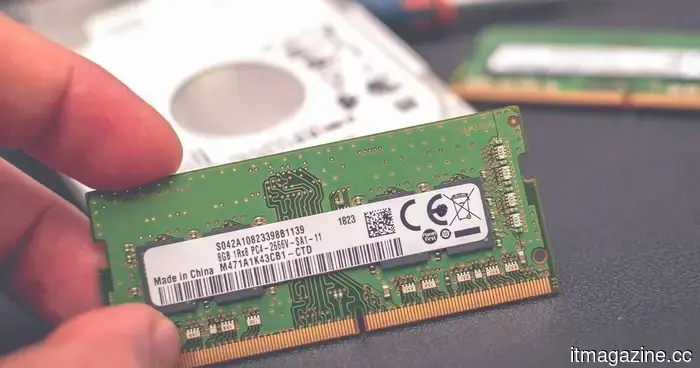
Corsair is introducing Chinese RAM into the mainstream market. However, it isn't likely to resolve the crisis completely.
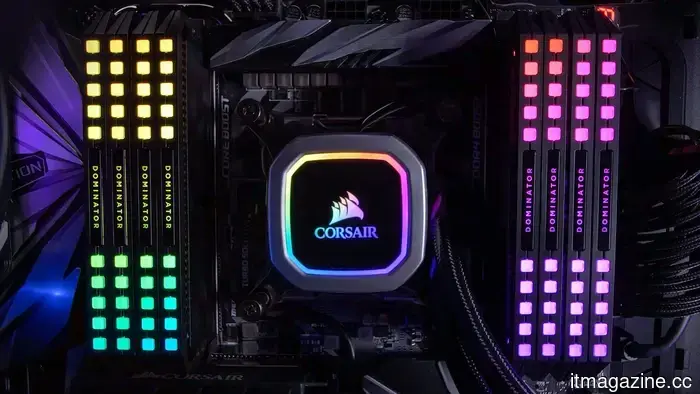
After months of exorbitantly high prices for RAM and SSDs, the memory market might finally be facing new pressure from an unforeseen source: China. Recent reports indicate that Chinese memory manufacturers are swiftly increasing their output of DRAM and NAND chips, prompting major hardware brands to take notice. Corsair is a key example, having reportedly tested DDR5 memory modules using chips from the prominent Chinese DRAM manufacturer ChangXin Memory Technologies, commonly referred to as CXMT.
This development seems inevitable. Memory prices have stubbornly remained elevated across PCs, laptops, and storage devices for several months. Consequently, when Chinese suppliers began providing RAM at nearly half the cost of some international competitors, manufacturers were likely to at least investigate this alternative. Market reports suggest that certain CXMT DDR5 modules are being offered at around $150, while comparable products from larger global suppliers typically range from $300 to $400.
CXMT is no longer a minor player on the fringe. The company is said to have captured nearly 8% of the global DRAM market and is aggressively increasing its production of DDR5. Concurrently, Chinese NAND manufacturer Yangtze Memory Technologies (YMTC) is establishing itself as a significant player in flash storage, with estimates of its global NAND market share ranging between 11% and 13%.
This scale is crucial since memory pricing is extremely sensitive to supply. When lower-cost chips start entering the market in substantial volumes, global brands can leverage this situation. Even if companies don't completely switch suppliers, the presence of cheaper alternatives can compel established players to reduce their prices.
However, Chinese memory is not expected to immediately displace Samsung, SK hynix, or Micron. While more affordable RAM is appealing, achieving the same level of performance consistency, silicon quality, production maturity, and long-term reliability as the industry leaders is the main challenge.
Corsair’s reported testing lends CXMT some credibility, but it remains just the initial step. One DDR5 kit does not automatically equalize Chinese memory with the offerings of Samsung, SK hynix, and Micron. For PC manufacturers, module speed is just one aspect; factors like stability, firmware performance, compatibility, warranty implications, and reliable supply are equally significant.
Even if CXMT can produce DDR5 that appears competitive on paper, the greater challenge lies in achieving scale. The company must demonstrate that it can consistently produce sufficient good silicon at high yields over an extended period to become a viable alternative.
A handful of lower-priced modules could disrupt Samsung and SK hynix temporarily, but a dependable high-volume supply chain is what will truly alter the market. If yield rates are inadequate, low prices might not translate into stable global availability. Moreover, if reliability is not established, leading PC brands may view Chinese memory primarily as a negotiation tool rather than a genuine substitute.
Compounding these challenges is the ongoing U.S.-China chip conflict. Washington has already targeted China’s access to high-end chipmaking tools, HBM, and various semiconductor supply chain components. YMTC is listed on the U.S. Entity List, and CXMT has also become entangled in the broader export control disputes.
Therefore, even if Chinese RAM emerges as a viable option, it may not remain unnoticed for long. Memory is vital to the PC sector, and past actions have shown that political leaders are willing to make Chinese technology a focus of trade conflicts.
Overall, this situation is unlikely to bring an immediate “solution” to the memory market. Factors like performance consistency, reliability, certifications, firmware stability, and long-term supply agreements continue to be of utmost importance for PC manufacturers and enterprise clients. Established suppliers like Samsung, SK hynix, and Micron Technology maintain dominant relationships.
However, pressure is mounting. If Chinese companies keep ramping up production faster than demand increases—especially outside the AI server surge—consumers may eventually start to see more reasonably priced RAM kits, SSDs, and laptops again, though likely not as swiftly as many hope.
Other articles
 This "ordinary" USB cable has hidden aspirations of transforming into a hacking device.
A new Kickstarter initiative named Hacknect conceals a Wi-Fi-capable hacking and automation platform within what seems to be a typical USB cable.
This "ordinary" USB cable has hidden aspirations of transforming into a hacking device.
A new Kickstarter initiative named Hacknect conceals a Wi-Fi-capable hacking and automation platform within what seems to be a typical USB cable.
 This "ordinary" USB cable has a hidden desire to function as a hacking tool.
A new Kickstarter initiative named Hacknect conceals a Wi-Fi-enabled hacking and automation platform within what seems to be a regular USB cable.
This "ordinary" USB cable has a hidden desire to function as a hacking tool.
A new Kickstarter initiative named Hacknect conceals a Wi-Fi-enabled hacking and automation platform within what seems to be a regular USB cable.
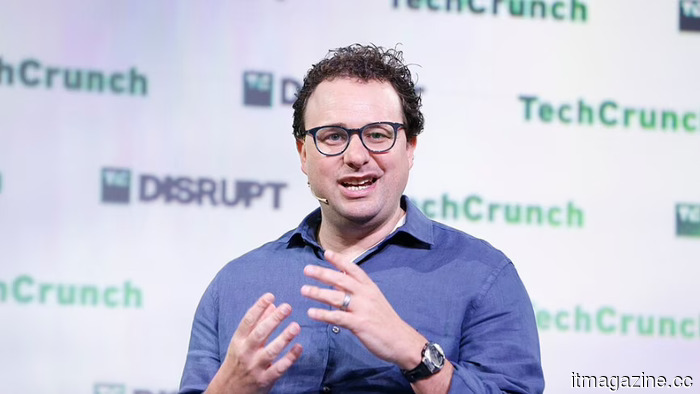 The US has placed Anthropic on its blacklist due to security concerns. Nevertheless, its intelligence agencies are still utilizing Claude.
A shortage of chips compelled the White House to permit the NSA to utilize Anthropic's AI. An emergency request for $9 billion will finance classified data centers for Nvidia chips.
The US has placed Anthropic on its blacklist due to security concerns. Nevertheless, its intelligence agencies are still utilizing Claude.
A shortage of chips compelled the White House to permit the NSA to utilize Anthropic's AI. An emergency request for $9 billion will finance classified data centers for Nvidia chips.
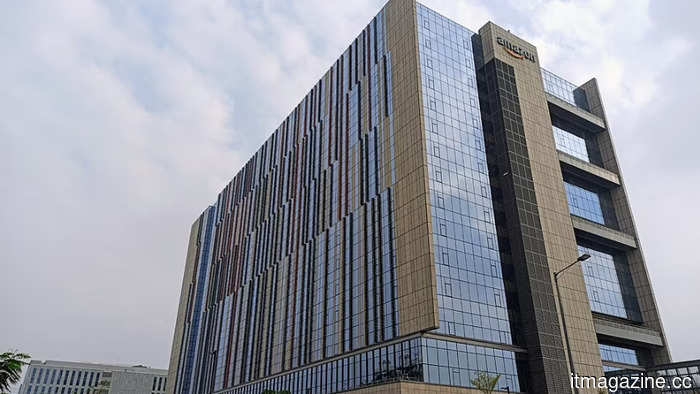 The Gulf was expected to drive the AI surge. Then the conflict began.
Oil prices have reached $100, the Strait of Hormuz is shut down, and investments in data centers are currently on hold. The Gulf's investment in AI is undergoing its initial significant challenge.
The Gulf was expected to drive the AI surge. Then the conflict began.
Oil prices have reached $100, the Strait of Hormuz is shut down, and investments in data centers are currently on hold. The Gulf's investment in AI is undergoing its initial significant challenge.
 A billionaire from the cryptocurrency world will guide humanity to Mars aboard Musk's Starship.
The inaugural human journey to Mars by SpaceX might be commanded by Chun Wang, a cryptocurrency billionaire who has already completed one private astronaut mission.
A billionaire from the cryptocurrency world will guide humanity to Mars aboard Musk's Starship.
The inaugural human journey to Mars by SpaceX might be commanded by Chun Wang, a cryptocurrency billionaire who has already completed one private astronaut mission.
 From humidity to energy: Researchers demonstrate how kitchen objects can generate power for wearables and smart home gadgets.
A novel biodegradable gadget composed of gelatin, table salt, and activated charcoal has the ability to produce electricity from the moisture in the air, paving the way for innovative battery-free wearable technology.
From humidity to energy: Researchers demonstrate how kitchen objects can generate power for wearables and smart home gadgets.
A novel biodegradable gadget composed of gelatin, table salt, and activated charcoal has the ability to produce electricity from the moisture in the air, paving the way for innovative battery-free wearable technology.
Corsair is introducing Chinese RAM into the mainstream market. However, it isn't likely to resolve the crisis completely.
Chinese manufacturers of memory products are introducing lower-cost RAM and storage chips into the market, attracting the attention of leading PC brands. This shift has the potential to significantly alter hardware pricing, though it may encounter various complications along the way.