
South Korea's deputy prime minister stated that the wealth generated by AI should serve the public good, highlighting this point through the recent Samsung strike.
South Korea’s Deputy Prime Minister Bae Kyung-hoon stated that the wealth generated by artificial intelligence must reach the broader public. He highlighted the recent labor tensions at Samsung and the rollout of Hyundai’s Atlas robots as indicators of future challenges in the AI era. In an interview with CNBC on Friday, Bae emphasized that as AI leads to unprecedented corporate profits, the distribution of this wealth and its potential to exacerbate inequality has become a national policy concern.
Bae noted, “In the AI era, these extremely large corporations will keep emerging. This may lead to ongoing labor-management conflicts, which should be resolved thoughtfully through dialogue.” His remarks were pointed, especially given that Samsung’s largest labor union had been gearing up for an 18-day strike, which South Korea's Prime Minister warned could result in daily losses of $668 million. The strike was paused after government mediation led to a tentative agreement. Workers sought to secure 15% of Samsung's operating profits as bonuses formalized in contracts, while Samsung had proposed 10%. The union is currently voting on this agreement until May 27.
This dispute is grounded in reality, as Samsung reported a Q1 2026 operating profit of ₩57.2 trillion, an eightfold increase from the previous year, largely fueled by demand for high-bandwidth memory for AI infrastructure. The wealth of the Lee family doubled to $45.5 billion in a year, while Samsung’s stock price surged nearly 144% year-to-date, and SK Hynix's stock rose almost 200%. The Kospi index has increased over 86% in 2026, surpassing last year’s gains of 75%. This wealth is significant, concentrated, and evident.
Bae also pointed to Hyundai as another area of concern, citing the company's integration of Boston Dynamics’ Atlas robots into its manufacturing, which has raised concerns regarding worker impacts. Hyundai, which acquired a controlling stake in Boston Dynamics in 2021, unveiled its AI robotics agenda at CES 2026, aiming to spearhead what it describes as a “human-centered robotics era.” However, for factory workers, the implications are much more immediate.
The political backdrop adds urgency to these discussions. On May 12, South Korean presidential official Kim Yeong Beom suggested on Facebook that excess tax revenue from the AI and semiconductor sectors should be distributed directly to citizens, which led to market instability, causing shares of Samsung and SK Hynix to decline sharply. An official later clarified that Kim’s post reflected his personal views and not formal government policy. This incident underscores the sensitivity surrounding issues of AI wealth redistribution.
Bae articulated Seoul’s objective as fostering an “AI-inclusive society, where no one is left behind in the AI age.” This rhetoric mirrors commitments from policymakers in Europe and the U.S., yet South Korea’s approach is distinctive given its heavy reliance on semiconductor manufacturing. In April, chips comprised 37% of the country’s total exports, with Samsung and SK Hynix accounting for a large share of the Kospi’s growth. For South Korea, the AI boom is not just one of many sectors; it is the prevailing sector.
When questioned about the risks posed by the concentration of market gains within two companies, Bae asserted that Samsung and SK Hynix are part of a broader ecosystem of suppliers and service firms that also benefit. He noted that South Korea is working to create a competitive edge in physical AI, which includes robots, autonomous vehicles, and industrial systems capable of sensing, reasoning, and acting in real environments. “Semiconductors and AI infrastructure provide the fundamental basis,” Bae explained. “On that foundation, Korea is striving to develop a complete range of AI capabilities, encompassing various hardware, software, and related services.”
The conflict between enhanced productivity through AI and workforce displacement is a global issue. Major automakers in Detroit have cut 20,000 white-collar positions while creating hundreds of AI-related jobs. Salesforce eliminated 4,000 support roles following the implementation of AI agents. This trend is consistent across different industries and regions: AI boosts company profitability while reducing workforce size, and the question of wealth distribution has become a key political challenge surrounding technology adoption.
In South Korea, this question is particularly acute due to the high concentration of gains. Two companies in a single sector have experienced a combined market value increase of hundreds of billions of dollars in just six months. The workers on the production lines producing the memory chips that fuel the AI boom nearly went on strike this week. Bae’s assertion that “the benefits of AI must also go to the public” acknowledges that market mechanisms alone will not address the distribution issue. The extent to which Seoul’s policy response aligns with its stated goals will be tested with each new Samsung contract negotiation and each new installation of an Atlas robot at Hyundai factories.
Other articles
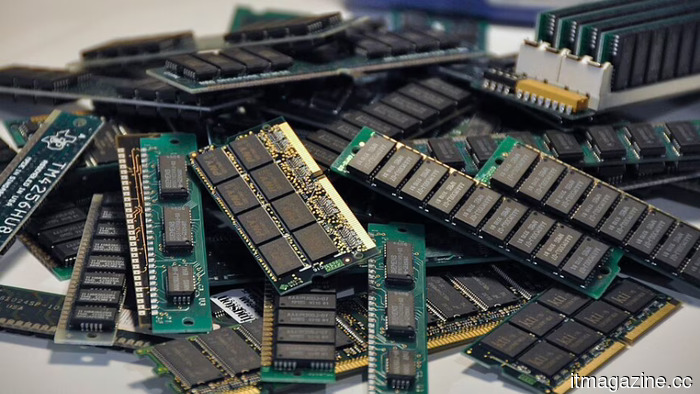 Corsair is now incorporating Chinese DRAM in its DDR5 memory kits. This could potentially lead to a decrease in memory prices.
CXMT chips have been noticed in Corsair Vengeance DDR5 modules, as Samsung, SK Hynix, and Micron focus more on AI memory rather than on consumer PCs.
Waymo's robotaxis continue to enter floodwaters. The software update was ineffective. Five cities are currently on lockdown.
A recall that occurred two weeks ago was intended to address the issue. However, an unmanned Waymo became stranded in a flood in Atlanta on Wednesday. A lasting solution is not available yet.
Corsair is now incorporating Chinese DRAM in its DDR5 memory kits. This could potentially lead to a decrease in memory prices.
CXMT chips have been noticed in Corsair Vengeance DDR5 modules, as Samsung, SK Hynix, and Micron focus more on AI memory rather than on consumer PCs.
Waymo's robotaxis continue to enter floodwaters. The software update was ineffective. Five cities are currently on lockdown.
A recall that occurred two weeks ago was intended to address the issue. However, an unmanned Waymo became stranded in a flood in Atlanta on Wednesday. A lasting solution is not available yet.
 The deputy Prime Minister of South Korea stated that the wealth generated by AI should be advantageous to the public, highlighting the issues raised by the Samsung strike.
Deputy PM Bae cautioned that labor disputes driven by AI will continue to occur as "super-large companies" develop, emphasizing the need for an "AI-inclusive society."
The deputy Prime Minister of South Korea stated that the wealth generated by AI should be advantageous to the public, highlighting the issues raised by the Samsung strike.
Deputy PM Bae cautioned that labor disputes driven by AI will continue to occur as "super-large companies" develop, emphasizing the need for an "AI-inclusive society."
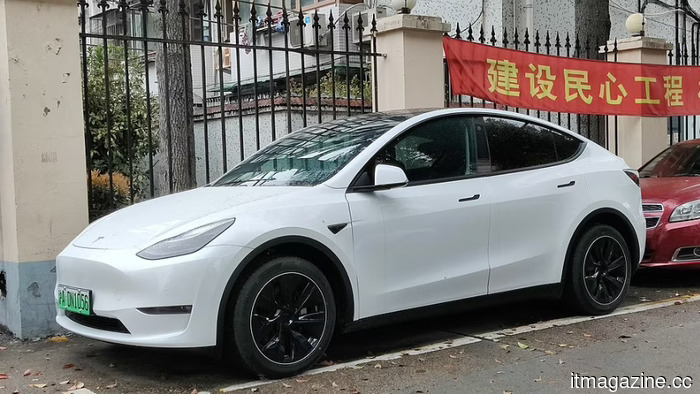 Tesla has finally introduced FSD in China, while its competitors have been offering self-driving cars in the market for several years.
Tesla's FSD (Supervised) has now been introduced in China, just a week after Musk's visit to Beijing with Trump. Competing Chinese companies are already providing Level 3 autonomy.
Tesla has finally introduced FSD in China, while its competitors have been offering self-driving cars in the market for several years.
Tesla's FSD (Supervised) has now been introduced in China, just a week after Musk's visit to Beijing with Trump. Competing Chinese companies are already providing Level 3 autonomy.
 The CEO of Xiaomi acknowledged that his SUV was not priced competitively enough to surpass Tesla, so he introduced a new model that is.
The new YU7 Standard Edition is priced at $4,350 less than the Model Y and has a range that exceeds it by 50km. Xiaomi has delivered 600,000 electric vehicles in less than two years.
The CEO of Xiaomi acknowledged that his SUV was not priced competitively enough to surpass Tesla, so he introduced a new model that is.
The new YU7 Standard Edition is priced at $4,350 less than the Model Y and has a range that exceeds it by 50km. Xiaomi has delivered 600,000 electric vehicles in less than two years.
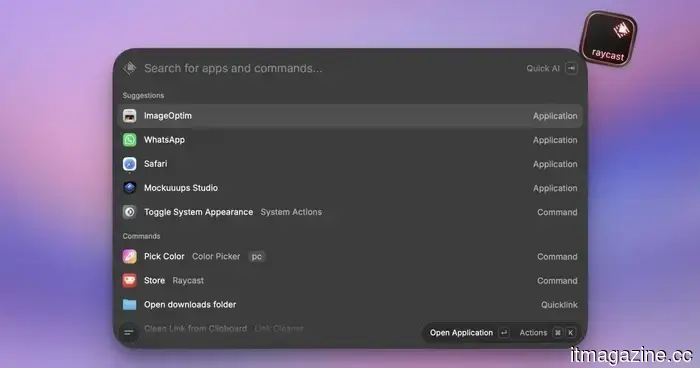 This new feature in Raycast 2.0 is driving me crazy.
Raycast 2.0 is an excellent update, but a modification to the clipboard history has disrupted my workflow entirely. Here's the change that occurred and how to resolve it.
This new feature in Raycast 2.0 is driving me crazy.
Raycast 2.0 is an excellent update, but a modification to the clipboard history has disrupted my workflow entirely. Here's the change that occurred and how to resolve it.
South Korea's deputy prime minister stated that the wealth generated by AI should serve the public good, highlighting this point through the recent Samsung strike.
Deputy PM Bae cautioned that labor disputes fueled by AI will continue to arise with the emergence of "super-large companies" and urged for the establishment of an "AI-inclusive society."