
The deputy Prime Minister of South Korea stated that the wealth generated by AI should be advantageous to the public, highlighting the issues raised by the Samsung strike.
South Korea’s Deputy Prime Minister, Bae Kyung-hoon, emphasized that the wealth generated by artificial intelligence should benefit the broader public. He noted that the labor unrest at Samsung Electronics this week is not an isolated incident but a glimpse into the challenges the AI era may bring. Speaking to CNBC on Friday, Bae highlighted that as AI leads to unprecedented corporate profits, questions surrounding wealth distribution and potential worsening inequality have become a national concern.
“In the age of AI, we will see more super-large companies emerging,” Bae stated. “This may lead to ongoing labor-management disputes, and it's crucial to handle these wisely through dialogue when they arise.”
His comments were particularly timely, as Samsung's major labor union had been preparing for an 18-day strike, which South Korea’s prime minister warned could result in losses of $668 million a day. The strike was called off on Wednesday following a tentative agreement reached through government mediation. Workers were seeking 15% of Samsung's operating profit for bonuses to be included in their contracts, while Samsung offered 10%. The union is currently voting on this proposed agreement until May 27.
The financial stakes were significant; Samsung’s first-quarter 2026 operating profit soared to ₩57.2 trillion, an eightfold increase year-over-year, primarily due to high-bandwidth memory chips for AI infrastructure. The wealth of the Lee family doubled to $45.5 billion in just a year, and Samsung’s stock has risen nearly 144% so far this year, while SK Hynix surged almost 200%. The Kospi index experienced over an 86% rise in 2026, following a 75% increase last year. The wealth generated is substantial, concentrated, and apparent.
Bae, who also serves as South Korea’s minister for science and technology, pointed to Hyundai as another area of concern. The automaker is integrating Boston Dynamics’ Atlas robots into its manufacturing process, which has raised “many concerns and worries” regarding the impact on employees. Hyundai acquired a controlling interest in Boston Dynamics in 2021 and announced its AI robotics strategy at CES 2026, aiming to lead the “human-centered robotics era.” However, this vision feels more distant for those on the factory floor.
The political context amplifies the urgency. On May 12, South Korean official Kim Yeong Beom suggested on Facebook that excess tax revenue from the AI and semiconductor sectors should be distributed directly to citizens. This sparked market turmoil, causing shares of Samsung and SK Hynix to plummet until a clarification was issued that the proposal was Kim’s individual opinion and not part of official government discussions. Even a speculative suggestion regarding the redistribution of AI wealth stirred billions in market capital, highlighting the sensitivity of the matter.
Bae characterized Seoul’s aim as fostering an “AI-inclusive society, where no one is left behind in the AI era.” This sentiment resonates with similar commitments by policymakers in Europe and the U.S., but South Korea’s approach is particularly notable due to its heavy reliance on semiconductor manufacturing. Chips accounted for 37% of the nation’s total exports in April. Samsung and SK Hynix hold a significant share of the Kospi’s gains. For South Korea, the AI surge isn’t merely one sector; it is the sector.
When asked about the risks associated with the concentration of market gains in these two companies, Bae contended that both Samsung and SK Hynix are part of a larger network of suppliers and service companies that also benefit. He stated that South Korea is working to develop a competitive edge in physical AI, which encompasses robots, autonomous vehicles, and industrial systems capable of functioning in real-world settings. “Semiconductors and AI infrastructure form the essential foundation,” Bae explained. “Korea is now striving to develop the full range of AI capabilities, including various hardware, software, and related services.”
The tension created by AI-driven productivity against workforce displacement is a global issue. In Detroit, the Big Three automakers have cut 20,000 white-collar jobs while adding hundreds of AI positions. Salesforce laid off 4,000 support staff after implementing AI agents. This trend is consistent across different industries and regions: AI boosts corporate profits while shrinking workforces, and the debate over who benefits from these gains is becoming a central political issue in the technology's deployment.
In South Korea, the implications are more pronounced due to the level of concentration in wealth. Two companies in a single sector have seen their combined market value increase by hundreds of billions of dollars in just six months. Meanwhile, workers on the production lines for the memory chips fueling the AI boom nearly went on strike this week. Bae’s assertion that “the benefits of AI must also be shared with the public” recognizes that market forces alone will not address the issue of wealth distribution. Whether Seoul's policy responses will align with the scale of its rhetoric will be evaluated with each new contract cycle for Samsung and every time Hyundai
Other articles
 Moz Pro now monitors your brand within ChatGPT and Gemini | TNW Deals
The new AI Visibility tool from Moz Pro monitors your brand's presence in ChatGPT and Gemini responses, as well as your standing against competitors. Test it out for free.
SpaceX's IPO submission highlights a contradiction in Musk's clean energy approach, as xAI consumes gas while Tesla offers solar solutions.
xAI invested $2.8 billion in gas turbines, while Tesla offers solar panels. SpaceX's S-1 promotes space-based solar energy as the solution, but the calculations are still not conclusive.
Moz Pro now monitors your brand within ChatGPT and Gemini | TNW Deals
The new AI Visibility tool from Moz Pro monitors your brand's presence in ChatGPT and Gemini responses, as well as your standing against competitors. Test it out for free.
SpaceX's IPO submission highlights a contradiction in Musk's clean energy approach, as xAI consumes gas while Tesla offers solar solutions.
xAI invested $2.8 billion in gas turbines, while Tesla offers solar panels. SpaceX's S-1 promotes space-based solar energy as the solution, but the calculations are still not conclusive.
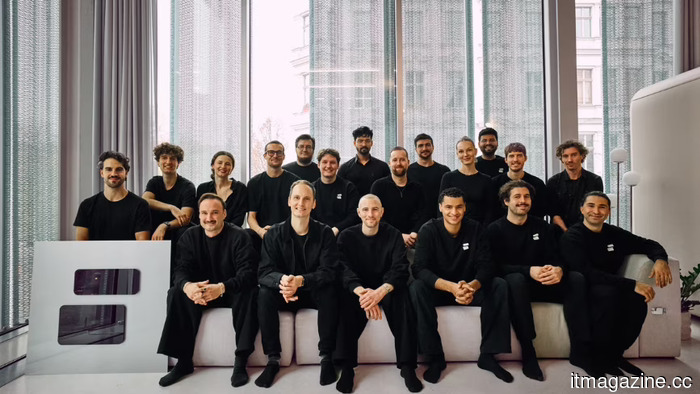 Berlin's Peec AI increased its revenue by more than twofold to reach $10 million in annual recurring revenue (ARR) over the course of six months. The company's product assists brands in appearing in ChatGPT.
The GEO startup secured its Series A funding with a $4M ARR six months prior. It now reports a $10M ARR, having placed billboards near competing offices throughout Berlin.
Berlin's Peec AI increased its revenue by more than twofold to reach $10 million in annual recurring revenue (ARR) over the course of six months. The company's product assists brands in appearing in ChatGPT.
The GEO startup secured its Series A funding with a $4M ARR six months prior. It now reports a $10M ARR, having placed billboards near competing offices throughout Berlin.
 Anthropic's Claude Mythos identified 10,000 critical vulnerabilities within a single month. The patches are unable to keep pace.
The partners of Project Glasswing utilized Claude Mythos to identify 1,094 verified high-severity vulnerabilities in over 1,000 open-source projects. Only 97 of these have been resolved.
Corsair has begun to include Chinese DRAM in its DDR5 memory kits. This might lead to a decrease in memory prices.
CXMT chips have been identified within Corsair Vengeance DDR5 modules, as Samsung, SK Hynix, and Micron focus on AI memory instead of consumer PCs.
Anthropic's Claude Mythos identified 10,000 critical vulnerabilities within a single month. The patches are unable to keep pace.
The partners of Project Glasswing utilized Claude Mythos to identify 1,094 verified high-severity vulnerabilities in over 1,000 open-source projects. Only 97 of these have been resolved.
Corsair has begun to include Chinese DRAM in its DDR5 memory kits. This might lead to a decrease in memory prices.
CXMT chips have been identified within Corsair Vengeance DDR5 modules, as Samsung, SK Hynix, and Micron focus on AI memory instead of consumer PCs.
The deputy Prime Minister of South Korea stated that the wealth generated by AI should be advantageous to the public, highlighting the issues raised by the Samsung strike.
Deputy PM Bae cautioned that labor disputes driven by AI will continue to occur as "super-large companies" develop, emphasizing the need for an "AI-inclusive society."