
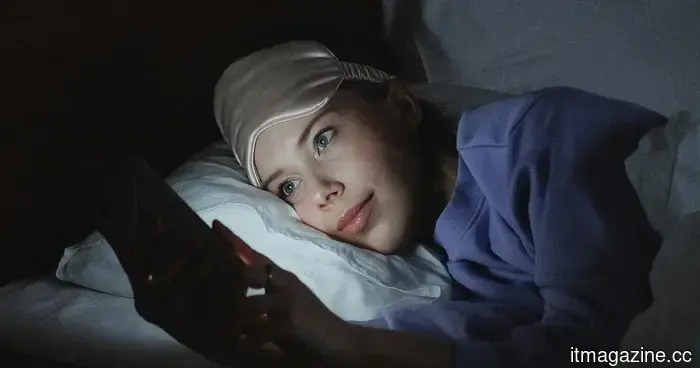
Research indicates that poor screen habits significantly contribute to the poor sleep and mental health of young people.
New research has uncovered 175 connections among screen habits, inadequate sleep, and mental distress in young adults.
If you've ever found yourself scrolling late into the night and woken up feeling worse, you're not imagining it. A recent study from the University of Copenhagen has precisely outlined why many young individuals seem trapped in cycles of poor sleep and worsening mental health.
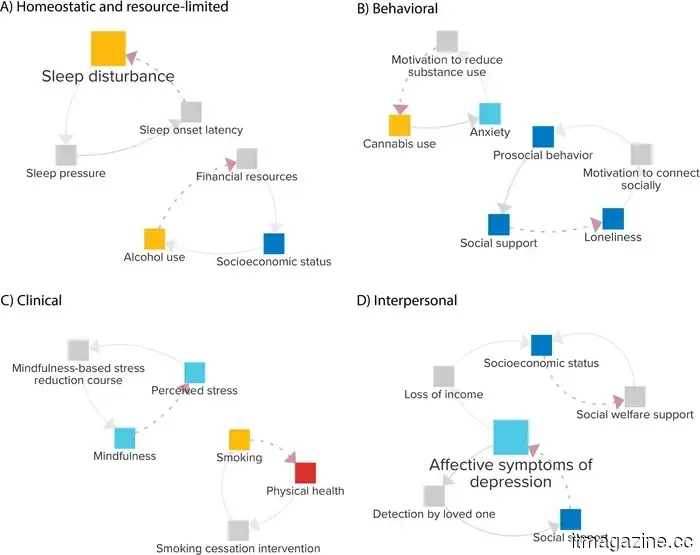
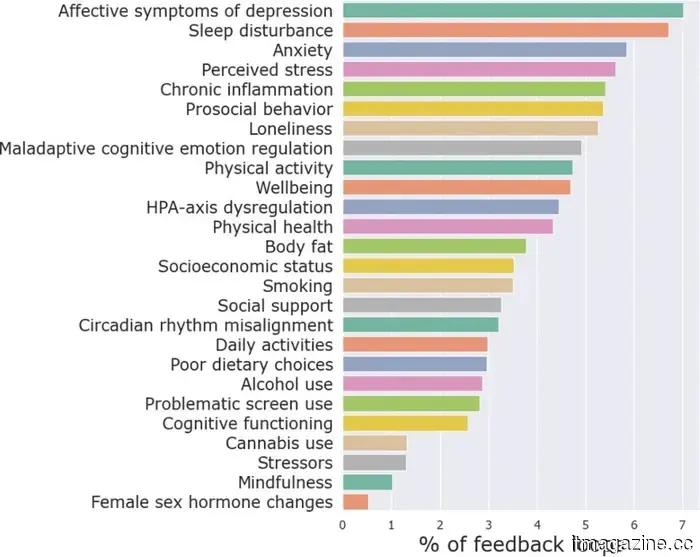
The researchers identified 29 interrelated factors and 175 causal links across biological, psychological, and social aspects that can entrap young adults aged 18 to 40 in what they term self-reinforcing vicious cycles of mental distress (via EurakAlert).
How do screen habits worsen the situation?
The findings indicate that excessive screen time, especially at night, impacts sleep beyond just that aspect. It initiates a chain reaction. Increased time spent on social media, streaming services, or engaging with AI can lead to decreased face-to-face interactions, intensifying feelings of loneliness.
This loneliness can trigger symptoms of depression, prompting further phone use. In addition, nighttime screen engagement disrupts sleep quality, and poor sleep exacerbates depressive symptoms, creating a self-perpetuating cycle.
The Young Adult Sleep model: an evolving causal loop diagram of mental health dynamics.
The researchers emphasized that this model is not a conclusive solution. It does not encompass every possible factor, and comprehensive studies on all 175 connections have yet to be conducted. You can view the complete model via an interactive online version.
What it presents is a clearer understanding of why advising a young person to merely put their phone down or go to bed earlier seldom proves effective. The issue isn't just one bad habit; it's a network of habits, emotions, and circumstances that reinforce one another in complex ways that are challenging to unravel independently.
Manisha Priyadarshini is a tech and entertainment writer with over nine years of editorial experience.
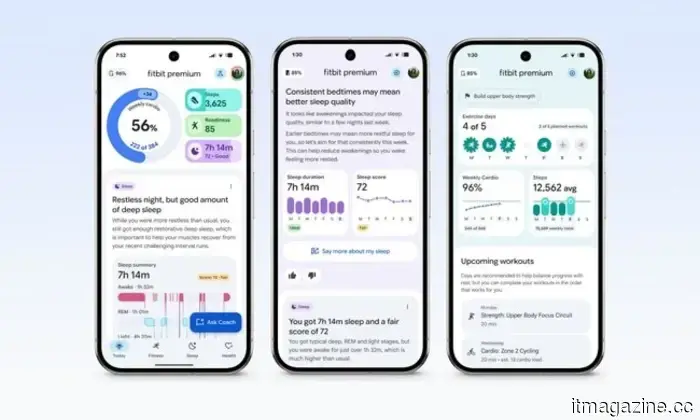
Google Health 5.0 is now being rolled out, with its best feature showcased upfront and its significant issues concealed.
Google Health 5.0 is currently available as a mandatory update for Fitbit app users, with the timing being deliberate. The new Fitbit Air, Google’s latest challenger to the Whoop fitness tracker, is set to launch next week, and, as expected, Health 5.0 is necessary for its setup.
Your most played artists on Spotify could provide you with early access to their concert tickets.
Obtaining concert tickets has always seemed like a challenging endeavor. You arrive at the right moment, refresh the page repeatedly, yet still end up empty-handed. Scalpers and bots snatch up the best seats before genuine fans have a chance. This is why Spotify has introduced Reserved, a new feature that holds two tickets for top Premium fans ahead of their release to the general public.
Motorola Raze Fold brought the phone stylus back into my life, reminding me how much I missed it.
Motorola's Razr Fold paired with the stylus has proven to be unexpectedly enjoyable. Initially, I thought styluses were tailored for a very niche audience—those who prefer to take notes in a somewhat traditional manner, artists benefiting from them, or loyal Galaxy Ultra users. However, for most users, a stylus doesn’t necessarily enhance the experience. When I began using the Motorola Razr Fold with the Moto Pen Ultra, I didn't anticipate it would change my opinion. A stylus on a foldable device seems practical since it provides a larger workspace, but phone styluses often sound better in theory compared to their actual use. The Moto Pen Ultra was a pleasant surprise; Motorola has designed it as more than just a small writing tool. It functions as a remote, a shortcut device, a sketchpad companion, and much more—all integrated into one accessory.




Other articles
 ByteDance's Seedance 2.0 premieres at Cannes with the 95-minute AI film Hell Grind.
During the 79th Cannes Film Festival, renowned for its abundance of cinematic storytelling, one of the most unexpected highlights this year emerged from artificial intelligence.
ByteDance's Seedance 2.0 premieres at Cannes with the 95-minute AI film Hell Grind.
During the 79th Cannes Film Festival, renowned for its abundance of cinematic storytelling, one of the most unexpected highlights this year emerged from artificial intelligence.
 ByteDance's Seedance 2.0 makes its debut at Cannes with the 95-minute AI film Hell Grind.
During the 79th Cannes Film Festival, renowned for its abundance of cinematic narratives, one of the most unexpected highlights of this year stemmed from AI. On
ByteDance's Seedance 2.0 makes its debut at Cannes with the 95-minute AI film Hell Grind.
During the 79th Cannes Film Festival, renowned for its abundance of cinematic narratives, one of the most unexpected highlights of this year stemmed from AI. On
 PDF Primetime: The Transition of Document Workflow to the Web
How simplicity and accessibility are transforming the way users manage daily digital tasks. Over the past ten years, the modern workplace has undergone significant changes, characterized by remote access and widely dispersed teams. Nevertheless, many administrative tasks still retain a surprising level of complexity. You can now work together on a group project with individuals from across the globe, […]
PDF Primetime: The Transition of Document Workflow to the Web
How simplicity and accessibility are transforming the way users manage daily digital tasks. Over the past ten years, the modern workplace has undergone significant changes, characterized by remote access and widely dispersed teams. Nevertheless, many administrative tasks still retain a surprising level of complexity. You can now work together on a group project with individuals from across the globe, […]
 ByteDance's Seedance 2.0 debuts in Cannes with a 95-minute AI film titled Hell Grind.
During the 79th Cannes Film Festival, renowned for its abundance of cinematic storytelling, one of the most unexpected highlights this year stemmed from AI. On
ByteDance's Seedance 2.0 debuts in Cannes with a 95-minute AI film titled Hell Grind.
During the 79th Cannes Film Festival, renowned for its abundance of cinematic storytelling, one of the most unexpected highlights this year stemmed from AI. On
 PDF Primetime: The Shift of Document Workflow to the Web
How simplicity and accessibility are transforming the way users manage daily digital activities. The contemporary workplace has undergone significant changes in the past ten years, now defined by remote access and geographically dispersed teams. However, many administrative processes continue to be surprisingly cumbersome. You can now work on a group project with individuals from around the globe, […]
PDF Primetime: The Shift of Document Workflow to the Web
How simplicity and accessibility are transforming the way users manage daily digital activities. The contemporary workplace has undergone significant changes in the past ten years, now defined by remote access and geographically dispersed teams. However, many administrative processes continue to be surprisingly cumbersome. You can now work on a group project with individuals from around the globe, […]
 ByteDance’s Seedance 2.0 arrives in Cannes with a 95-minute AI film titled Hell Grind.
During the 79th Cannes Film Festival, an event renowned for its rich cinematic narratives, one of the year's most unexpected highlights emerged from artificial intelligence. On
ByteDance’s Seedance 2.0 arrives in Cannes with a 95-minute AI film titled Hell Grind.
During the 79th Cannes Film Festival, an event renowned for its rich cinematic narratives, one of the year's most unexpected highlights emerged from artificial intelligence. On
Research indicates that poor screen habits significantly contribute to the poor sleep and mental health of young people.
Recent studies demonstrate how screen usage, inadequate sleep, feelings of loneliness, and depression create self-perpetuating cycles among young adults between the ages of 18 and 40.