

ByteDance’s Seedance 2.0 arrives in Cannes with a 95-minute AI film titled Hell Grind.
At the 79th Cannes Film Festival, renowned for its rich cinematic narratives, one of this year's most unexpected highlights emerged from the realm of AI. On Thursday, ByteDance's cloud platform Volcengine introduced its Seedance 2.0 model at Cannes, where the company showcased an AI film and unveiled Hell Grind, a 95-minute AI-generated feature film claimed to be the first full-length movie created by AI.
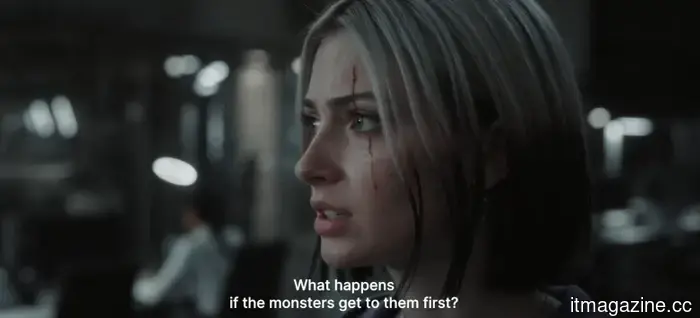
The creative team behind the film is from the US-based AI firm Higgsfield, while the foundational video generation model, Seedance 2.0, was developed by ByteDance. This was not just a short AI clip or a demo to test concepts; Hell Grind was presented as a complete, theatrical-scale narrative feature, showcasing the rapid transition of generative AI from experimental projects to extended cinematic storytelling.
What distinguishes this achievement is that producing long-form videos has posed a significant technical challenge in AI filmmaking. Currently, most mainstream AI video solutions can only generate clips ranging from 15 to 30 seconds. Crafting a feature-length film usually involves piecing together thousands of disjointed shots, often resulting in inconsistent characters, shaky scenes, and disrupted visual continuity, making the final product hard to incorporate into a professional production workflow.
Seedance 2.0 seems to have overcome many of these challenges. The film centers on four street children named Roko, Jaxx, Lulu, and Rein, who discover a mysterious artifact during their visit to a museum. This discovery unleashes a dark power and endows them with superpowers. They must unite to fight the newly arisen evil and survive in a reality where the lines between reality and illusion start to blur. After viewing an early version of the film, Chuck Russell is reported to have expressed that the project genuinely allowed him to connect with the characters, a rarity in AI-generated films.
Production details are equally impressive: the film was completed by a 15-member team in just 14 days, with a budget reported to be under $500,000. A traditionally produced film of comparable scale could easily require tens of millions of dollars.
During the summit, Alex Mashrabov, co-founder of Higgsfield, contended that the technical foundation for AI-native filmmaking is mature enough to realize ambitious cinematic visions at a fraction of traditional production costs. Reports indicate that Luc Besson's SEEN studio is preparing to leverage Volcengine's Seedance 2.0 to create an AI-animated film titled The Furious Five, with Besson set to direct. This project is said to combine live-action performances with AI generation, eliminating the need for motion-capture studios and green screens, allowing standard shooting setups to directly contribute to animation production.
If true, the implications extend beyond production efficiencies. A 95-minute AI-generated feature film indicates that the ability to generate narrative-scale content may no longer be the primary challenge in filmmaking, redirecting the focus toward creative direction rather than budget or team size. For independent creators, this could significantly lower barriers to entry and enhance accessibility to feature-length storytelling.
Conversely, this shift raises important structural questions for the film industry. If a feature film can be produced in approximately two weeks at a fraction of traditional costs, parts of the mid- and low-tier production workforce could face job displacement pressures. Furthermore, a significant discourse is emerging regarding authorship: whether the emotional impact of AI-generated content reflects true artistic intent or merely an optimized arrangement of human responses. As generative systems advance in their ability to create coherent, emotionally engaging narratives, the role of human creators may increasingly focus on defining intent, taste, and meaning, even as the tools themselves increasingly influence what is perceived as effective storytelling.
Jessie Wu is a tech reporter based in Shanghai, covering consumer electronics, semiconductors, and the gaming industry for TechNode. She can be reached via email at jessie.wu@technode.com.




Other articles
 HMD, previously known as the home of Nokia, has introduced a blatant imitation of the iPhone 17 Pro and refers to it as “futuristic.”
HMD, the brand linked to Nokia’s phone heritage, has introduced an affordable 5G smartphone in India featuring a rear design that feels quite familiar. While the company refers to it as “futuristic,” it bears a strong resemblance to Apple's latest Pro iPhone.
HMD, previously known as the home of Nokia, has introduced a blatant imitation of the iPhone 17 Pro and refers to it as “futuristic.”
HMD, the brand linked to Nokia’s phone heritage, has introduced an affordable 5G smartphone in India featuring a rear design that feels quite familiar. While the company refers to it as “futuristic,” it bears a strong resemblance to Apple's latest Pro iPhone.
 The Firefox Project Nova redesign features a compact mode and an updated appearance.
Mozilla's Project Nova is set to introduce softer tabs for Firefox, a color scheme inspired by fire, a compact mode, and more transparent privacy settings. The rollout is anticipated to occur later this year.
The Firefox Project Nova redesign features a compact mode and an updated appearance.
Mozilla's Project Nova is set to introduce softer tabs for Firefox, a color scheme inspired by fire, a compact mode, and more transparent privacy settings. The rollout is anticipated to occur later this year.
 ByteDance's Seedance 2.0 debuts at Cannes with a 95-minute AI film titled Hell Grind.
At the 79th Cannes Film Festival, renowned for its abundance of cinematic storytelling, one of the most unexpected highlights of this year stemmed from AI.
ByteDance's Seedance 2.0 debuts at Cannes with a 95-minute AI film titled Hell Grind.
At the 79th Cannes Film Festival, renowned for its abundance of cinematic storytelling, one of the most unexpected highlights of this year stemmed from AI.
 The Firefox Project Nova redesign introduces a compact mode and a fresh appearance.
Mozilla's Project Nova will introduce softer tabs for Firefox, a fire-themed color palette, a compact mode, and more transparent privacy settings. The update is anticipated to be released later this year.
The Firefox Project Nova redesign introduces a compact mode and a fresh appearance.
Mozilla's Project Nova will introduce softer tabs for Firefox, a fire-themed color palette, a compact mode, and more transparent privacy settings. The update is anticipated to be released later this year.
 Ubisoft aims for a resurgence with Assassin’s Creed, Far Cry, Ghost Recon, along with an AI project that has players concerned.
Ubisoft's plan for a comeback features new titles in the Assassin’s Creed, Far Cry, and Ghost Recon franchises, along with a playable generative AI initiative named Teammates.
Ubisoft aims for a resurgence with Assassin’s Creed, Far Cry, Ghost Recon, along with an AI project that has players concerned.
Ubisoft's plan for a comeback features new titles in the Assassin’s Creed, Far Cry, and Ghost Recon franchises, along with a playable generative AI initiative named Teammates.
 Spotify will allow you to use AI to create covers and remixes of your favorite tracks, for an additional charge.
Spotify and Universal Music Group revealed an agreement that allows Premium subscribers to utilize AI for creating covers and remixes of their favorite tracks.
Spotify will allow you to use AI to create covers and remixes of your favorite tracks, for an additional charge.
Spotify and Universal Music Group revealed an agreement that allows Premium subscribers to utilize AI for creating covers and remixes of their favorite tracks.
ByteDance’s Seedance 2.0 arrives in Cannes with a 95-minute AI film titled Hell Grind.
During the 79th Cannes Film Festival, an event renowned for its rich cinematic narratives, one of the year's most unexpected highlights emerged from artificial intelligence. On