

ByteDance's Seedance 2.0 premieres at Cannes with the 95-minute AI film Hell Grind.
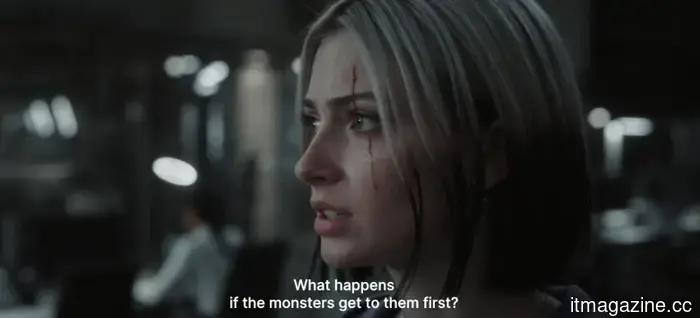
At the 79th Cannes Film Festival, renowned for its abundance of cinematic storytelling, one of the year's most unexpected developments emerged from artificial intelligence. On Thursday, ByteDance’s cloud service, Volcengine, introduced its Seedance 2.0 model at Cannes, hosting an AI film showcase and debuting Hell Grind, a 95-minute feature film claimed to be the world's first fully AI-generated movie.
The production team for this feature hails from the US-based AI firm Higgsfield, and the primary video generation model used is Seedance 2.0, created by ByteDance. Unlike short AI clips or proof-of-concept demonstrations, Hell Grind was presented as a fully realized, theater-ready narrative feature, marking a significant advancement of generative AI from experimental projects to extended cinematic storytelling.
What distinguishes this achievement is that generating long-form videos has posed a significant technical challenge in AI filmmaking. Today’s prevalent AI video tools typically create clips lasting only 15 to 30 seconds. Producing a feature-length film generally necessitates assembling thousands of fragmented shots, often resulting in inconsistent visuals, unstable scenes, and interrupted continuity, making such outputs hard to integrate into a professional production workflow.
Seedance 2.0 seems to have overcome many of these obstacles. The film’s plot follows four street children—Roko, Jaxx, Lulu, and Rein—who discover a mysterious artifact while exploring a museum. This discovery unleashes a dark entity and grants them superpowers, compelling them to unite against the rising evil and fight for their survival as the line between reality and illusion becomes increasingly indistinct.
After viewing an early version of the film, Chuck Russell reportedly expressed that the project allowed him to genuinely connect with the characters, a rare occurrence in AI-generated cinema.
The production specifics are equally impressive: the film was completed within just 14 days by a team of 15, with a total budget under $500,000. In contrast, a traditionally produced film of comparable scale could cost tens of millions of dollars. At the summit, Alex Mashrabov, co-founder of Higgsfield, contended that the technical infrastructure for AI-driven filmmaking is now sufficiently advanced to actualize ambitious cinematic concepts at a mere fraction of the cost of traditional methods.
Luc Besson’s SEEN studio is reportedly gearing up to utilize Volcengine’s Seedance 2.0 to create an AI animated film, The Furious Five, with Besson attached as director. This project is characterized as a blend of live-action performances with AI-generated elements, eliminating the need for motion-capture studios and green screens, and facilitating direct input from everyday shooting setups into animation production.
If true, the implications extend beyond production efficiency. The creation of a 95-minute AI-generated feature film suggests that the primary constraint in filmmaking may now shift from narrative-generation to creative direction, rather than budget or team size. For independent creators, this could significantly reduce entry barriers and widen access to feature-length storytelling.
However, this shift also prompts fundamental questions for the film industry. The potential to produce a feature film in about two weeks at a fraction of traditional costs may place some members of the mid- and lower-tier production workforce at risk of displacement. Additionally, a more profound discussion is emerging around authorship: whether the emotional impact of AI-generated content reflects authentic artistic intent or is merely an optimized arrangement of human emotional responses.
As generative systems continue to improve in crafting coherent and emotionally engaging narratives, the role of human creators might evolve further towards establishing intent, aesthetic preferences, and meaning, even as the tools themselves increasingly influence standards of effective storytelling.
Jessie Wu is a technology reporter based in Shanghai, covering consumer electronics, semiconductors, and the gaming industry for TechNode. You can reach her at jessie.wu@technode.com.



Other articles
 ByteDance's Seedance 2.0 arrives at Cannes with a 95-minute AI film titled Hell Grind.
During the 79th Cannes Film Festival, known for its abundant cinematic storytelling, one of the year’s most unexpected revelations came from AI. On
ByteDance's Seedance 2.0 arrives at Cannes with a 95-minute AI film titled Hell Grind.
During the 79th Cannes Film Festival, known for its abundant cinematic storytelling, one of the year’s most unexpected revelations came from AI. On
 ByteDance's Seedance 2.0 debuts in Cannes with a 95-minute AI film titled Hell Grind.
During the 79th Cannes Film Festival, renowned for its abundance of cinematic storytelling, one of the most unexpected highlights this year stemmed from AI. On
ByteDance's Seedance 2.0 debuts in Cannes with a 95-minute AI film titled Hell Grind.
During the 79th Cannes Film Festival, renowned for its abundance of cinematic storytelling, one of the most unexpected highlights this year stemmed from AI. On
 The Firefox Project Nova redesign features a compact mode and an updated appearance.
Mozilla's Project Nova is set to introduce softer tabs for Firefox, a color scheme inspired by fire, a compact mode, and more transparent privacy settings. The rollout is anticipated to occur later this year.
The Firefox Project Nova redesign features a compact mode and an updated appearance.
Mozilla's Project Nova is set to introduce softer tabs for Firefox, a color scheme inspired by fire, a compact mode, and more transparent privacy settings. The rollout is anticipated to occur later this year.
 Spotify will allow you to use AI to create covers and remixes of your favorite songs, for an additional cost.
Spotify and Universal Music Group revealed an agreement that enables Premium subscribers to utilize AI for creating covers and remixes of their favorite tracks.
Spotify will allow you to use AI to create covers and remixes of your favorite songs, for an additional cost.
Spotify and Universal Music Group revealed an agreement that enables Premium subscribers to utilize AI for creating covers and remixes of their favorite tracks.
 HMD, formerly associated with Nokia, launches a bold imitation of the iPhone 17 Pro and brands it as “futuristic.”
HMD, the brand linked to Nokia's phone heritage, has introduced an affordable 5G smartphone in India that features a rear design that feels quite recognizable. Although the company describes it as "futuristic," it bears a strong resemblance to the latest Pro iPhone from Apple.
GitLab 19.0 aims to bridge the divide between coding and delivery.
GitLab 19.0 enhances agentic AI throughout the entire development lifecycle by incorporating SBOM dependency scanning, support for Claude Opus 4.7, and a credit-based pricing model for agents.
HMD, formerly associated with Nokia, launches a bold imitation of the iPhone 17 Pro and brands it as “futuristic.”
HMD, the brand linked to Nokia's phone heritage, has introduced an affordable 5G smartphone in India that features a rear design that feels quite recognizable. Although the company describes it as "futuristic," it bears a strong resemblance to the latest Pro iPhone from Apple.
GitLab 19.0 aims to bridge the divide between coding and delivery.
GitLab 19.0 enhances agentic AI throughout the entire development lifecycle by incorporating SBOM dependency scanning, support for Claude Opus 4.7, and a credit-based pricing model for agents.
ByteDance's Seedance 2.0 premieres at Cannes with the 95-minute AI film Hell Grind.
During the 79th Cannes Film Festival, renowned for its abundance of cinematic storytelling, one of the most unexpected highlights this year emerged from artificial intelligence.