

ByteDance's Seedance 2.0 makes its debut at Cannes with the 95-minute AI film Hell Grind.
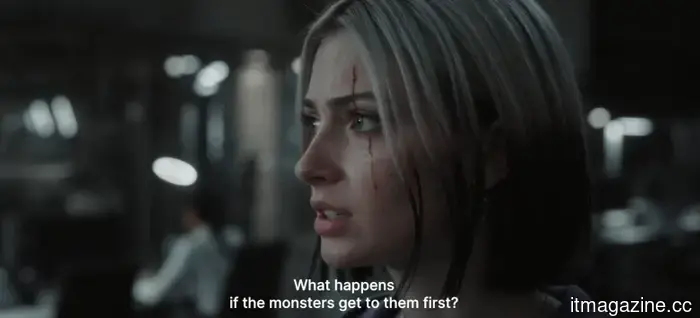
At the 79th Cannes Film Festival, known for its abundance of cinematic storytelling, one of the year's most unexpected highlights came from AI. On Thursday, ByteDance's cloud service Volcengine introduced its Seedance 2.0 model at Cannes, hosting an AI film showcase that included the premiere of Hell Grind, a 95-minute feature film touted as the first full-length movie generated by AI.
The team behind this film hails from the US-based AI firm Higgsfield, while the primary video generation model, Seedance 2.0, was created by ByteDance. This isn't merely a 15-second AI clip or a concept demonstration; Hell Grind is a complete, theater-ready narrative film, illustrating how quickly generative AI is evolving from experimental content creation to full-length cinematic storytelling.
What distinguishes this achievement is that long-form video generation has traditionally posed one of the biggest challenges in AI filmmaking. Most popular AI video tools can typically only produce clips lasting between 15 and 30 seconds. Producing a feature-length film generally involves piecing together tens of thousands of fragmented shots, often resulting in inconsistent appearances, unstable scenes, and disrupted visual continuity, making the output unsuitable for professional production workflows.
Seedance 2.0 seems to have overcome many of these challenges. The story centers on four street kids named Roko, Jaxx, Lulu, and Rein, who discover a mysterious artifact while exploring a museum. This find awakens a sinister force and grants them superpowers, compelling them to unite against the emerging evil and struggle for survival as reality and illusion start to blur.
After viewing an early version of the film, Chuck Russell reportedly expressed that the project allowed him to genuinely connect with the characters, which he noted is rare in AI-generated films.
The production statistics are equally remarkable: the film was created by a 15-member team in just 14 days, with a budget below $500,000. A traditionally produced film of similar scope could easily run into the tens of millions of dollars. At the summit, Alex Mashrabov, co-founder of Higgsfield, claimed that the technical foundation for AI-native filmmaking is sufficiently advanced to realize ambitious cinematic visions at a fraction of traditional production costs.
Luc Besson's SEEN studio is said to be gearing up to utilize Volcengine's Seedance 2.0 for an AI animated film called The Furious Five, with Besson reportedly serving as director. This project is characterized as one that merges live-action performances with AI generation, eliminating the need for motion-capture studios and green screens, and allowing everyday shooting setups to seamlessly integrate into animation production.
If this holds true, the implications extend beyond efficiency in production. A 95-minute AI-generated feature film suggests that narrative-scale generation might no longer be the primary obstacle in filmmaking, shifting the focus toward creative direction rather than budget constraints or team size. This shift could greatly reduce the entry barriers for independent creators, broadening access to feature-length storytelling.
However, this transition also prompts structural inquiries regarding the film industry. If a feature film can be completed in approximately two weeks for a fraction of traditional costs, the mid- and low-tier production workforce could face job displacement. Additionally, a deeper discussion is emerging around authorship: whether the emotional impact of AI-generated content reflects true artistic intent or merely optimized patterns of human responses.
As generative systems continue to advance in creating coherent and emotionally impactful narratives, the role of human creators may increasingly revolve around defining intent, taste, and meaning, even as the tools themselves progressively influence what is deemed effective storytelling.
Jessie Wu is a technology reporter based in Shanghai, focusing on consumer electronics, semiconductors, and the gaming industry for TechNode. You can reach her via email at jessie.wu@technode.com.




Other articles
 Spotify will allow you to use AI to create covers and remixes of your favorite songs, for an additional cost.
Spotify and Universal Music Group revealed an agreement that enables Premium subscribers to utilize AI for creating covers and remixes of their favorite tracks.
Spotify will allow you to use AI to create covers and remixes of your favorite songs, for an additional cost.
Spotify and Universal Music Group revealed an agreement that enables Premium subscribers to utilize AI for creating covers and remixes of their favorite tracks.
 The Firefox Project Nova redesign features a compact mode and an updated appearance.
Mozilla's Project Nova is set to introduce softer tabs for Firefox, a color scheme inspired by fire, a compact mode, and more transparent privacy settings. The rollout is anticipated to occur later this year.
The Firefox Project Nova redesign features a compact mode and an updated appearance.
Mozilla's Project Nova is set to introduce softer tabs for Firefox, a color scheme inspired by fire, a compact mode, and more transparent privacy settings. The rollout is anticipated to occur later this year.
 Spotify will allow you to use AI to create covers and remixes of your favorite tracks, for an additional charge.
Spotify and Universal Music Group revealed an agreement that allows Premium subscribers to utilize AI for creating covers and remixes of their favorite tracks.
Spotify will allow you to use AI to create covers and remixes of your favorite tracks, for an additional charge.
Spotify and Universal Music Group revealed an agreement that allows Premium subscribers to utilize AI for creating covers and remixes of their favorite tracks.
 ClickUp reduces its workforce by 22% and proposes $1 million salaries as part of its AI restructuring efforts.
ClickUp’s CEO, Zeb Evans, has reduced the workforce by 22% and implemented salary bands of $1 million for a "100x organization" where AI agents surpass the number of employees by three to one.
ClickUp reduces its workforce by 22% and proposes $1 million salaries as part of its AI restructuring efforts.
ClickUp’s CEO, Zeb Evans, has reduced the workforce by 22% and implemented salary bands of $1 million for a "100x organization" where AI agents surpass the number of employees by three to one.
 Ubisoft aims for a resurgence with Assassin’s Creed, Far Cry, Ghost Recon, and an AI experiment that has players concerned.
Ubisoft's plan for a comeback features new titles in the Assassin's Creed, Far Cry, and Ghost Recon franchises, along with a playable generative AI project named Teammates.
Ubisoft aims for a resurgence with Assassin’s Creed, Far Cry, Ghost Recon, and an AI experiment that has players concerned.
Ubisoft's plan for a comeback features new titles in the Assassin's Creed, Far Cry, and Ghost Recon franchises, along with a playable generative AI project named Teammates.
ByteDance's Seedance 2.0 makes its debut at Cannes with the 95-minute AI film Hell Grind.
During the 79th Cannes Film Festival, renowned for its abundance of cinematic narratives, one of the most unexpected highlights of this year stemmed from AI. On