

Research indicates that unhealthy screen habits significantly contribute to the poor sleep and mental health of young people.
Recent research has uncovered 175 links between screen usage, inadequate sleep, and mental distress among young adults.
If you've ever stayed up late browsing your phone and felt worse the next day, you're not alone. A new study from the University of Copenhagen explains why many young people find themselves trapped in a cycle of poor sleep and declining mental health.
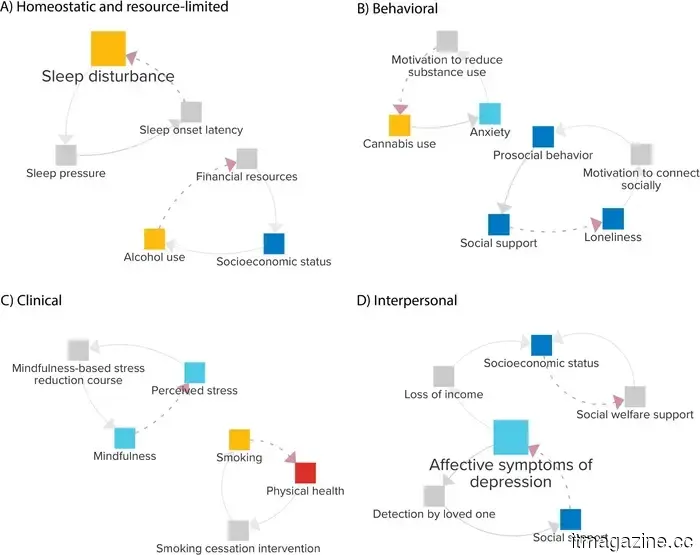
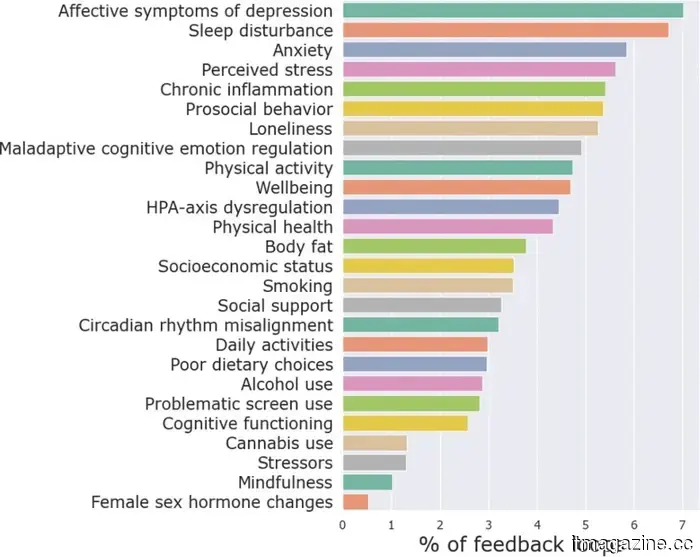
The researchers pinpointed 29 interconnected factors and 175 causal links within biological, psychological, and social realms that entangle young adults aged 18 to 40 in what they characterize as self-reinforcing cycles of mental distress.
How do screen habits worsen the situation?
The study reveals that excessive screen time, especially at night, impacts sleep in more ways than one. It triggers a cascade of effects. Increased time spent on social media, streaming, or conversing with AI can lead to a decrease in face-to-face interactions, exacerbating feelings of loneliness.
This loneliness can initiate depressive symptoms, pushing individuals to use their phones even more. Concurrently, late-night screen time disrupts sleep quality, and inadequate sleep intensifies depressive symptoms, forming a self-perpetuating cycle.
The Young Adult Sleep model: an evolving causal loop diagram of mental health dynamics
The researchers emphasize that this model is not a complete answer. It does not encompass every potential influence, and systematic evaluations of all 175 connections have not yet been carried out. An interactive version of the complete model is available online for exploration.
What this model offers is a better understanding of why simply advising a young person to put down their phone or go to bed earlier seldom proves effective. The issue is not merely a single bad habit; it is a complex web of habits, emotions, and circumstances that reinforce one another in ways that are genuinely difficult to untangle independently.
Manisha Priyadarshini is a technology and entertainment writer with over nine years of editorial experience.
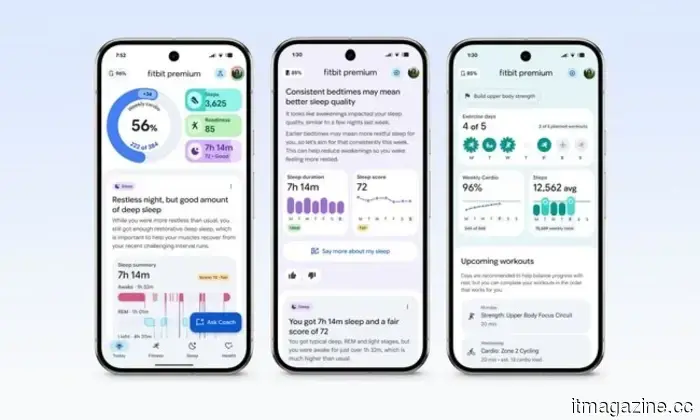
Google Health 5.0 is launching with its best feature front and center, while its notable problems are somewhat obscured.
Google Health 5.0 is now being rolled out as a mandatory update for Fitbit app users, with its timing being intentional. The new Fitbit Air, Google’s closest rival to the Whoop fitness tracking band, will debut next week, and as can be inferred, Health 5.0 is essential for setup.
Read more
Your most-listened-to artists on Spotify could grant you early access to their concert tickets.
Spotify's Reserved feature holds two concert tickets for the most devoted Premium fans before the general sale begins.
Securing concert tickets has often felt like a futile effort. You arrive at the right moment, refresh the page repeatedly, and still end up empty-handed. Scalpers and bots grab the best seats before genuine fans have a chance. This is why Spotify has introduced Reserved, a new feature that saves two concert tickets for an artist’s most dedicated fans ahead of the public sale.
Read more
The Motorola Razr Fold has reintroduced me to using a phone stylus, making me realize how much I missed it.
Motorola’s Razr Fold with a stylus shouldn't be this enjoyable.
I had largely accepted that phone styluses were meant for a specific type of user—those who prefer traditional note-taking, artists who find value in them, or Galaxy Ultra enthusiasts. However, for most users, a stylus doesn’t necessarily enhance the experience. So when I began using the Motorola Razr Fold with the Moto Pen Ultra, I didn't expect it to change my perspective. A stylus on a foldable phone seems logical since it provides a larger canvas, but in practice, phone styluses often fall short of expectations. The Moto Pen Ultra pleasantly surprised me because Motorola has designed it to be more than just a small writing instrument; it functions as a remote, a shortcut tool, a sketch pad companion, and much more, all in one accessory.
Read more





Другие статьи
 PDF Primetime: The Transition of Document Workflow to the Web
How simplicity and accessibility are transforming the way users manage daily digital tasks. Over the past ten years, the modern workplace has undergone significant changes, characterized by remote access and widely dispersed teams. Nevertheless, many administrative tasks still retain a surprising level of complexity. You can now work together on a group project with individuals from across the globe, […]
PDF Primetime: The Transition of Document Workflow to the Web
How simplicity and accessibility are transforming the way users manage daily digital tasks. Over the past ten years, the modern workplace has undergone significant changes, characterized by remote access and widely dispersed teams. Nevertheless, many administrative tasks still retain a surprising level of complexity. You can now work together on a group project with individuals from across the globe, […]
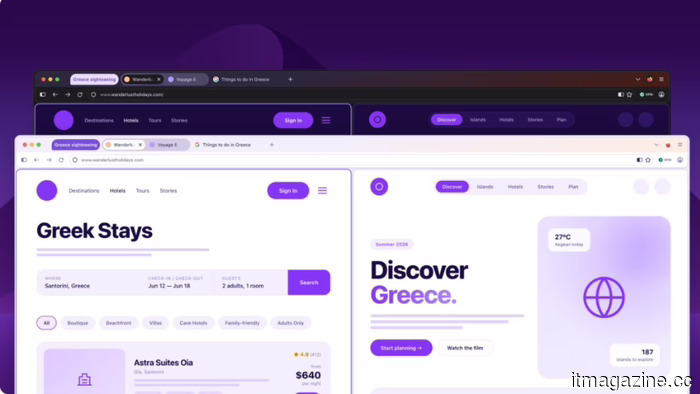 The Firefox Project Nova redesign introduces a compact mode and a fresh appearance.
Mozilla's Project Nova will introduce softer tabs for Firefox, a fire-themed color palette, a compact mode, and more transparent privacy settings. The update is anticipated to be released later this year.
The Firefox Project Nova redesign introduces a compact mode and a fresh appearance.
Mozilla's Project Nova will introduce softer tabs for Firefox, a fire-themed color palette, a compact mode, and more transparent privacy settings. The update is anticipated to be released later this year.
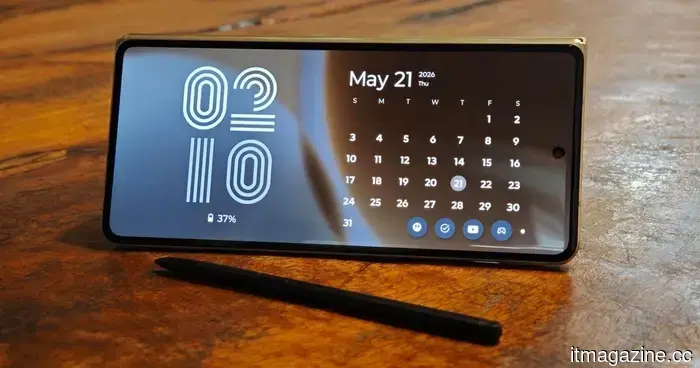 The Motorola Raze Fold brought back my appreciation for the phone stylus, and I realized how much I've missed using it.
I was surprised by the Moto Pen Ultra of the Razr Fold, as it doesn’t regard the stylus as just a nostalgic item but instead as a useful shortcut tool for a spacious foldable display.
The Motorola Raze Fold brought back my appreciation for the phone stylus, and I realized how much I've missed using it.
I was surprised by the Moto Pen Ultra of the Razr Fold, as it doesn’t regard the stylus as just a nostalgic item but instead as a useful shortcut tool for a spacious foldable display.
 How JobAssist Transforms the Contemporary Job Search Process
This platform provides candidates with the framework and assurance necessary to differentiate themselves in competitive job markets. For countless candidates, the job search has turned into a job of its own. From customizing CVs for each position, composing cover letters from the ground up, monitoring numerous applications, to staying updated with employers’ replies, the process can […]
How JobAssist Transforms the Contemporary Job Search Process
This platform provides candidates with the framework and assurance necessary to differentiate themselves in competitive job markets. For countless candidates, the job search has turned into a job of its own. From customizing CVs for each position, composing cover letters from the ground up, monitoring numerous applications, to staying updated with employers’ replies, the process can […]
 ByteDance's Seedance 2.0 debuts at Cannes with a 95-minute AI film titled Hell Grind.
At the 79th Cannes Film Festival, renowned for its abundance of cinematic storytelling, one of the most unexpected highlights of this year stemmed from AI.
ByteDance's Seedance 2.0 debuts at Cannes with a 95-minute AI film titled Hell Grind.
At the 79th Cannes Film Festival, renowned for its abundance of cinematic storytelling, one of the most unexpected highlights of this year stemmed from AI.
 Ubisoft aims for a resurgence with Assassin’s Creed, Far Cry, Ghost Recon, and an AI experiment that has players concerned.
Ubisoft's plan for a comeback features new titles in the Assassin's Creed, Far Cry, and Ghost Recon franchises, along with a playable generative AI project named Teammates.
Ubisoft aims for a resurgence with Assassin’s Creed, Far Cry, Ghost Recon, and an AI experiment that has players concerned.
Ubisoft's plan for a comeback features new titles in the Assassin's Creed, Far Cry, and Ghost Recon franchises, along with a playable generative AI project named Teammates.
Research indicates that unhealthy screen habits significantly contribute to the poor sleep and mental health of young people.
Recent studies reveal how habits related to screens, inadequate sleep, feelings of loneliness, and depression interconnect in self-reinforcing cycles among young adults between the ages of 18 and 40.