

ByteDance's Seedance 2.0 debuts in Cannes with a 95-minute AI film titled Hell Grind.
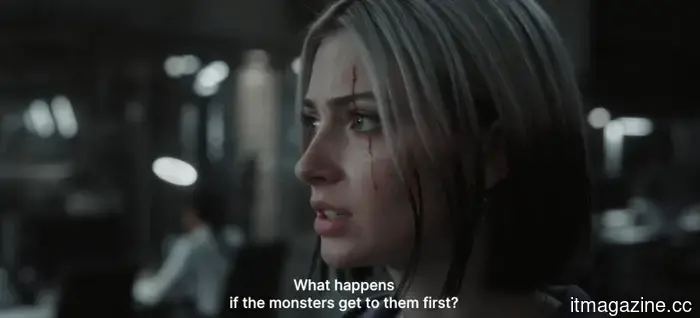
At the 79th Cannes Film Festival, known for its rich cinematic storytelling, one of the notable surprises this year came from artificial intelligence. On Thursday, ByteDance's cloud platform Volcengine introduced its Seedance 2.0 model at Cannes, hosting an AI film showcase where it premiered "Hell Grind," a 95-minute feature film claimed to be the world's first fully AI-generated movie. The production team for this feature film is from the US-based AI company Higgsfield, while the underlying video generation model is Seedance 2.0, developed by ByteDance.
This was not merely a 15-second AI clip or a proof-of-concept demonstration; "Hell Grind" presented itself as a complete, theater-ready narrative feature, indicating the rapid transition of generative AI from experimental content generation to long-form cinematic storytelling.
What makes this achievement noteworthy is that long-form video generation has posed one of the most significant technical challenges in AI filmmaking. Currently, most mainstream AI video tools can only produce clips that last between 15 and 30 seconds. Creating a feature-length film usually involves piecing together tens of thousands of disjointed shots, often resulting in inconsistent characters, unstable scenes, and disrupted visual continuity, making it difficult to utilize in a professional production setting.
Seedance 2.0 seems to have overcome many of these challenges. The film tells the story of four street children—Roko, Jaxx, Lulu, and Rein—who discover a mysterious artifact during a museum exploration. This discovery unleashes a dark force and grants them superpowers. They must unite to confront this emerging evil and fight for their survival in a world where the lines between reality and illusion begin to fade. After viewing an early cut of the film, Chuck Russell reportedly expressed that the project evoked genuine empathy for the characters, a rare occurrence in AI-generated cinema.
The production details are also impressive: the film was allegedly completed by a team of 15 in just 14 days, with a total budget of under $500,000. A traditionally produced film of similar scale could easily reach costs in the tens of millions of dollars. At the summit, Alex Mashrabov, co-founder of Higgsfield, claimed that the technical framework for AI-centered filmmaking has matured sufficiently to realize ambitious cinematic ideas at a fraction of the traditional production cost.
Luc Besson's SEEN studio is reportedly set to utilize Volcengine's Seedance 2.0 to create an AI-animated film titled "The Furious Five," with Besson reportedly serving as director. The project is said to meld live-action performances with AI generation, eliminating the need for motion-capture studios and green screens, allowing ordinary filming setups to feed directly into animation production.
If this holds true, the ramifications extend beyond production efficiency. The existence of a 95-minute AI-generated feature film implies that the challenge of narrative-scale generation may no longer be the primary restriction in filmmaking, transferring the bottleneck towards creative direction instead of budget or team size. For independent creators, this development could significantly lower entry barriers and broaden access to feature-length storytelling.
However, this transition also raises structural concerns for the film industry. If a feature film can be completed in about two weeks at a fraction of conventional budgets, mid- and low-tier production workers may experience displacement pressures. Additionally, a deeper discussion is emerging regarding authorship: whether the emotional impact from AI-generated works reflects genuine artistic intent or merely the optimization of human emotional responses.
As generative systems become increasingly adept at crafting coherent, emotionally resonant narratives, the role of human creators may evolve further to defining intent, taste, and meaning, while the tools themselves increasingly influence what effective storytelling entails.
Jessie Wu is a technology reporter located in Shanghai. She covers consumer electronics, semiconductors, and the gaming industry for TechNode. You can reach her via email at jessie.wu@technode.com.




Other articles
 PDF Primetime: The Transition of Document Workflow to the Web
How simplicity and accessibility are transforming the way users manage daily digital tasks. Over the past ten years, the modern workplace has undergone significant changes, characterized by remote access and widely dispersed teams. Nevertheless, many administrative tasks still retain a surprising level of complexity. You can now work together on a group project with individuals from across the globe, […]
PDF Primetime: The Transition of Document Workflow to the Web
How simplicity and accessibility are transforming the way users manage daily digital tasks. Over the past ten years, the modern workplace has undergone significant changes, characterized by remote access and widely dispersed teams. Nevertheless, many administrative tasks still retain a surprising level of complexity. You can now work together on a group project with individuals from across the globe, […]
 ByteDance's Seedance 2.0 debuts at Cannes with a 95-minute AI film titled Hell Grind.
At the 79th Cannes Film Festival, renowned for its abundance of cinematic storytelling, one of the most unexpected highlights of this year stemmed from AI.
ByteDance's Seedance 2.0 debuts at Cannes with a 95-minute AI film titled Hell Grind.
At the 79th Cannes Film Festival, renowned for its abundance of cinematic storytelling, one of the most unexpected highlights of this year stemmed from AI.
 Spotify will allow you to use AI to create covers and remixes of your favorite tracks, for an additional charge.
Spotify and Universal Music Group revealed an agreement that allows Premium subscribers to utilize AI for creating covers and remixes of their favorite tracks.
Spotify will allow you to use AI to create covers and remixes of your favorite tracks, for an additional charge.
Spotify and Universal Music Group revealed an agreement that allows Premium subscribers to utilize AI for creating covers and remixes of their favorite tracks.
 ByteDance's Seedance 2.0 premieres at Cannes with the 95-minute AI film Hell Grind.
During the 79th Cannes Film Festival, renowned for its abundance of cinematic storytelling, one of the most unexpected highlights this year emerged from artificial intelligence.
ByteDance's Seedance 2.0 premieres at Cannes with the 95-minute AI film Hell Grind.
During the 79th Cannes Film Festival, renowned for its abundance of cinematic storytelling, one of the most unexpected highlights this year emerged from artificial intelligence.
 Motorola's latest Razr series has sparked a competition among carriers in the US with their promotional offers.
T-Mobile is providing the Razr Fold at no cost along with 6Rx network support, whereas Verizon is promoting complimentary deals on the Razr 2026 and Moto G 2026.
Motorola's latest Razr series has sparked a competition among carriers in the US with their promotional offers.
T-Mobile is providing the Razr Fold at no cost along with 6Rx network support, whereas Verizon is promoting complimentary deals on the Razr 2026 and Moto G 2026.
 The Motorola Raze Fold brought the phone stylus back into my life, and I realized how much I had missed using it.
I was surprised by the Moto Pen Ultra of the Razr Fold, as it doesn't regard the stylus merely as a nostalgic item, but instead as a functional shortcut tool for a spacious foldable display.
The Motorola Raze Fold brought the phone stylus back into my life, and I realized how much I had missed using it.
I was surprised by the Moto Pen Ultra of the Razr Fold, as it doesn't regard the stylus merely as a nostalgic item, but instead as a functional shortcut tool for a spacious foldable display.
ByteDance's Seedance 2.0 debuts in Cannes with a 95-minute AI film titled Hell Grind.
During the 79th Cannes Film Festival, renowned for its abundance of cinematic storytelling, one of the most unexpected highlights this year stemmed from AI. On