
Chinese EV brands exceed 15% market share in Europe, with the UK at the forefront.
BYD and Chery led the surge in Chinese electric vehicle (EV) deliveries in April, even as Brussels maintains its tariff barriers and Stellantis quietly transitions the management of underutilized European plants. Chinese brands represented over 15% of Europe’s electric vehicle sales in April, marking the first time this milestone has been achieved in a single month. Sales of fully electric cars from manufacturers like BYD and Chery soared over 100% year-on-year, reaching 38,281 units, according to Dataforce. In the broader European car market, Chinese brands are nearing a 10% share.
Five years ago, this number was nearly negligible. In 2021, Chinese automakers were selling only a few thousand EVs each month in Europe, so the significant increase seen in April is noteworthy for the momentum rather than the figure itself.
The situation with plug-in hybrids is even more pronounced. Chinese brands captured nearly 30% of European PHEV sales in the latest figures, a market they hardly participated in just two years ago. BYD’s Seal U and Atto 2, alongside Chery’s Jaecoo and Omoda series, have been the primary contributors to this growth.
Jaecoo clearly illustrates the rapid shift in buying habits, especially among British consumers. The Jaecoo 7 became the UK's top-selling new car in March, with 10,064 registrations, outpacing its nearest competitor by 70%. The brand only debuted in the UK in 2025, with plug-in hybrid versions constituting 85% of those March sales. In the UK press, the vehicle has earned the nickname "Temu Range Rover," referencing both a discount e-commerce platform and its similar appearance to that model.
Notably, the UK does not impose tariffs on imported electric vehicles, which plays a significant role in this scenario; approximately one in seven cars sold in Britain now comes from a Chinese manufacturer. “You can get a really good new car, very often for £389 ($521) a month,” Nathan Coe, CEO of Auto Trader, remarked in an interview. “And that offer for a car that looks appealing, performs well, and has a good range is very attractive to consumers.” The implication, which Coe did not explicitly indicate, is that British consumers show less brand loyalty compared to their European counterparts and are particularly price-conscious.
In the EU, where tariffs ranging from 17 to 38% are currently placed on Chinese-made EVs, the growth has only been slightly hindered. Chinese car manufacturers have responded by establishing production facilities on the continent and, increasingly, by taking advantage of the unused capacity of European competitors. BYD is in the process of constructing its own plant in Hungary and is also engaged in discussions with Stellantis and other European companies about acquiring underutilized factories. Stellantis has already initiated this process by partnering with Dongfeng to manufacture the Voyah-branded hybrids and EVs in Rennes, France, holding a 51% stake, while Opel will produce a compact electric crossover in collaboration with Leapmotor in Zaragoza.
The pricing dynamics that make these European factory agreements appealing for Chinese firms are evident. A fierce price battle within China has severely impacted margins, leading exports to become the profitable avenue. Similarly, the pricing factors that lead Stellantis to consider deals with European factories are clear. As the Peugeot-Fiat parent company contracts in Europe and reallocates investment to the US, it leaves factories on the continent that require utilization.
Brussels has opted for tariffs as a strategic tool. However, the data from April indicates that these tariffs alone are not achieving the intended effect. The long-term challenge for the European car industry, as indicated by Coe, is the emergence of a Chinese EV priced at €30,000, offering a practical range and modern technology, sold through a traditional dealer network, which is now a viable alternative for consumers who would have previously purchased a Volkswagen.
Other articles
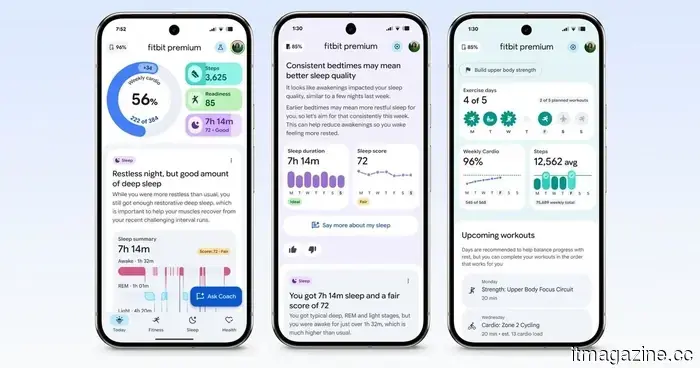 Google Health 5.0 is being released, showcasing its strongest feature at the forefront while its most significant issues are hidden from view.
The new home screen widget of Google Health 5.0 represents a significant improvement compared to the previous Fitbit steps bubble. However, the app itself has a more complex narrative.
Google Health 5.0 is being released, showcasing its strongest feature at the forefront while its most significant issues are hidden from view.
The new home screen widget of Google Health 5.0 represents a significant improvement compared to the previous Fitbit steps bubble. However, the app itself has a more complex narrative.
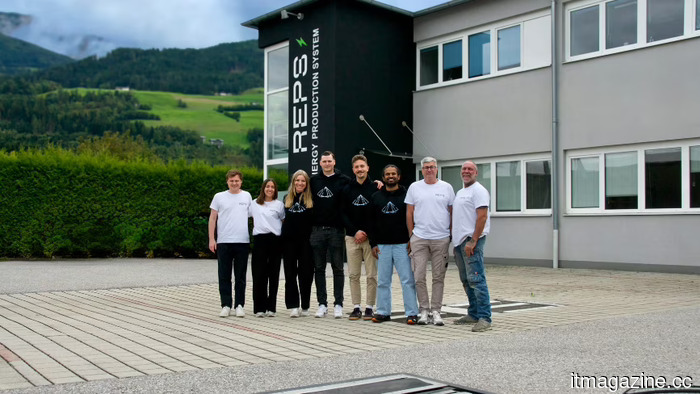 Austrian startup REPS secures $23.6 million to convert road traffic into electricity.
Austrian startup REPS has secured $23.6 million to expand its road-embedded energy converters, with its first commercial unit operational at the Port of Hamburg since 2025.
Austrian startup REPS secures $23.6 million to convert road traffic into electricity.
Austrian startup REPS has secured $23.6 million to expand its road-embedded energy converters, with its first commercial unit operational at the Port of Hamburg since 2025.
 JBL created the most impressive transparent earbuds that appear as if they came straight from The Matrix.
JBL’s Soundgear Clips are now available in a special transparent Emerald Green edition, introducing a beautiful new color exclusive to China in its open-ear collection.
JBL created the most impressive transparent earbuds that appear as if they came straight from The Matrix.
JBL’s Soundgear Clips are now available in a special transparent Emerald Green edition, introducing a beautiful new color exclusive to China in its open-ear collection.
 Chinese EV brands surpass 15% market share in Europe, with the UK taking the lead.
Chinese automakers, spearheaded by BYD and Chery, captured over 15% of the European electric vehicle market in April 2026, with deliveries reaching 38,281 units, as reported by Dataforce.
Chinese EV brands surpass 15% market share in Europe, with the UK taking the lead.
Chinese automakers, spearheaded by BYD and Chery, captured over 15% of the European electric vehicle market in April 2026, with deliveries reaching 38,281 units, as reported by Dataforce.
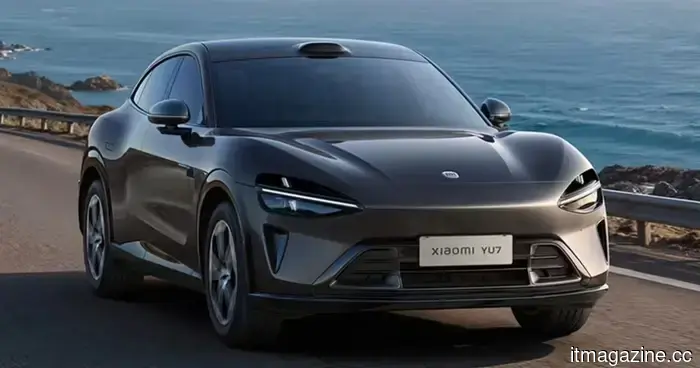 Xiaomi's new electric SUV, priced at $34,500, offers a longer range than the Tesla Model Y while being more affordable.
Xiaomi's new entry-level YU7 variant is priced $4,350 lower than the Tesla Model Y, while also providing an additional range of 31 miles.
Xiaomi's new electric SUV, priced at $34,500, offers a longer range than the Tesla Model Y while being more affordable.
Xiaomi's new entry-level YU7 variant is priced $4,350 lower than the Tesla Model Y, while also providing an additional range of 31 miles.
 Spotify's new AI application is capable of creating daily briefings and customized podcasts tailored to your preferences.
Spotify's new Studio app utilizes AI to create personalized podcasts and daily updates based on your listening habits, calendar, and email.
Spotify's new AI application is capable of creating daily briefings and customized podcasts tailored to your preferences.
Spotify's new Studio app utilizes AI to create personalized podcasts and daily updates based on your listening habits, calendar, and email.
Chinese EV brands exceed 15% market share in Europe, with the UK at the forefront.
Chinese automakers, led by BYD and Chery, captured over 15% of European electric vehicle sales in April 2026, with deliveries reaching 38,281 units, as reported by Dataforce.