
Chinese EV brands surpass 15% market share in Europe, with the UK taking the lead.
BYD and Chery spearheaded a significant increase in Chinese electric vehicle (EV) deliveries in April, despite Brussels maintaining its tariff barriers and Stellantis discreetly transferring keys to underutilized European facilities. Chinese brands represented over 15 percent of Europe’s electric vehicle sales in April, marking the first instance of surpassing this threshold within a single month. Sales of fully electric vehicles from companies such as BYD and Chery more than doubled year-on-year to reach 38,281 units, as per Dataforce. In the broader European car market, Chinese brands are approaching 10 percent market share.
Five years ago, this percentage was negligible. In 2021, Chinese manufacturers were selling just a few thousand EVs monthly in Europe. The significance of the April figures lies not only in the numbers but in the rapid pace of change since then.
The situation for plug-in hybrids is even more pronounced. Chinese brands captured nearly 30 percent of European PHEV sales in the latest monthly report, a segment where they scarcely had presence two years prior. The BYD Seal U and Atto 2, along with Chery's Jaecoo and Omoda models, have driven much of this growth.
Jaecoo exemplifies how swiftly British consumers have adapted, with the Jaecoo 7 becoming the top-selling new car in the UK in March, accumulating 10,064 registrations, outpacing its nearest rival by 70 percent. The brand was only introduced in the UK in 2025, with plug-in hybrid versions making up 85 percent of those March sales. The vehicle has acquired the moniker "Temu Range Rover" in UK media, likening it to the low-cost e-commerce platform and the model it closely resembles.
The UK does not impose tariffs on imported EVs, contributing to its current market dynamics, as approximately one in seven cars sold in Britain originates from a Chinese brand. "You can get a really good new car, often for £389 ($521) a month," stated Nathan Coe, CEO of Auto Trader, in an interview. "This offer for a car that is aesthetically pleasing, reliable, and has a good range is very attractive to consumers."
While Coe’s implication is clear—that British consumers exhibit less brand loyalty compared to their continental peers and are sensitive to pricing—the situation in the EU, where tariffs ranging from 17 to 38 percent are imposed on Chinese-made EVs, has only slightly dampened this growth. In response, Chinese automakers have begun establishing factories in Europe and increasingly utilizing the underutilized capacities of European counterparts. BYD is constructing its own plant in Hungary and is also in discussions with Stellantis and other European manufacturers regarding acquiring underused facilities. Stellantis has opened the door for collaboration, with its joint venture with Dongfeng set to produce the Chinese company's Voyah-branded hybrids and EVs at their Rennes site in France, where Stellantis maintains a 51 percent stake. Opel will also manufacture a compact electric crossover in Zaragoza, co-developed with Leapmotor.
The pricing dynamics that entice Chinese firms are evident, as fierce price competition in China has severely impacted margins, leading exports to become vital for profitability. Similarly, the pricing landscape that attracts Stellantis to collaborate with European factories is straightforward; as the Peugeot-Fiat parent company contracts in Europe and reallocates investments to the US, it leaves behind manufacturing plants that require utilization.
Brussels has opted for tariffs as a strategy, yet the April statistics indicate that this singular approach is not achieving the desired effects. The long-term challenge for the European automotive industry, as pointed out by Coe, is that a Chinese EV priced at €30,000, equipped with a practical range and modern software, sold through a standard dealer network, is now a viable alternative for buyers who would have considered a Volkswagen five years ago.
Other articles
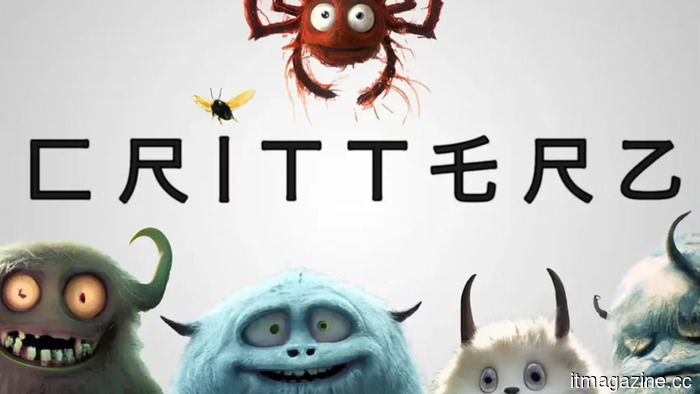 The shutdown of Sora leaves Critterz without its model at the Cannes market.
Critterz, the family animation supported by OpenAI, did not make its debut at the Cannes festival due to OpenAI's discontinuation of the Sora model utilized in its production.
The shutdown of Sora leaves Critterz without its model at the Cannes market.
Critterz, the family animation supported by OpenAI, did not make its debut at the Cannes festival due to OpenAI's discontinuation of the Sora model utilized in its production.
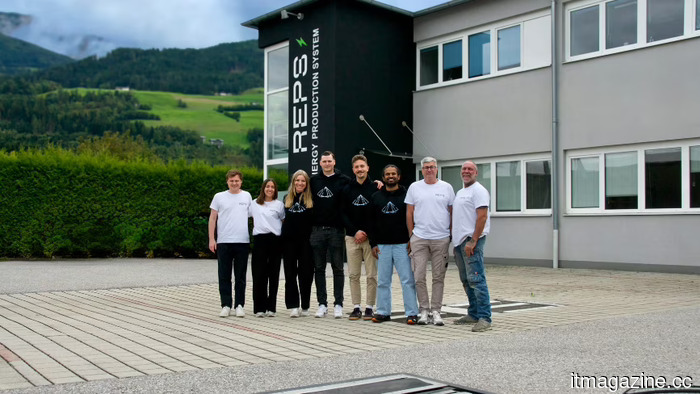 Austrian startup REPS secures $23.6 million to convert road traffic into electricity.
Austrian startup REPS has secured $23.6 million to expand its road-embedded energy converters, with its first commercial unit operational at the Port of Hamburg since 2025.
Austrian startup REPS secures $23.6 million to convert road traffic into electricity.
Austrian startup REPS has secured $23.6 million to expand its road-embedded energy converters, with its first commercial unit operational at the Port of Hamburg since 2025.
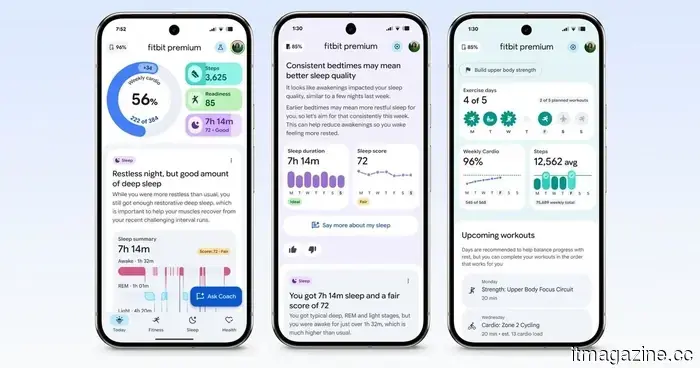 Google Health 5.0 is being released, showcasing its strongest feature at the forefront while its most significant issues are hidden from view.
The new home screen widget of Google Health 5.0 represents a significant improvement compared to the previous Fitbit steps bubble. However, the app itself has a more complex narrative.
Google Health 5.0 is being released, showcasing its strongest feature at the forefront while its most significant issues are hidden from view.
The new home screen widget of Google Health 5.0 represents a significant improvement compared to the previous Fitbit steps bubble. However, the app itself has a more complex narrative.
 Chinese EV brands exceed 15% market share in Europe, with the UK at the forefront.
Chinese automakers, led by BYD and Chery, captured over 15% of European electric vehicle sales in April 2026, with deliveries reaching 38,281 units, as reported by Dataforce.
Chinese EV brands exceed 15% market share in Europe, with the UK at the forefront.
Chinese automakers, led by BYD and Chery, captured over 15% of European electric vehicle sales in April 2026, with deliveries reaching 38,281 units, as reported by Dataforce.
 Italian law enforcement has confiscated a piracy application that illegally broadcast Sky, DAZN, and Netflix by using stolen legitimate accounts.
Italy's Guardia di Finanza has confiscated CINEMAGOAL, a piracy application that decoded streams from Sky, DAZN, and Netflix by utilizing credentials from fake legitimate subscribers.
Italian law enforcement has confiscated a piracy application that illegally broadcast Sky, DAZN, and Netflix by using stolen legitimate accounts.
Italy's Guardia di Finanza has confiscated CINEMAGOAL, a piracy application that decoded streams from Sky, DAZN, and Netflix by utilizing credentials from fake legitimate subscribers.
 JBL created the most impressive transparent earbuds that appear as if they came straight from The Matrix.
JBL’s Soundgear Clips are now available in a special transparent Emerald Green edition, introducing a beautiful new color exclusive to China in its open-ear collection.
JBL created the most impressive transparent earbuds that appear as if they came straight from The Matrix.
JBL’s Soundgear Clips are now available in a special transparent Emerald Green edition, introducing a beautiful new color exclusive to China in its open-ear collection.
Chinese EV brands surpass 15% market share in Europe, with the UK taking the lead.
Chinese automakers, spearheaded by BYD and Chery, captured over 15% of the European electric vehicle market in April 2026, with deliveries reaching 38,281 units, as reported by Dataforce.