
CircuitHub secures $28 million from Plural to produce PCBs in the same way that clouds deliver computing resources.
The Massachusetts-based automated electronics manufacturing company, rooted in Cambridge, has produced over two million circuit boards for 20,000 engineers. Plural is banking on the trillion-dollar trend of reshoring driving its growth.
CircuitHub, the automated electronics manufacturing firm established by Andrew Seddon, has secured $28 million in funding, spearheaded by Plural. This funding round marks the largest in CircuitHub's 15-year history and will support the expansion of the company’s automated PCB factories in Europe and the United States, in addition to further developing its engineering team and transitioning into full-service electronics manufacturing.
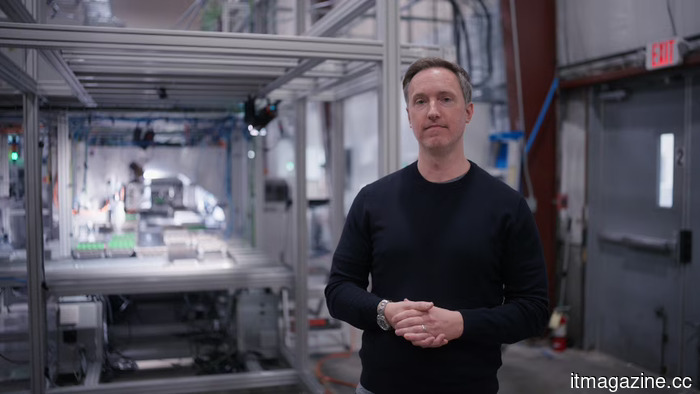
CircuitHub’s sales approach leverages a cloud-economics analogy for circuit boards. Its initial 5,000-square-foot ‘Grid’ facility in Massachusetts processes uploaded design files through robotic assembly lines managed by computer vision and AI quality control, enabling the shipment of completed PCBs to clients within days, as opposed to the months typical of traditional contract manufacturers.
One Grid facility can create either a single prototype or batches of 10,000 units from various designs concurrently, thereby making high-mix manufacturing economically feasible for the first time, according to the company’s own analysis.
Seddon summarized the funding round's operational angle succinctly: ‘Hardware companies confront a difficult decision: either establish their own vertically integrated manufacturing from scratch or depend on a legacy Western supply chain that has deteriorated over the years. CircuitHub offers an alternative: remote access to a state-of-the-art factory via your browser or AI agent. Just as software companies utilize cloud computing, hardware companies can now utilize our Grid.’ This analogy is what venture capital hardware investors have been eager to see materialize in a tangible product for the past decade.
CircuitHub’s history lends credibility to this analogy. The company has delivered over two million boards and placed more than 133 million parts, serving around 20,000 engineers in sectors such as robotics, satellites, automotive autonomy, defense, and energy.
The industry term ‘Physical AI’ refers to embodied-AI hardware, which faces structural constraints at the PCB and assembly levels, unlike the model and software layers.
The market analysis that Plural is supporting is particularly noteworthy. According to broader industry data sourced by CircuitHub, approximately 95% of electronics projects require fewer than 10,000 units; nevertheless, the global electronics manufacturing services market remains geared toward mass production, which typically involves significantly larger order volumes.
The US has lost over 85% of its share of the global PCB market to more affordable overseas manufacturers, mainly in China. The PCB market is forecasted to exceed $1 trillion, with the long-tail of small-batch custom production being the segment that has largely been overlooked for much of the past decade.
Plural’s investment thesis is firmly based in the reshoring narrative. Partner Sten Tamkivi commented that CircuitHub's initiatives are foundational. He noted, ‘Andrew and the exceptional CircuitHub team are transforming the unit economics of the entire sector.’ Tamkivi’s focus on resilience and sovereignty, in conjunction with the unit economics argument, sets the Plural analysis apart from conventional hardware-platform propositions, recognizing European and US-controlled hardware manufacturing as a strategic asset rather than merely a commodity supply category.
The trend of reshoring within Europe is gaining momentum. Earlier this year, PaperShell received a €40.3 million grant from the EU Innovation Fund for a copper-clad laminate and PCB facility; the EU also allocated €700 million for the NanoIC pilot line, positioned at a different level of the supply chain; and Analog Devices struck a $1.5 billion deal for Empower Semiconductor, focused on power management.
CircuitHub’s funding round represents the assembly and fulfillment layer that addresses the small-batch end of the market that other companies are not optimized for.
Founded in 2011 by Seddon, Rehno Lindeque, and Jon Friedman, CircuitHub conducts its R&D in Cambridge, UK, while its commercial operations are situated at the Massachusetts Grid to be close to early clients. The company participated in Y Combinator in 2012.
A planned European Grid would establish CircuitHub as the first automated PCB platform of this magnitude to operate across both sides of the Atlantic. Details regarding post-money valuation, run-rate revenue, and the timeline for the European Grid have not been disclosed.
Other articles
 Dunia Innovations in Berlin invests €280M in a GigaLab focused on autonomous AI materials.
Dunia Innovations in Berlin has announced its intentions to build a €280 million GigaLab, covering 6,000 square meters, to validate AI-generated materials on an industrial scale.
Dunia Innovations in Berlin invests €280M in a GigaLab focused on autonomous AI materials.
Dunia Innovations in Berlin has announced its intentions to build a €280 million GigaLab, covering 6,000 square meters, to validate AI-generated materials on an industrial scale.
 Viktor secures $75 million from Accel to integrate an AI coworker into Slack and Teams.
Viktor, the AI coworking company located in Warsaw and Munich and founded by former Meta engineers, has secured $75 million in Series A funding, with Accel leading the round.
Viktor secures $75 million from Accel to integrate an AI coworker into Slack and Teams.
Viktor, the AI coworking company located in Warsaw and Munich and founded by former Meta engineers, has secured $75 million in Series A funding, with Accel leading the round.
 Gen Z isn't criticizing AI; they're expressing discontent with their own job market.
Eric Schmidt faced booing at the University of Arizona, while Gloria Caulfield experienced the same at UCF. The narrative labeled it as generational confusion, but the statistics indicate it was a matter of generational accuracy.
Gen Z isn't criticizing AI; they're expressing discontent with their own job market.
Eric Schmidt faced booing at the University of Arizona, while Gloria Caulfield experienced the same at UCF. The narrative labeled it as generational confusion, but the statistics indicate it was a matter of generational accuracy.
 Gen Z is not rejecting AI; rather, it is expressing dissatisfaction with the job market for themselves.
Eric Schmidt faced boos at the University of Arizona, while Gloria Caulfield was also met with boos at UCF. The narrative framed it as generational confusion, but the statistics indicate it was actually generational accuracy.
Gen Z is not rejecting AI; rather, it is expressing dissatisfaction with the job market for themselves.
Eric Schmidt faced boos at the University of Arizona, while Gloria Caulfield was also met with boos at UCF. The narrative framed it as generational confusion, but the statistics indicate it was actually generational accuracy.
 Alibaba introduces the Zhenwu M890 as a strong competitor to NVIDIA in China's market.
Alibaba's T-Head chip division has introduced the Zhenwu M890, its most advanced AI accelerator to date, and announced that the chip has entered 'scaled mass production' as China intensifies its efforts to develop a domestic alternative to NVIDIA.
Alibaba introduces the Zhenwu M890 as a strong competitor to NVIDIA in China's market.
Alibaba's T-Head chip division has introduced the Zhenwu M890, its most advanced AI accelerator to date, and announced that the chip has entered 'scaled mass production' as China intensifies its efforts to develop a domestic alternative to NVIDIA.
 Alibaba introduces the Zhenwu M890 as China intensifies its efforts to create an alternative to NVIDIA.
Alibaba's T-Head chip division has introduced the Zhenwu M890, its most advanced AI accelerator to date, and announced that the chip is currently in 'scaled mass production' as China speeds up its efforts to create a domestic alternative to NVIDIA.
Alibaba introduces the Zhenwu M890 as China intensifies its efforts to create an alternative to NVIDIA.
Alibaba's T-Head chip division has introduced the Zhenwu M890, its most advanced AI accelerator to date, and announced that the chip is currently in 'scaled mass production' as China speeds up its efforts to create a domestic alternative to NVIDIA.
CircuitHub secures $28 million from Plural to produce PCBs in the same way that clouds deliver computing resources.
CircuitHub has secured $28 million in funding, led by Plural, to enhance its automated PCB-manufacturing 'Grid' factories in Europe and the United States.