
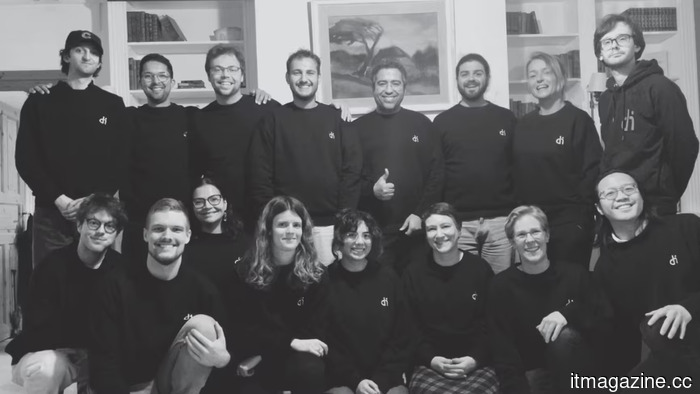
Dunia Innovations in Berlin invests €280M in a GigaLab focused on autonomous AI materials.
The autonomous R&D facility, spanning 6,000 square metres and supported by Siemens, ABB Robotics, NVIDIA, AWS, and ILS, aims to address the materials-verification challenges presented by AI-driven design in Europe. Dunia Innovations, a deeptech company based in Berlin that develops autonomous infrastructure for materials R&D, revealed on Wednesday its plans for a €280 million facility named GigaLab, intended to discover and develop advanced materials on an industrial scale. Core technologies will be supplied by Siemens, ABB Robotics, NVIDIA, AWS, and ILS. The facility is anticipated to generate over 200 direct jobs and commence operations in 2028.
Founded in 2022, Dunia offers an integrated platform that merges AI, lab automation, and simulation into a closed-loop system that caters to clients in the fields of catalysts, batteries, and semiconductors. The first-generation platform was launched in 2023, with the second-generation IRIS platform going live in May 2025. GigaLab represents Dunia's belief that the next limitation in advanced materials discovery lies in the physical realm rather than algorithmic, particularly in the experimental-verification capabilities required to validate the millions of candidate materials generated by AI models.
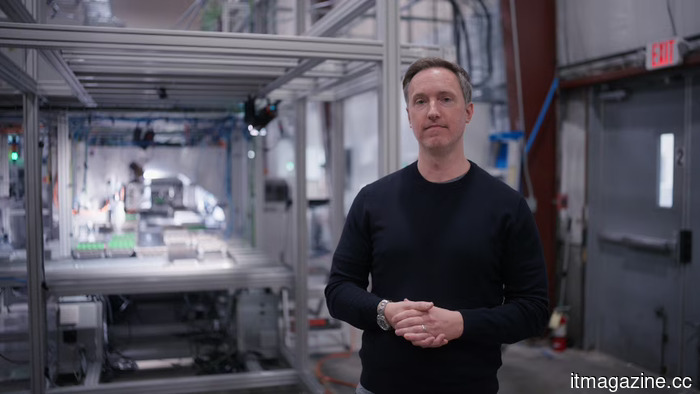
Dunia's core assertion, articulated by CEO and co-founder Dr. Alex Hammer, is that the fragmented nature of the published scientific record hampers the training of large-scale models transforming other fields. Furthermore, simulation has not succeeded in predicting how materials perform under real-world conditions of temperature, pressure, and contamination. "With AI already conceptualizing millions of new materials, the need for experimental verification is skyrocketing," Hammer stated. "We require factories that conduct science at an industrial scale. GigaLab will be the first facility designed to achieve this."
The industrial consortium Dunia is forming around the facility plays a pivotal role. Siemens will contribute digital-twin and process-simulation technologies; ABB Robotics will provide lab automation for fully autonomous experimentation; AWS will manage cloud infrastructure and large-scale analytics; NVIDIA will offer high-performance computing for AI model training through its Inception program; and ILS will supply advanced high-throughput parallel testing equipment.
Merck has shown interest in GigaLab's potential to accelerate the development of next-generation semiconductor materials. The partnership between Siemens and NVIDIA follows the same model that has been successful in industrial robotics, with the digital-twin and edge-compute stack now being applied to materials science.
The competitive European landscape is significant in this context. Dr. Dirk Demuth, Head of Corporate Development and co-founder of hte GmbH, noted in the announcement that the depth of integration distinguishes the Berlin GigaLab from previous generations of materials-AI infrastructure. "We are constructing AI, automation, and industrial-grade workflow design from the ground up, rather than assembling them piecemeal," he remarked.
Dunia is positioning the project as crucial for European competitiveness, sustainability, and autonomy, and anticipates substantial public co-investment alongside funding from venture capital and industrial partners. The company has also advocated for a €500 million EU-funded materials-testing facility, a longer-term project running concurrently with GigaLab.
In terms of funding history, Dunia raised approximately $11.5 million (€10.6 million) in October 2024 with contributions from French VC Elaia and Swiss VC redalpine, and it is currently seeking additional funds for GigaLab. The European Commission's Horizon programme has also supported Dunia's electrocatalyst discovery efforts through a dedicated CORDIS grant.
The €280 million GigaLab represents a significant increase in scale from any of Dunia's previous announcements. However, the specific funding mix for the facility's construction has not been disclosed, though the announcement suggests a blend of venture capital, industrial partnerships, and anticipated European public co-investment.
This initiative falls within the broader European deeptech context, which has faced challenges in securing funding for the long-term, capital-intensive infrastructure required for frontier materials research. Although some initial investment funds, like Berlin's World Fund with its record €300 million climate-tech vehicle, have begun addressing these needs from the climate-tech perspective, a €280 million commitment involving named partners such as Siemens, ABB, NVIDIA, and AWS is the largest visible announcement for materials infrastructure in Europe this year.
The feasibility of the project's stated 2028 opening timeline will depend on the speed at which public co-investment aligns with existing industrial commitments.
Other articles
 CircuitHub secures $28 million from Plural to manufacture PCBs in a manner similar to how clouds generate computing power.
CircuitHub has secured $28 million in funding, led by Plural, to enhance its automated PCB manufacturing 'Grid' factories throughout Europe and the United States.
CircuitHub secures $28 million from Plural to manufacture PCBs in a manner similar to how clouds generate computing power.
CircuitHub has secured $28 million in funding, led by Plural, to enhance its automated PCB manufacturing 'Grid' factories throughout Europe and the United States.
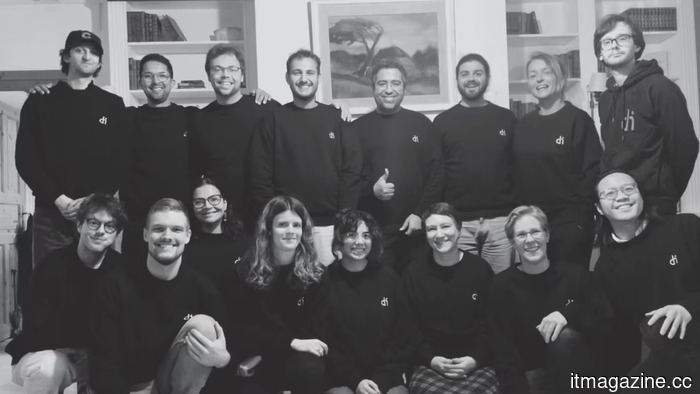 Dunia Innovations in Berlin has pledged €280 million to establish a GigaLab focused on autonomous AI materials.
Dunia Innovations in Berlin has announced its intention to establish a €280 million GigaLab, covering 6,000 square meters, meant to validate AI-designed materials on an industrial scale.
Dunia Innovations in Berlin has pledged €280 million to establish a GigaLab focused on autonomous AI materials.
Dunia Innovations in Berlin has announced its intention to establish a €280 million GigaLab, covering 6,000 square meters, meant to validate AI-designed materials on an industrial scale.
 Google introduces Gemini Omni Flash, a video generation model designed for conversation, although the avatar mode has been postponed.
Google has introduced Gemini Omni Flash, a novel multimodal video-generation model developed by DeepMind. This model allows users to create and edit videos interactively using inputs from images, audio, video, and text, with SynthID watermarking enabled by default.
Google introduces Gemini Omni Flash, a video generation model designed for conversation, although the avatar mode has been postponed.
Google has introduced Gemini Omni Flash, a novel multimodal video-generation model developed by DeepMind. This model allows users to create and edit videos interactively using inputs from images, audio, video, and text, with SynthID watermarking enabled by default.
 OpenAI establishes its inaugural international applied-AI lab in Singapore, backed by a $235 million investment.
OpenAI is establishing its inaugural applied-AI lab beyond the United States in Singapore, backed by a commitment of S$300 million ($235 million) and plans to increase its staff to approximately 200 individuals in the coming years.
OpenAI establishes its inaugural international applied-AI lab in Singapore, backed by a $235 million investment.
OpenAI is establishing its inaugural applied-AI lab beyond the United States in Singapore, backed by a commitment of S$300 million ($235 million) and plans to increase its staff to approximately 200 individuals in the coming years.
 Google has unveiled Pics, an AI image generator integrated within Workspace, aiming to compete with Canva in terms of precise editing.
Google has unveiled Pics, an AI image generator native to Workspace, which utilizes Nano Banana 2 and features precision editing controls along with integration for Slides and Drive.
Google has unveiled Pics, an AI image generator integrated within Workspace, aiming to compete with Canva in terms of precise editing.
Google has unveiled Pics, an AI image generator native to Workspace, which utilizes Nano Banana 2 and features precision editing controls along with integration for Slides and Drive.
 Alibaba introduces the Zhenwu M890, marking a strong push in China to create an alternative to NVIDIA.
Alibaba's T-Head chip division has introduced the Zhenwu M890, its most advanced AI accelerator to date, and announced that the chip is currently in 'scaled mass production' as China intensifies its efforts to develop a domestic alternative to NVIDIA.
Alibaba introduces the Zhenwu M890, marking a strong push in China to create an alternative to NVIDIA.
Alibaba's T-Head chip division has introduced the Zhenwu M890, its most advanced AI accelerator to date, and announced that the chip is currently in 'scaled mass production' as China intensifies its efforts to develop a domestic alternative to NVIDIA.
Dunia Innovations in Berlin invests €280M in a GigaLab focused on autonomous AI materials.
Dunia Innovations in Berlin has announced its intentions to build a €280 million GigaLab, covering 6,000 square meters, to validate AI-generated materials on an industrial scale.