
Alibaba introduces the Zhenwu M890 as China intensifies its efforts to create an alternative to NVIDIA.
T-Head’s new GPU falls under US export controls, alongside a summit between Trump and Xi focused on AI chips, while the company claims the domestic accelerator market in China is already in advanced mass production.
On Wednesday, Alibaba's T-Head chip division released detailed specifications for the Zhenwu M890, the newest GPU-class AI chip aimed as a domestic counterpart to NVIDIA’s accelerators. An Alibaba executive stated that T-Head's proprietary GPU chips have reached large-scale mass production. This announcement comes during a notably busy period for discussions surrounding Chinese AI chips.
According to a detailed report by the South China Morning Post, the Zhenwu M890 is T-Head's highest-spec product to date, competing with NVIDIA’s H100 generation instead of the newer Blackwell. While independent benchmarks indicate a significant performance difference compared to NVIDIA’s flagship, the gap between the Zhenwu M890 and the H100—now legally unavailable to Chinese customers due to US export controls—is smaller. This situation presents a combination where the inability to purchase the H100, along with a credible domestic alternative, frames Alibaba's announcement.
The claim of "scaled mass production" is a noteworthy operational detail. Coverage from EE Times highlights that this production line disclosure aligns with what Western analysts have sought from Chinese chip designers for the past two years; the Alibaba executive’s readiness to publicly assert this signifies the company's confidence in its supply-chain robustness enough to welcome subsequent technical scrutiny.
Reportedly, the chip is produced at process nodes that Chinese foundries can manage without US-controlled lithography equipment, which has been a crucial limiting factor throughout the Chinese domestic chip development cycle.
The context of corporate finance is significant. T-Head, officially known as Pingtouge (which means 'honey badger' in Chinese), was established in 2018, launched its first AI chip (the Hanguang 800) in 2019, and has functioned as an internal supply entity within Alibaba Cloud ever since. T-Head is planning an IPO to fund a more aggressive infrastructure investment strategy, positioning the unit in direct competition with Cambricon and Huawei’s Ascend line within the domestic accelerator sector. From this perspective, the announcement of the Zhenwu M890 serves as operational justification for whatever competitive insights T-Head may present in its prospectus.
The competitive dynamics are often understated in media coverage. Chinese hyperscalers, foundation-model laboratories, and AI deployment clients have significantly increased their purchases of domestic AI chips through Q1 and Q2 of 2026, even as sales of NVIDIA’s H200 have been authorized for a select group of Chinese buyers under the new export licensing framework.
These two trends are complementary; Chinese customers seek options on both fronts. By introducing the Zhenwu M890, Alibaba aims to position T-Head as the default domestic choice, akin to the strategies of Huawei’s Ascend and Cambricon’s Siyuan line. The market, based on available evidence, appears sufficiently large to sustain all three companies at scale.
The geopolitical backdrop was set earlier this month with the Trump-Xi summit in Beijing. Discussions on US-China AI policy are now being conducted at the state level, encompassing H200 export licensing and AI regulatory measures on the agenda. None of the cleared H200 chips for the ten Chinese buyers has been delivered yet.
In this procurement void, Chinese clients are accelerating their pursuit of domestic alternatives. The Zhenwu M890 announcement is a strategic commercial reaction to this gap.
The broader narrative surrounding alternatives to NVIDIA extends beyond China. Tenstorrent’s acquisition discussions with Intel and Qualcomm in the US, along with Google's $25 billion TPU-cloud joint venture with Blackstone announced this week, reflect similar market shifts.
Currently, the AI compute supply curve cannot meet the demand from hyperscalers relying solely on NVIDIA’s silicon. Alibaba’s strategic positioning of T-Head serves as China’s answer to this allocation challenge.
Operational details that media coverage may overlook include per-chip pricing, total shipment volumes of the Zhenwu M890 to date, the identities of customers beyond Alibaba’s own cloud services, the proportions of internal versus third-party shipments, and the timeline for the T-Head IPO. None of these specifics have been formally revealed.
What is visible, however, includes the technical disclosures and the production status claim. The next announcement of named customers, particularly outside of Alibaba Cloud’s infrastructure, will be a crucial indicator of whether T-Head can extend the chip's usage beyond internal applications.
Other articles
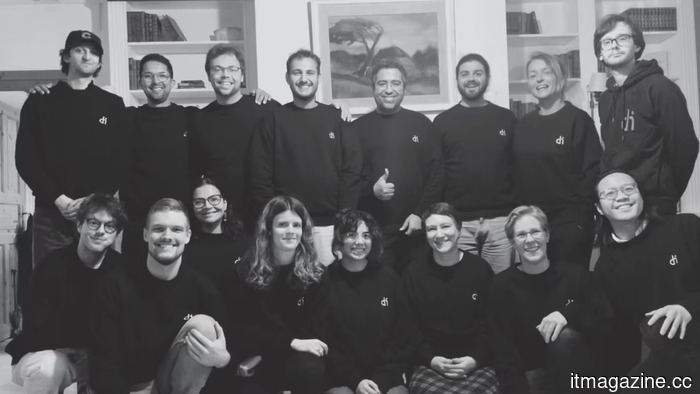 Dunia Innovations in Berlin has pledged €280 million to establish a GigaLab focused on autonomous AI materials.
Dunia Innovations in Berlin has announced its intention to establish a €280 million GigaLab, covering 6,000 square meters, meant to validate AI-designed materials on an industrial scale.
Dunia Innovations in Berlin has pledged €280 million to establish a GigaLab focused on autonomous AI materials.
Dunia Innovations in Berlin has announced its intention to establish a €280 million GigaLab, covering 6,000 square meters, meant to validate AI-designed materials on an industrial scale.
 Google has unveiled Pics, an AI image generator integrated within Workspace, aiming to compete with Canva in terms of precise editing.
Google has unveiled Pics, an AI image generator native to Workspace, which utilizes Nano Banana 2 and features precision editing controls along with integration for Slides and Drive.
Google has unveiled Pics, an AI image generator integrated within Workspace, aiming to compete with Canva in terms of precise editing.
Google has unveiled Pics, an AI image generator native to Workspace, which utilizes Nano Banana 2 and features precision editing controls along with integration for Slides and Drive.
 Google has introduced Pics, an AI image generator integrated within Workspace, aimed at competing with Canva in the realm of precise editing.
Google has unveiled Pics, an AI image generator native to Workspace that utilizes Nano Banana 2, featuring precise editing controls and integration with Slides and Drive.
Google has introduced Pics, an AI image generator integrated within Workspace, aimed at competing with Canva in the realm of precise editing.
Google has unveiled Pics, an AI image generator native to Workspace that utilizes Nano Banana 2, featuring precise editing controls and integration with Slides and Drive.
 Meta initiates the 10% reduction, with the Singapore office receiving the notification at 4 am first.
On Wednesday, Meta began informing thousands of employees about layoffs, starting with staff in Singapore at 4 am local time. This job reduction follows a commitment made in April to decrease the workforce by approximately 8,000 positions.
Meta initiates the 10% reduction, with the Singapore office receiving the notification at 4 am first.
On Wednesday, Meta began informing thousands of employees about layoffs, starting with staff in Singapore at 4 am local time. This job reduction follows a commitment made in April to decrease the workforce by approximately 8,000 positions.
 OpenAI establishes its inaugural international applied-AI lab in Singapore, backed by a $235 million investment.
OpenAI is establishing its inaugural applied-AI lab beyond the United States in Singapore, backed by a commitment of S$300 million ($235 million) and plans to increase its staff to approximately 200 individuals in the coming years.
OpenAI establishes its inaugural international applied-AI lab in Singapore, backed by a $235 million investment.
OpenAI is establishing its inaugural applied-AI lab beyond the United States in Singapore, backed by a commitment of S$300 million ($235 million) and plans to increase its staff to approximately 200 individuals in the coming years.
 Viktor secures $75 million from Accel to integrate an AI coworker into Slack and Teams.
Viktor, the AI coworking company located in Warsaw and Munich and founded by former Meta engineers, has secured $75 million in Series A funding, with Accel leading the round.
Viktor secures $75 million from Accel to integrate an AI coworker into Slack and Teams.
Viktor, the AI coworking company located in Warsaw and Munich and founded by former Meta engineers, has secured $75 million in Series A funding, with Accel leading the round.
Alibaba introduces the Zhenwu M890 as China intensifies its efforts to create an alternative to NVIDIA.
Alibaba's T-Head chip division has introduced the Zhenwu M890, its most advanced AI accelerator to date, and announced that the chip is currently in 'scaled mass production' as China speeds up its efforts to create a domestic alternative to NVIDIA.