
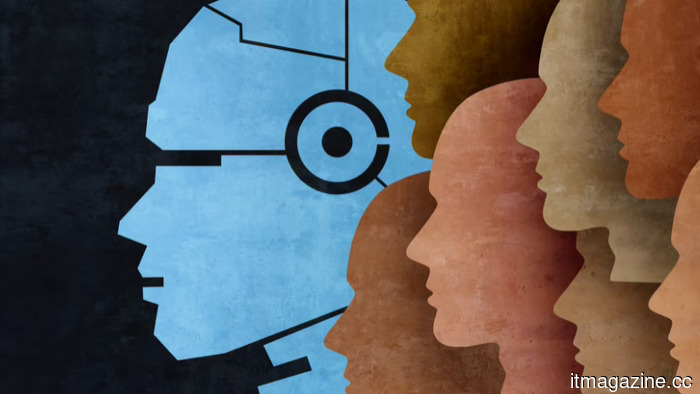
Gen Z is not rejecting AI; rather, it is expressing dissatisfaction with the job market for themselves.
Eric Schmidt spoke at the University of Arizona’s spring commencement, telling a stadium full of graduates that the effect of artificial intelligence would be ‘larger, faster, and more consequential’ than anything they had experienced so far. The former Google CEO aimed to provide reassurance regarding humanity's adaptability; however, he was met with boos that continued until he concluded.
Twelve days prior, at the University of Central Florida, real estate executive Gloria Caulfield described AI as ‘the next industrial revolution’ during her commencement address, only to be greeted with similar disapproval from the students.
The media coverage in both instances framed the response as generational misunderstanding, suggesting that young people were misinterpreting a technology cycle already experienced by older generations. This perspective was misguided.
The graduates of 2026 were not reacting to the technology itself; rather, they were responding to the speech that highlighted their potential job redundancy.
Consider the available data on this graduating cohort. Bill McDermott, CEO of ServiceNow, warned at a March conference that unemployment among new college graduates could reach 30% within two years due to AI assuming entry-level white-collar duties. This figure was initially viewed as highly provocative.
Yet, two months later, Goldman Sachs’ research indicated that AI was eliminating around 16,000 US jobs monthly, with a significant impact on the Gen Z workforce. The Dallas Federal Reserve published a working paper earlier in 2026, revealing a widening unemployment gap between entry-level and experienced workers post-pandemic, particularly in roles vulnerable to AI replacement.
Dario Amodei, CEO of Anthropic, which produces a widely used enterprise AI product, has projected that AI could eliminate up to 50% of entry-level white-collar jobs. Each of these statistics is documented and accessible online, likely viewed by the students on their phones during the commencement.
What sets this cohort apart is not their skepticism towards new technology; skepticism is typical among all cohorts facing the introduction of new technologies in the job market. What is unique about the class of 2026 is that they are the first group entering the workforce while displacement data is being articulated by leading CEOs with specific financial implications for named industries.
For instance, Standard Chartered's CEO Bill Winters informed investors that more than 15% of back-office roles would be eliminated by 2030, which primarily involve positions typically filled by new graduates. Similarly, Meta laid off 8,000 employees in an AI-driven restructuring, with CEO Mark Zuckerberg framing the layoffs as a shift from payroll to AI capital expenditure. So far in 2026, technology sector layoffs have totaled approximately 110,000 jobs across 137 companies.
The class of 2026 has been closely following these figures, almost in real time, since they began university.
The validity of their boos stems from the evidence indicating that job displacement is not evenly distributed among age groups. Earlier generations experienced technology cycles in which the workers most affected by new technology generally possessed the ability to gain the new skills demanded. In contrast, Gen Z finds itself in a scenario where their exposure to job displacement does not offer them similar opportunities for skill acquisition.
The Dallas Fed paper clarifies that the unemployment gap exists between entry-level and experienced workers, not between those who are technology-oriented and those who are not. The skill that shields against this wave of automation is not technical knowledge but rather a decade’s worth of context-driven judgment in workflows that AI can now replicate in seconds.
Older workers possess that judgment; younger workers do not. Therefore, it is the young cohort that is absorbing the displacement without sufficient labor market influence to counteract it.
In response, corporate leaders assert that this new equilibrium will foster more engaging work for those who survive the transition. The Multiverse concept suggests that companies will upskill existing employees to manage AI agents instead of replacing them. While this is a valid perspective, it relies on companies following through with training commitments rather than simply reducing headcounts.
The same announcement from Standard Chartered about the 15% back-office cuts did not include a significant training initiative to match. Meta’s plan to shift 7,000 employees into AI-focused roles, shared just before its layoffs, concerned only the employees that the company chose to retain, not those being let go. The class of 2026 is acutely aware of this discrepancy, a fact that often seems less recognized by corporate leaders discussing the transition.
There’s an additional aspect to how this cohort relates to the change. Previous generations learned about labor market displacement either retrospectively through their parents’ experiences or prospectively via organized political education. Gen Z has gained this knowledge concurrently, through platforms like TikTok, LinkedIn, and corporate communications from CEOs—all at a pace faster than any previous generation's. The result, as evidenced by the boos, is a cohort that has calculated the implications before the speechwriters finish their scripts.
MIT researcher Andrew McAfee has publicly cautioned that automating entry-level
Other articles
 Meta initiates the 10% reduction, with the Singapore office receiving the notification at 4 am first.
On Wednesday, Meta began informing thousands of employees about layoffs, starting with staff in Singapore at 4 am local time. This job reduction follows a commitment made in April to decrease the workforce by approximately 8,000 positions.
Meta initiates the 10% reduction, with the Singapore office receiving the notification at 4 am first.
On Wednesday, Meta began informing thousands of employees about layoffs, starting with staff in Singapore at 4 am local time. This job reduction follows a commitment made in April to decrease the workforce by approximately 8,000 positions.
 Alibaba introduces the Zhenwu M890, marking a strong push in China to create an alternative to NVIDIA.
Alibaba's T-Head chip division has introduced the Zhenwu M890, its most advanced AI accelerator to date, and announced that the chip is currently in 'scaled mass production' as China intensifies its efforts to develop a domestic alternative to NVIDIA.
Alibaba introduces the Zhenwu M890, marking a strong push in China to create an alternative to NVIDIA.
Alibaba's T-Head chip division has introduced the Zhenwu M890, its most advanced AI accelerator to date, and announced that the chip is currently in 'scaled mass production' as China intensifies its efforts to develop a domestic alternative to NVIDIA.
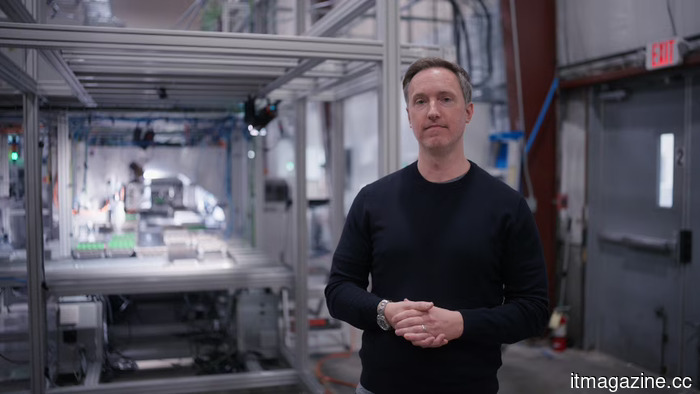 CircuitHub secures $28 million from Plural to produce PCBs in the same way that clouds deliver computing resources.
CircuitHub has secured $28 million in funding, led by Plural, to enhance its automated PCB-manufacturing 'Grid' factories in Europe and the United States.
CircuitHub secures $28 million from Plural to produce PCBs in the same way that clouds deliver computing resources.
CircuitHub has secured $28 million in funding, led by Plural, to enhance its automated PCB-manufacturing 'Grid' factories in Europe and the United States.
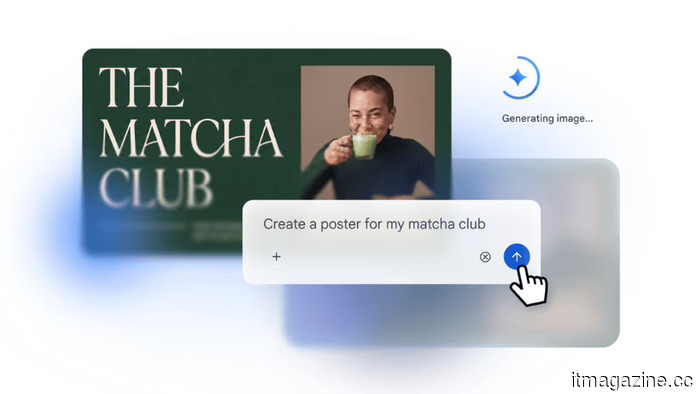 Google has introduced Pics, an AI image generator integrated within Workspace, aimed at competing with Canva in the realm of precise editing.
Google has unveiled Pics, an AI image generator native to Workspace that utilizes Nano Banana 2, featuring precise editing controls and integration with Slides and Drive.
Google has introduced Pics, an AI image generator integrated within Workspace, aimed at competing with Canva in the realm of precise editing.
Google has unveiled Pics, an AI image generator native to Workspace that utilizes Nano Banana 2, featuring precise editing controls and integration with Slides and Drive.
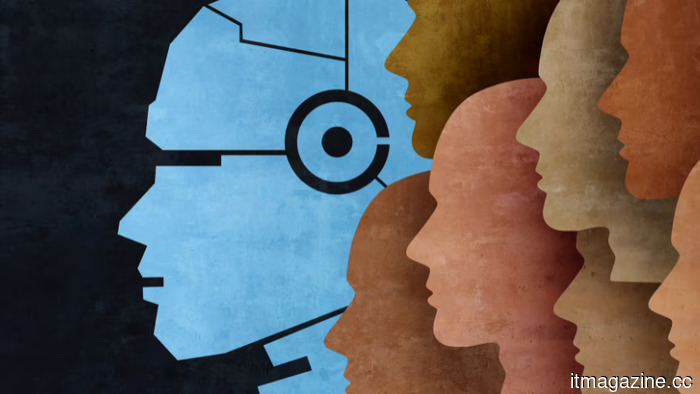 Gen Z isn't criticizing AI; they're expressing discontent with their own job market.
Eric Schmidt faced booing at the University of Arizona, while Gloria Caulfield experienced the same at UCF. The narrative labeled it as generational confusion, but the statistics indicate it was a matter of generational accuracy.
Gen Z isn't criticizing AI; they're expressing discontent with their own job market.
Eric Schmidt faced booing at the University of Arizona, while Gloria Caulfield experienced the same at UCF. The narrative labeled it as generational confusion, but the statistics indicate it was a matter of generational accuracy.
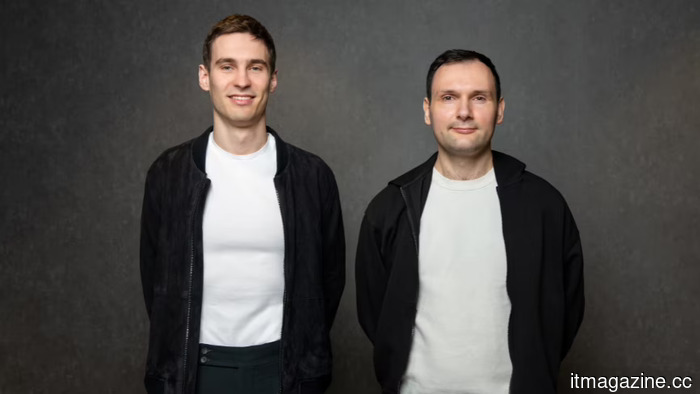 Viktor secures $75 million from Accel to integrate an AI coworker into Slack and Teams.
Viktor, the AI coworking company located in Warsaw and Munich and founded by former Meta engineers, has secured $75 million in Series A funding, with Accel leading the round.
Viktor secures $75 million from Accel to integrate an AI coworker into Slack and Teams.
Viktor, the AI coworking company located in Warsaw and Munich and founded by former Meta engineers, has secured $75 million in Series A funding, with Accel leading the round.
Gen Z is not rejecting AI; rather, it is expressing dissatisfaction with the job market for themselves.
Eric Schmidt faced boos at the University of Arizona, while Gloria Caulfield was also met with boos at UCF. The narrative framed it as generational confusion, but the statistics indicate it was actually generational accuracy.